

Why Yoga for Belly Fat Reduction?
Many people dismiss yoga as “just stretching” — too gentle to burn fat or reshape a soft midsection. That misconception undersells what yoga actually does to your body and, crucially, your biology. Yoga for belly fat works through multiple pathways simultaneously: building core strength, regulating stress hormones, improving sleep, and shifting the nervous system out of chronic fight-or-flight mode.
Understanding Visceral vs. Subcutaneous Belly Fat
Not all belly fat is equal. Subcutaneous fat sits just under the skin and is relatively harmless. Visceral fat, however, wraps around internal organs and drives inflammation, insulin resistance, and metabolic disease. Reducing visceral fat requires more than crunches — it demands hormonal and lifestyle change, which is precisely where yoga excels.
How Yoga Addresses Root Causes of Belly Fat Accumulation
Chronic stress floods the body with cortisol, a hormone that directly signals the body to store fat abdominally. Yoga’s breathwork and mindfulness practices lower cortisol measurably, attacking belly fat at its hormonal root. Poor posture and a weak core also contribute — for related movement insights, see our guide on yoga for lower back pain.
The Science Behind Yoga and Fat Loss
The NIH’s National Center for Complementary and Integrative Health NIH NCCIH recognizes yoga as a meaningful tool for weight management, citing improvements in mindful eating, stress reduction, and physical activity levels — all factors directly linked to reduced abdominal fat over time.
How Yoga Helps in Flattening the Stomach

How Yoga Helps in Flattening the Stomach
Yoga offers a multifaceted approach to reducing abdominal fat, going beyond simple calorie expenditure. Several physiological mechanisms contribute to its effectiveness in targeting the stomach area.
Core Activation and Metabolic Boost
Many yoga poses, particularly those in a vinyasa or power yoga style, require significant engagement of the deep abdominal muscles. Poses like Plank, Boat Pose (Navasana), and various twists actively strengthen the core. This increased muscular engagement not only tones the abdominal region but also contributes to a higher resting metabolic rate. A stronger core supports better posture, which can make the stomach appear flatter, and this consistent muscle activation burns calories throughout the day, aiding in overall fat loss.
Stress Reduction and Cortisol Management
Chronic stress is a known contributor to increased abdominal fat storage due to elevated cortisol levels. Yoga’s emphasis on breathwork (pranayama) and meditation is highly effective in managing stress. Research from institutions like the Mayo Clinic Mayo Clinic highlights yoga’s role in reducing stress hormones. By lowering cortisol, yoga helps prevent the body from storing excess fat around the midsection, promoting a leaner physique.
Mindful Eating and Digestive Health
The mindful awareness cultivated through yoga practice often extends to eating habits. Yogis tend to become more attuned to their body’s hunger and fullness cues, leading to more conscious food choices and potentially reducing overeating. Certain yoga poses can also stimulate digestive organs, improving digestion and reducing bloating, which can contribute to a flatter-looking stomach.
Improved Sleep Quality and Recovery
Adequate sleep is crucial for weight management and hormone regulation. Yoga has been shown to improve sleep quality by calming the nervous system and reducing anxiety. Better sleep allows the body to recover more effectively, balances appetite-regulating hormones, and supports the fat-loss process, making it a sustainable endeavor.
Best Types of Yoga for Belly Fat Loss
Vinyasa Flow: High-Intensity Calorie Burn
Vinyasa yoga synchronizes breath with movement, creating a dynamic, flowing sequence that elevates your heart rate and torches calories. This style is excellent for burning energy and can contribute to overall fat loss, including abdominal fat. Its continuous movement engages multiple muscle groups, promoting a significant calorie expenditure.
Power Yoga: Strength-Based Belly Targeting
Similar to Vinyasa but often more intense, Power Yoga emphasizes strength and flexibility. Poses are held longer, and the focus on core engagement directly targets abdominal muscles, aiding in toning and strengthening the core. This style is particularly effective for those looking to build muscle alongside fat loss.
Hatha Yoga: Sustainable, Beginner-Friendly Approach
Hatha yoga involves slower-paced poses with longer holds, making it accessible for beginners. While not as intense as Vinyasa or Power Yoga, its focus on proper alignment and breath control can still contribute to core strength and stress reduction. Reducing stress is key, as Harvard Health on stress, cortisol, and abdominal fat accumulation PubMed highlights its impact on belly fat.
Choosing the Right Style for Your Fitness Level
For a vigorous calorie burn, Vinyasa or Power Yoga are ideal. Beginners may find Hatha yoga a more comfortable starting point, offering a solid foundation before progressing to more challenging styles. Consider your current fitness level and personal preferences when selecting a practice.
Top Yoga Poses for Reducing Belly Fat
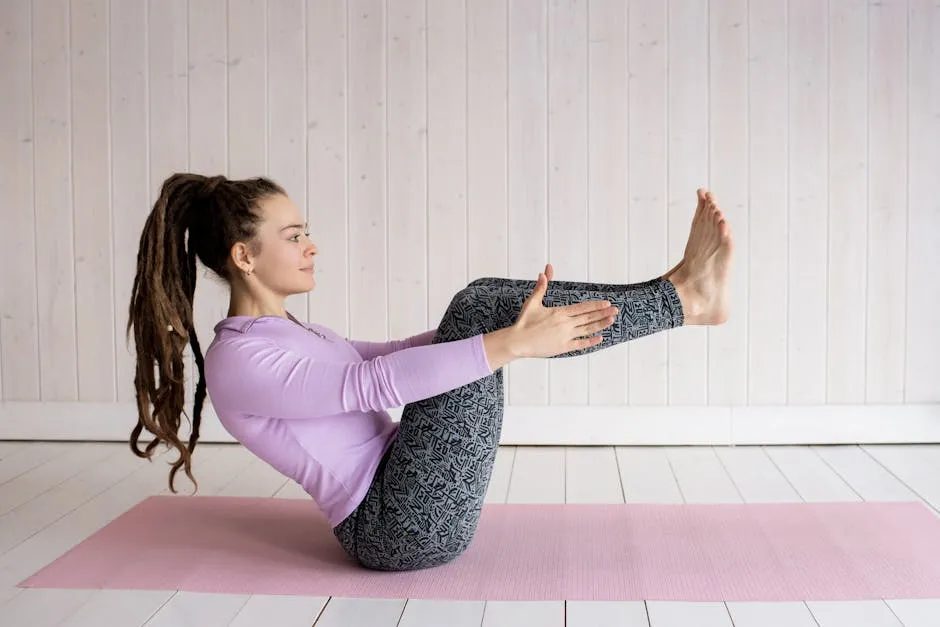
Boat Pose (Navasana): Core Strengthening Master
Boat Pose is a powerhouse for targeting the deep abdominal muscles. Start by sitting with your knees bent and feet flat on the floor. Lean back slightly, keeping your spine straight, and lift your feet off the floor, bringing your shins parallel to the ground. Extend your arms forward, parallel to the floor, palms facing each other. For a deeper challenge, straighten your legs into a ‘V’ shape. Hold for 5-10 breaths, focusing on drawing your navel towards your spine. Common mistakes include rounding the back or slumping the shoulders. To modify, keep your knees bent or hold onto the backs of your thighs. A good yoga mat with alignment markers can help ensure your hands and feet are positioned correctly during practice.
Plank Pose (Phalakasana): Isometric Abdominal Activation
Plank Pose is a foundational pose that engages the entire core, including the rectus abdominis and transverse abdominis. Begin on your hands and knees. Extend your legs back, coming onto the balls of your feet, so your body forms a straight line from head to heels. Engage your core by drawing your navel in and up. Keep your hips from sagging or lifting too high. Hold for 30-60 seconds, breathing steadily. If a full plank is too challenging, drop to your knees while maintaining a straight line from head to knees.
Cobra Pose (Bhujangasana): Digestive Stimulation
While not directly an abdominal crunch, Cobra Pose stimulates digestive organs and can aid in reducing bloating, which contributes to a flatter appearance. Lie on your stomach with your legs extended and the tops of your feet on the floor. Place your hands under your shoulders, elbows tucked in. Inhale and press into your hands, lifting your chest off the floor. Keep your hips and lower belly on the ground. Gaze slightly forward. Exhale and lower back down. This pose is beneficial for overall metabolic health, as highlighted by research from the Cleveland Clinic on mind-body medicine and metabolic health Harvard Health.
 Warrior Poses (Virabhadrasana): Full-Body Engagement
Warrior II (Virabhadrasana II) and Warrior III (Virabhadrasana III) offer significant benefits. Warrior II strengthens the legs and core while opening the hips. From a standing position, step your feet wide apart, turn your right foot out 90 degrees and your left foot in slightly. Bend your right knee over your right ankle, keeping your thigh parallel to the floor. Extend your arms parallel to the floor, gazing over your right fingertips. Warrior III is a balancing pose that intensely works the core and legs to maintain stability. Step your feet together and step your right foot back, lifting it as you hinge forward from your hips, extending your arms forward or back. For more on core balance, see our guide on balancing poses for beginners.
Modifications for Larger Belly and Beginner Bodies
When practicing poses like Boat Pose, keeping knees bent or using props such as blocks under your hands in Cobra Pose can provide necessary support. For Plank, dropping to the knees is a standard modification. The key is to maintain proper alignment and engage the core as much as possible within your current range of motion. Listen to your body and don’t push into pain. Consistency is more important than intensity, especially when starting.
Common Misconceptions About Yoga and Belly Fat
Myth: Yoga Alone Will Eliminate Belly Fat
A common misconception is that simply practicing yoga will melt away belly fat. While yoga is incredibly beneficial for core strength and overall well-being, it’s rarely a standalone solution for significant weight loss. PubMed studies on vinyasa yoga and calorie expenditure Mayo Clinic Yoga show that while some styles can burn calories, the impact on stubborn belly fat often depends on other factors.
Myth: You Need Advanced Flexibility to Start
Many people believe they must be incredibly flexible to begin a yoga practice. This is untrue! Yoga is a journey, and every practitioner starts somewhere. Modifications are always available, and the focus is on mindful movement, not extreme poses. If you’re concerned about physical limitations, exploring Yoga for Lower Back Pain: Poses, Benefits, and Safety Tips might offer some reassuring insights.
Myth: Results Appear Overnight
Another myth is the expectation of rapid, overnight results. Sustainable weight loss, including reducing belly fat, is a gradual process. Consistency with your yoga practice, combined with healthy lifestyle choices, is key.
The Reality: Holistic Integration with Diet and Lifestyle
The truth is, yoga is most effective for belly fat reduction when integrated into a broader healthy lifestyle. This includes a balanced diet, adequate sleep, and effective stress management. Yoga strengthens your core and improves your body’s ability to manage stress, which can indirectly impact fat storage. Think of yoga as a powerful tool within a comprehensive wellness plan, not a magic bullet.
Creating Your Yoga for Belly Fat Transformation Journey

Embarking on your yoga for belly fat journey is about creating sustainable habits. Think of it as a transformation, not a quick fix. This approach focuses on building strength, improving mindfulness, and fostering a healthier lifestyle overall.
Sample Weekly Yoga Schedule
Aim for consistency with a balanced schedule:
- 3-4 days per week: Core-focused yoga sessions (e.g., Vinyasa, Power Yoga).
- 1-2 days per week: Gentle yoga or restorative practices for recovery and flexibility.
- Daily: Short meditation or breathwork sessions.
Progress Tracking Metrics Beyond the Scale
While the scale can be a guide, focus on other indicators of progress. Notice improved energy levels, better posture, increased strength in your core, and how your clothes fit. Documenting these changes can be highly motivating.
Integrating Mindful Eating and Sleep Hygiene
True transformation involves a holistic approach. Combine your yoga practice with mindful eating—paying attention to hunger cues and nourishing your body—and prioritizing 7-9 hours of quality sleep. These elements are crucial for hormone balance and effective fat loss.
Timeline: When to Expect Visible Results
With consistent practice and a holistic lifestyle, you can begin to see noticeable changes within 6 to 8 weeks. Remember, this is a gradual process, and the benefits extend far beyond physical appearance, contributing to overall well-being.
Conclusion: Sustainable Belly Fat Loss Through Yoga
Key Takeaways
Yoga for belly fat works — but not through spot reduction alone. It combines core strengthening, stress hormone regulation, improved digestion, and mindful eating habits into one sustainable practice. The most effective approach pairs active styles like Vinyasa or Power Yoga with restorative sessions that lower cortisol, the hormone most directly linked to stubborn abdominal fat. Consistency matters far more than intensity. Even three sessions per week, maintained over months, produces measurable changes in waist circumference and overall body composition Cleveland Clinic.
Next Steps to Begin Your Practice
Start simple: choose two or three poses from this guide, commit to a 20-minute daily practice, and track how you feel rather than obsessing over the scale. As your core strengthens and stress levels drop, results will follow. If you experience any lower back discomfort during your practice, our guide on yoga for lower back pain offers targeted support. Roll out your mat today — your strongest, healthiest core is built one breath at a time.