

The Reality of Quick Weight Loss: What You Need to Know First
Everyone wants results fast — and that’s completely understandable. But the moment most people hear “quick weight loss,” they brace for a warning lecture. Here’s the truth: losing weight quickly isn’t inherently dangerous when it’s done with the right strategy. The problem has never been the speed — it’s the method.
Why ‘Quick’ Doesn’t Mean Unhealthy
The Mayo Clinic NIH NCCIH confirms that a structured calorie deficit can produce safe, meaningful weight loss — and that early results are often faster than people expect. Crash diets fail not because they’re fast, but because they’re unsustainable and nutritionally bankrupt. A science-backed approach protects muscle, supports metabolism, and still delivers real progress on the scale.
Setting Goals That Actually Stick
Realistic doesn’t mean slow. It means measurable. Aim for targets tied to behavior — what you eat, how you move — rather than a number alone. If movement is part of your plan, our guide on shows how even gentle daily exercise accelerates results without burnout. Start with clarity, not perfection.
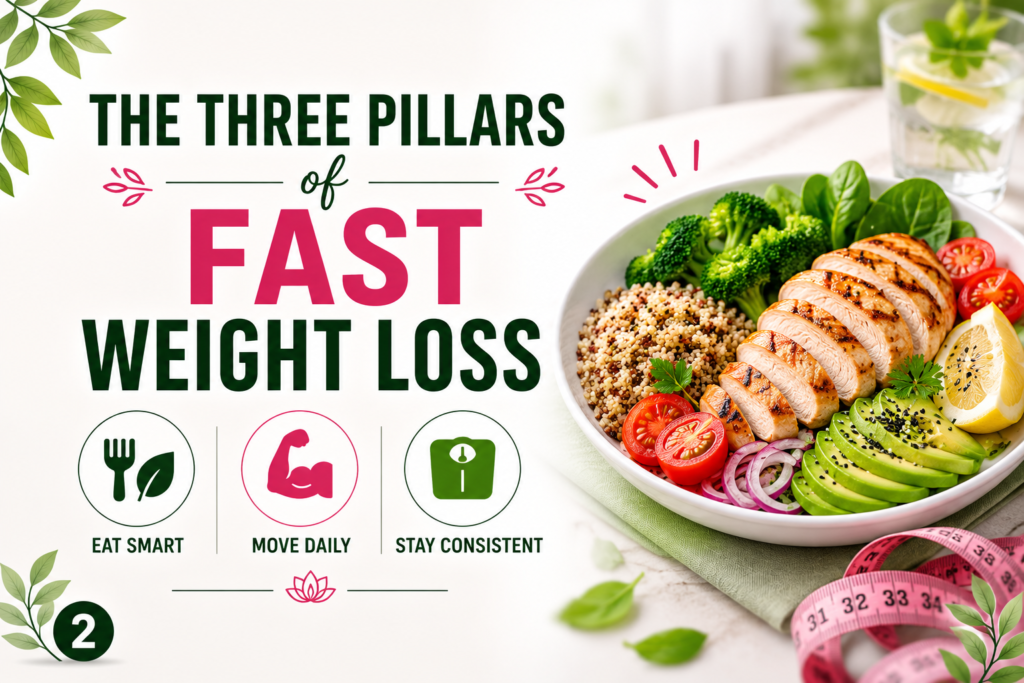
The Three Pillars of Fast Weight Loss

Achieving rapid weight loss isn’t about magic bullets or extreme diets; it’s about strategically manipulating three fundamental pillars. Mastering these will set you on a path for noticeable results without sacrificing your well-being.
Pillar 1: Strategic Calorie Deficit
The most crucial element of weight loss, quick or otherwise, is consuming fewer calories than your body burns. A deficit of 500-1000 calories per day typically leads to a loss of 1-2 pounds per week. To achieve this safely, focus on nutrient-dense, lower-calorie foods. Think lean proteins, vegetables, and whole grains. Avoid processed foods and sugary drinks, which offer little nutritional value and can derail your efforts. For instance, a typical day might include oatmeal with berries for breakfast, a large salad with grilled chicken for lunch, and baked salmon with steamed broccoli for dinner. This pattern prioritizes satiety while keeping calories in check.
Pillar 2: Protein-First Eating Pattern
Incorporating ample protein into your diet is a game-changer for fast weight loss. Protein is highly satiating, meaning it helps you feel fuller for longer, reducing overall calorie intake. It also requires more energy to digest than carbohydrates or fats, contributing to a slightly higher metabolism. Prioritize lean protein sources like chicken breast, fish, eggs, beans, and tofu at every meal. This approach can be particularly beneficial for individuals managing conditions like PCOS, as discussed in our guide on Best Foods for PCOS Weight Loss: A Science-Backed Guide with Meal Plans.
Pillar 3: Movement That Matters
While diet is paramount, exercise significantly amplifies weight loss efforts. Cardiovascular exercise burns calories directly, while strength training builds muscle mass. More muscle means a higher resting metabolic rate, helping you burn more calories even when you’re not exercising. Aim for at least 150 minutes of moderate-intensity cardio per week, such as brisk walking, jogging, or cycling, alongside two to three strength training sessions. Consistency is key, and even incorporating short bursts of activity throughout the day can make a difference. Emerging research also highlights the role of stress and sleep, managed through practices like yoga, in weight management, according to the NIH NCCIH on the role of stress and sleep in weight loss Mayo Clinic.
Your 7-Day Quick-Start Action Plan
Days 1-3: The Foundation Phase
Begin by prioritizing protein at every meal. This strategy, supported by research from Harvard Health on protein intake and satiety PubMed, helps you feel fuller for longer, reducing overall calorie consumption. Focus on lean sources like chicken breast, fish, eggs, and Greek yogurt. Pair your protein with non-starchy vegetables such as spinach, broccoli, and bell peppers. For example, breakfast could be scrambled eggs with spinach, lunch a grilled chicken salad, and dinner baked salmon with asparagus. To simplify the protein-first pattern, many users leverage meal prep services or apps like to track macros without guesswork.
Days 4-7: Building Momentum
Continue the protein and vegetable focus, but start incorporating complex carbohydrates in controlled portions. Think about half a cup of quinoa or sweet potato with your lunch or dinner. This phase is also ideal for increasing physical activity. If you have PCOS, you might find that incorporating specific movements helps manage symptoms alongside weight loss; see our guide on PCOS weight loss yoga for ideas. Aim for at least 30 minutes of moderate exercise daily, such as brisk walking, cycling, or swimming.
What to Track and Why
Throughout this week, track your food intake, water consumption, and daily activity. Monitoring your food helps ensure you’re meeting your protein goals and staying within a calorie deficit. Logging water intake is crucial for metabolism and satiety. Recording exercise motivates you to stay consistent and shows you how your activity levels impact your progress. This consistent tracking forms the basis for sustainable changes beyond the first week.
The Psychology of Staying Motivated During Rapid Weight Loss
Overcoming the Motivation Dip
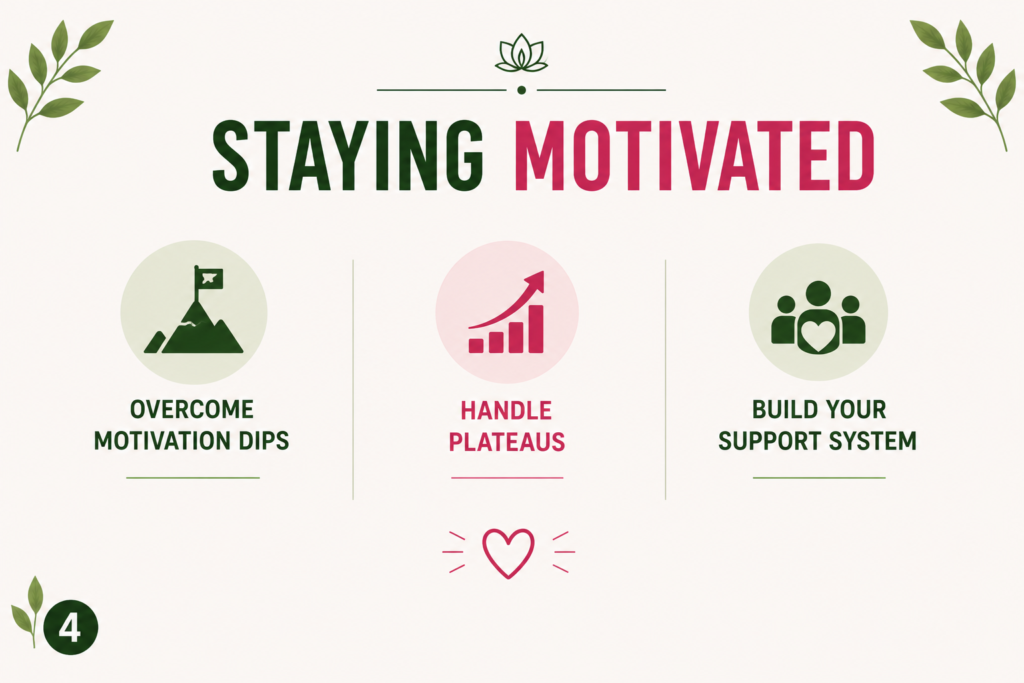
Rapid weight loss can be exhilarating, but motivation naturally ebbs and flows. When you hit a slump, remind yourself of your initial goals and visualize your success. Celebrate small victories – a week of consistent workouts, a new clothing size – to reinforce positive behavior. If you’re managing conditions like PCOS, remember that consistency is key, and sometimes a little extra effort is needed, as detailed in our guide on.
Handling Plateaus Without Quitting
Plateaus are a normal part of any weight loss journey, even a rapid one. Instead of getting discouraged, view them as a signal to reassess. Are you sticking to your calorie goals? Is your exercise routine varied enough? PubMed studies on rapid weight loss sustainability (pubmed.ncbi.nlm.nih.gov) Harvard Health show that small adjustments can often break through these stalls. Consider adding a new type of exercise or focusing on nutrient timing.
Building Your Support System
You don’t have to go through this alone. Share your goals with trusted friends or family who can offer encouragement. Consider joining an online community or finding a workout buddy. A strong support system can provide accountability and emotional resilience, making the journey more enjoyable and sustainable. Having reliable resources and people to turn to can make all the difference when facing challenges.
From Quick Loss to Sustainable Habits: The Transition Strategy
Why Quick Methods Fail Long-Term
Rapid weight loss strategies, while tempting, often lead to a rebound effect. They typically involve extreme calorie restriction or unsustainable exercise regimens that are difficult to maintain. This approach can also negatively impact your metabolism and lead to nutrient deficiencies. The World Health Organization (WHO) guidelines on healthy weight loss targets emphasize gradual, sustainable changes over drastic measures World Health Organization. Without a plan for transitioning, you risk regaining the lost weight and becoming discouraged.
Shifting Your Mindset for Permanence
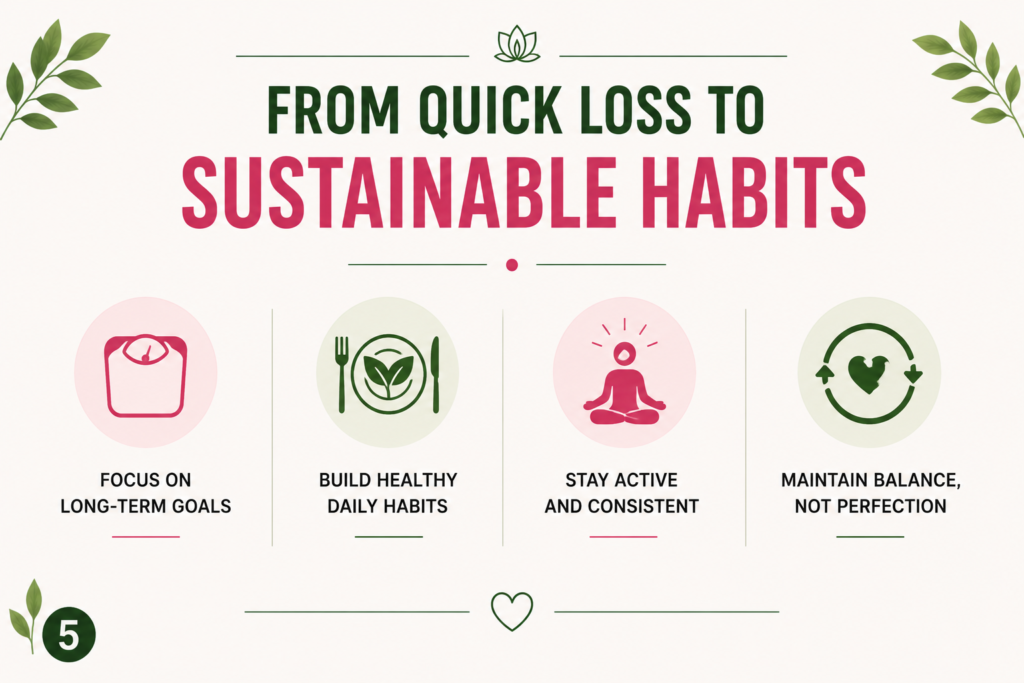
The key to long-term success is to shift your mindset from a temporary “diet” to a permanent lifestyle change. Focus on building healthy habits that you can enjoy and sustain. This involves understanding your triggers for unhealthy eating and developing coping mechanisms. For women managing hormonal changes, incorporating practices like PCOS weight loss yoga can be incredibly beneficial for sustainable results.
Maintenance Without Deprivation
Transitioning to maintenance means finding a balance that allows you to enjoy food and life without constant restriction. This phase is about consistency, not perfection. Small, regular adjustments to your diet and activity levels are more effective than drastic overhauls. Prioritize nutrient-dense foods and find forms of physical activity you genuinely enjoy to ensure long-term adherence and well-being.
Common Myths About Fast Weight Loss—Debunked
Myth: You Must Cut Carbs Completely
Carbohydrates are not the enemy. Research consistently shows that total calorie balance matters far more than eliminating any single macronutrient Mayo Clinic Yoga. Cutting carbs entirely often leads to short-term water-weight loss, not fat loss — and the rebound is swift. A moderate reduction in refined carbs while keeping whole grains, legumes, and fruit is both effective and sustainable.
Myth: Exercise Alone Will Get You There
Exercise is powerful for health, but it cannot outrun a poor diet. Studies show nutrition drives the majority of weight loss results, while movement preserves muscle and improves metabolic health. If you’re relying on workouts alone, see our guide on yoga for belly fat — it explains why combining core strengthening with smarter eating accelerates results far better than exercise in isolation.
Myth: Faster Always Means Better
Extreme crash diets can strip away muscle mass, slow your metabolism, and trigger hormonal disruption — making future weight loss harder. Science supports losing one to two pounds per week as the sweet spot: fast enough to feel momentum, slow enough to protect lean tissue and keep results permanent.
About the Author

Pratham Bavkar — Wellness Researcher · Founder, Yoga Therapy Guide
Pratham Bavkar is the founder of Yoga Therapy Guide and a wellness researcher focused on yoga therapy, mobility, and posture health. He creates evidence-based, beginner-friendly guides on yoga poses, stretching routines, and natural wellness practices to help readers improve daily health naturally.