What Is Meditation?
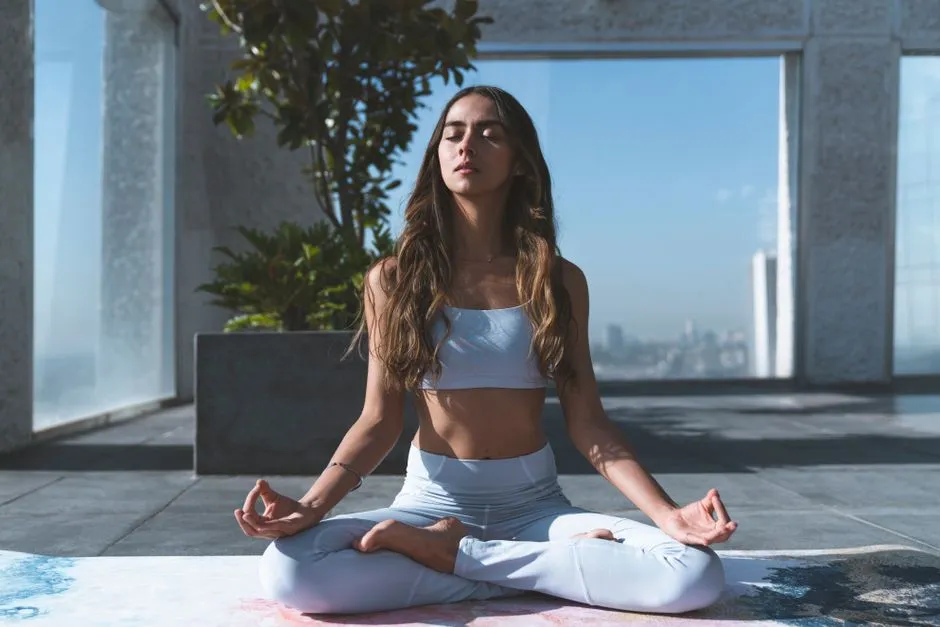
Meditation is more than sitting quietly — it’s a deliberate practice of training attention and awareness to achieve mental clarity and emotional stability. At its core, meditation asks you to observe your thoughts without judgment, gently redirecting focus whenever the mind wanders.
Definition and Core Principles
Across its many forms, meditation shares a few universal principles: a focused object of attention (breath, sound, or sensation), a relaxed but alert posture, and a non-reactive attitude toward distracting thoughts. These elements work together to shift the nervous system from reactive to responsive — a foundation that supports everything from stress relief to deeper self-awareness.
Why Meditation Matters Today
Modern life keeps the brain in near-constant stimulation, making intentional stillness both rare and powerful. NIH NCCIH studies on meditation efficacy and neurological changes NIH NCCIH confirm that regular practice measurably reduces stress hormones, lowers blood pressure, and reshapes brain regions linked to focus and emotional regulation. If you’re managing physical health alongside mental wellbeing, see our guide on yoga for high blood pressure for complementary evidence-based approaches.
How to Meditate: The Beginner’s Foundation
Setting Up Your Practice Space
To begin, find a quiet spot where you won’t be disturbed. This could be a corner of your bedroom, a comfortable chair, or even a dedicated meditation nook. The key is consistency and minimizing distractions. A comfortable cushion or mat designed for meditation can reduce physical distractions and improve posture. Ensure the temperature is comfortable and the lighting is soft.
The 5-Minute Starter Protocol
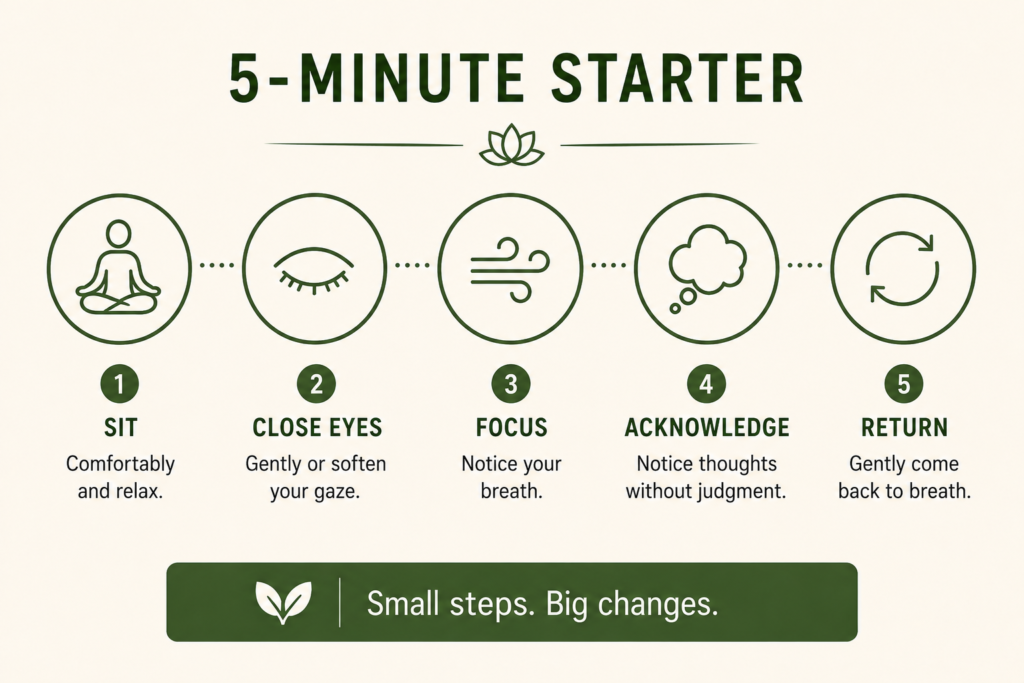
Start small to build a sustainable habit. Try this simple 5-minute protocol:
- Sit comfortably: Find a relaxed but alert posture, either on a cushion or a chair.
- Close your eyes gently: Or soften your gaze.
- Focus on your breath: Notice the sensation of air entering and leaving your body. Don’t try to change it, just observe.
- Acknowledge distractions: When your mind wanders (and it will!), gently guide your attention back to your breath without judgment.
This brief practice, consistent with Mayo Clinic guidelines on meditation for stress and sleep Mayo Clinic, can offer immediate benefits.
Common Beginner Mistakes to Avoid
New meditators often struggle with expecting immediate results or getting frustrated by a wandering mind. Remember, meditation is a practice, not a performance. Avoid judging your sessions. If your mind is busy, that’s okay; the act of noticing and returning to your breath is the core of the practice. Don’t aim for a perfectly “empty” mind, but rather a gentle awareness. For those interested in breathwork, exploring techniques related to yoga for high blood pressure can offer additional tools.
Types of Meditation Techniques Explained
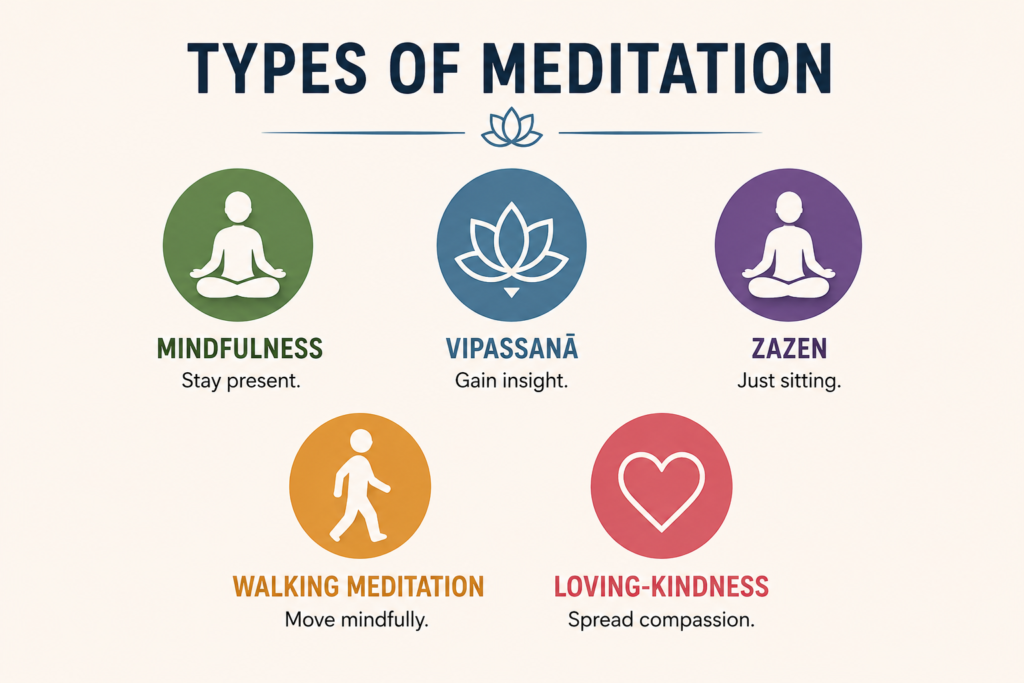
Mindfulness Meditation
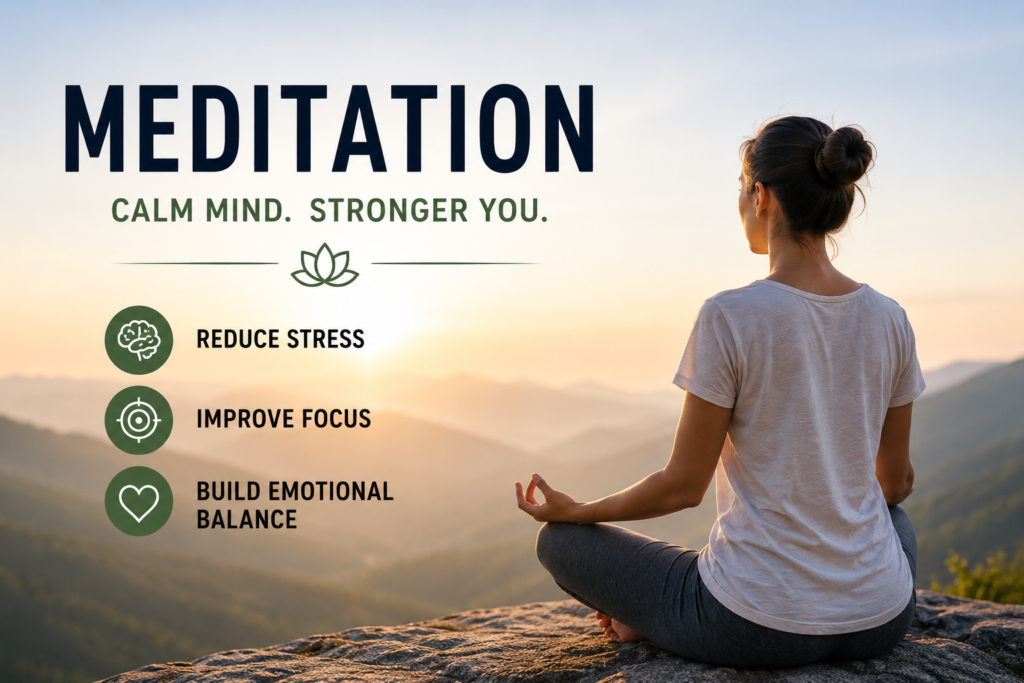
This is perhaps the most popular of the meditation techniques for beginners. Mindfulness meditation involves focusing your attention on the present moment without judgment. You might focus on your breath, bodily sensations, or external sounds. When your mind wanders, as it inevitably will, the practice is to gently bring your attention back to your chosen anchor. This consistent return strengthens your ability to control your focus and can lead to significant changes in brain structure, as indicated by Harvard Health research on mindfulness and brain plasticity PubMed.
Vipassanā (Insight) Meditation
Originating from ancient India, Vipassanā, which translates to “insight” or “clear seeing,” is a powerful meditation technique that aims to cultivate deep understanding of the true nature of reality. It often involves observing impermanence, dissatisfaction, and non-self. While similar to mindfulness in its observational nature, Vipassanā has a more specific goal of developing wisdom and liberation from suffering through direct experience.
Zazen (Zen) Meditation
Zazen is the foundational practice of Zen Buddhism. It typically involves sitting in a specific posture (often cross-legged) with an upright spine, eyes kept slightly open and lowered, and focusing on the breath or simply being aware of whatever arises in consciousness. The emphasis is on “just sitting” (shikantaza) – a state of alert, open awareness without attachment to thoughts or sensations.
Walking Meditation
Not all meditation requires stillness. Walking meditation involves bringing mindful awareness to the physical act of walking. You focus on the sensations in your feet, the movement of your legs, and the rhythm of your breath as you move. This technique is excellent for those who find sitting still challenging and can be easily integrated into daily life. It offers a dynamic way to cultivate presence and can be particularly grounding.
Loving-Kindness Meditation (Metta)
Loving-kindness meditation cultivates feelings of warmth, compassion, and love towards oneself and others. It typically involves silently repeating phrases that express goodwill, such as “May I be happy, may I be healthy, may I be safe.” The practice gradually extends these feelings outwards to loved ones, neutral people, difficult people, and eventually all beings. This technique can be profoundly helpful in reducing anger and resentment.
Visualization Meditation
Visualization meditation uses mental imagery to promote relaxation, achieve specific goals, or evoke certain feelings. You might imagine yourself in a peaceful natural setting, or visualize yourself successfully overcoming a challenge. The mind doesn’t always distinguish between vividly imagined experiences and real ones, making visualization a potent tool for mental and emotional well-being. Some of the breathing techniques used in yoga can complement visualization practices.
Find Your Perfect Technique: A Selection Guide
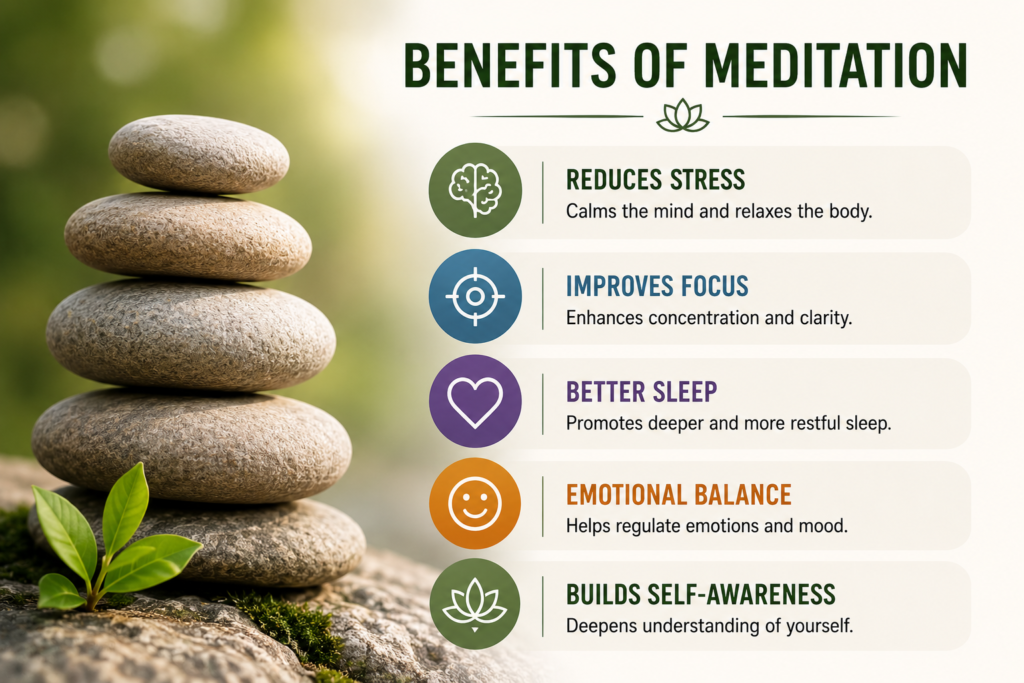
Choosing among the many meditation techniques available becomes much easier when you match the method to your specific goal. Use this simple framework: identify your primary need, then select the technique best supported by evidence for that outcome. PubMed peer-reviewed studies on Vipassanā, Zazen, and loving-kindness meditation Harvard Health consistently show that different practices produce measurably different neurological and psychological effects — meaning technique selection genuinely matters.
Meditation for Stress Relief
Body scan meditation and breath-focused mindfulness are your strongest starting points. Both activate the parasympathetic nervous system, helping lower cortisol levels. If stress manifests physically — tight shoulders, shallow breathing — body scan is particularly effective. Those managing stress alongside high blood pressure may also benefit from exploring yoga for high blood pressure.
Meditation for Focus and Concentration
Focused attention practices, such as single-point breath awareness or trataka (candle-gazing), train sustained concentration most directly. Start with five-minute sessions and gradually extend.
Meditation for Better Sleep
Yoga Nidra and progressive relaxation techniques are clinically favored for sleep difficulties. Practice within an hour of bedtime for best results.
Meditation for Emotional Regulation
Loving-kindness (Metta) meditation builds self-compassion and reduces reactivity. Even brief daily sessions show meaningful improvements in emotional resilience over four to eight weeks.
Meditation Myths vs. Reality
Many people hesitate to try meditation due to common misconceptions. Let’s debunk some of the most prevalent myths:
Myth: You Must Clear Your Mind Completely
This is perhaps the biggest hurdle for beginners. The reality is that the mind is *designed* to think. Meditation isn’t about stopping thoughts; it’s about observing them without judgment and gently redirecting your focus, often to your breath. The World Health Organization’s recommendations on mental health and meditation World Health Organization emphasize its accessibility and the practice of mindful awareness, not thought suppression.
Myth: Meditation Requires Hours of Practice
While long meditation sessions can be beneficial, they are not necessary, especially when starting. Even five to ten minutes daily can yield significant results. Consistency is far more important than duration. For those looking for complementary relaxation techniques, exploring breathwork like that found in can also be very effective.
Myth: Only Spiritual People Benefit
Meditation is a secular practice that offers tangible benefits for everyone, regardless of their spiritual beliefs. Its positive effects on stress reduction, focus, and emotional regulation are well-documented and applicable to all walks of life.
Troubleshooting Common Challenges
Restless Mind During Practice
A busy mind is normal! Instead of fighting thoughts, gently acknowledge them and return your focus to your breath. Think of it like clouds passing in the sky. You don’t need to stop the clouds, just observe them without judgment.
Difficulty with Visualization
Not everyone is a natural visualizer. If guided imagery is challenging, focus on physical sensations or sounds instead. You might also find focusing on a simple mantra or the rhythm of your breath more effective. For some, exploring breathing techniques can be a great starting point yoga breathing exercises.
Staying Consistent with Practice
Consistency trumps intensity. Aim for short, regular sessions rather than infrequent long ones. Schedule your meditation like any other important appointment. Even five minutes daily can build momentum and lasting habits.
Integrating Meditation Into Daily Life
Meditation doesn’t require carved-out hours — small, consistent moments build lasting habits. The techniques you’ve explored throughout this guide work best when woven naturally into your existing routine.
Micro-Meditations Throughout the Day
A single mindful breath before a meeting, a two-minute body scan during lunch, or a brief gratitude pause before sleep all count. Consistency matters far more than duration. Even 60 seconds of focused breathing, practiced daily, rewires your stress response over time.
Combining Techniques for Enhanced Results
Once comfortable with one method, blend approaches — open a session with breathwork, transition into body scanning, then close with loving-kindness. If you also practice yoga, pairing movement with meditation amplifies both benefits; our guide on yoga for high blood pressure explores how breathwork and mindfulness together support physical wellbeing. Start simple, stay curious, and let your practice evolve.
About the Author

Pratham Bavkar — Wellness Researcher · Founder, Yoga Therapy Guide
Pratham Bavkar is the founder of Yoga Therapy Guide and a wellness researcher focused on yoga therapy, mobility, and posture health. He creates evidence-based, beginner-friendly guides on yoga poses, stretching routines, and natural wellness practices to help readers improve daily health naturally.