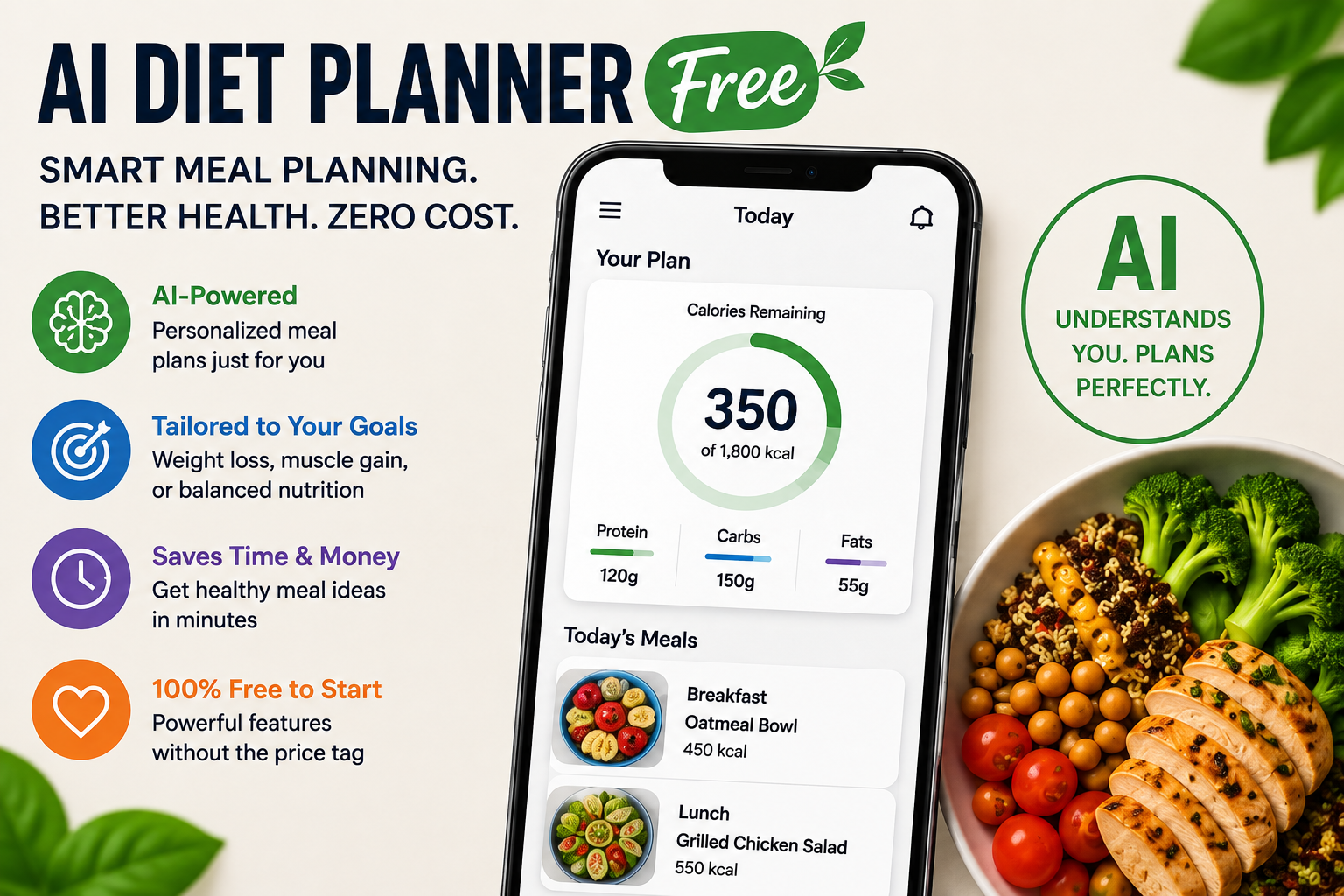
Your body runs on numbers.
We’ll do the math.
Answer five quick questions and get an instant, personalized calorie target, macro breakdown, and sample meal plan — built on the same formulas nutritionists use.
Build my plan
Takes about 20 seconds.
Please fill in your age, weight, and height to continue.
Here’s your personalized plan
Based on the details you entered — recalculate any time as your stats or goals change.
A sample day on your plan
What Is an AI Diet Planner and How Does It Work?
An AI diet planner is software that uses artificial intelligence to generate personalized meal recommendations based on your unique health data, food preferences, and nutritional goals. Unlike a static calorie counter or a generic meal template, these tools actively reason through thousands of food combinations to build plans that fit your life — not just your macros.
The Technology Behind AI Meal Planning
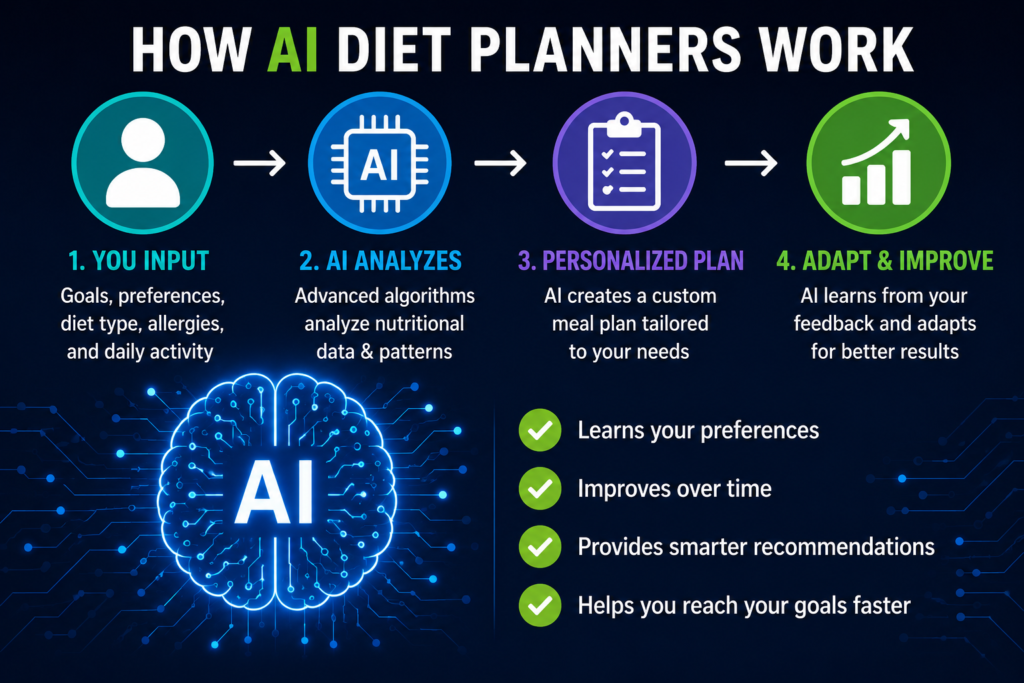
Most AI diet planners rely on large language models and nutritional databases trained on millions of dietary patterns. The NIH's National Center for Complementary and Integrative Health NIH NCCIH has recognized AI's growing role in personalized health, validating what these tools aim to do: match interventions to individuals rather than populations. The result is guidance that feels tailored rather than generic.
How Machine Learning Adapts to Your Preferences
Each time you log a meal, rate a recipe, or flag an ingredient you dislike, the system updates its model of you. Over time, recommendations become sharper and more practical. For a deeper look at which apps do this best, see our guide on.
Why Free AI Planners Are Now Possible
Advances in cloud computing and open-source AI frameworks have dramatically reduced costs. Developers now offer robust free tiers supported by optional premium upgrades, meaning sophisticated meal planning is genuinely accessible — no subscription required to get started.
Key Benefits of Using a Free AI Diet Planner
Switching to an AI-powered approach to meal planning delivers real, measurable advantages — especially when the tool costs nothing. Whether you're managing a chronic condition or simply trying to eat better, these platforms remove barriers that once made personalized nutrition feel out of reach.
Time Savings vs. Manual Planning
Manually researching recipes, calculating macros, and balancing nutritional needs across a full week can consume several hours. A free AI diet planner compresses that process into minutes, generating complete meal plans instantly based on your inputs. That recovered time adds up significantly over weeks and months.
Personalization Without the Nutritionist Price Tag
The Mayo Clinic Mayo Clinic emphasizes that effective dietary planning requires individual tailoring — accounting for health goals, food preferences, and medical considerations. Registered dietitians provide exactly that, but at a cost many households can't sustain. Free AI tools now deliver a meaningful level of that same personalization at no charge.
Accessibility for Everyone, Regardless of Budget
Good nutrition guidance should not be a privilege. Free AI diet planners democratize access, making structured, goal-oriented meal planning available to anyone with a smartphone or computer. If you're also exploring app-based support, see our roundup of best AI weight loss apps for options that pair well with free planning tools.
How to Use an AI Diet Planner: Step-by-Step Guide
Setting Up Your Profile and Goals
Start by creating your profile with the basics: age, height, current weight, and your primary goal—whether that's weight loss, muscle gain, or simply eating more balanced meals. Most free AI diet planners also ask about your activity level and any health conditions. Be as accurate as possible here, since this data forms the foundation every recommendation is built on. The more honest your inputs, the more relevant your plan will be from day one.
Inputting Dietary Preferences and Restrictions
Next, tell the AI what you will and won't eat. Flag allergies, intolerances, and ethical choices like veganism or a gluten-free lifestyle. Many tools also let you specify foods you simply dislike—a small detail that dramatically improves how usable your plan feels. If you follow a specific eating style, our guide on The Paleo Diet: A Complete Guide to Foods, Benefits, and Scientific Evidence can help you articulate those preferences clearly before you input them.
Generating Your First Personalized Meal Plan
Once your profile is complete, the AI generates an initial plan—typically a full week of meals with estimated macros and calories. Review it critically: does portion sizing feel realistic? Are the ingredients accessible to you? Treat this first output as a starting draft, not a final prescription.
Refining Plans Based on AI Feedback
This is where AI tools genuinely earn their value. As you log meals, rate recipes, and track how you feel, the system adjusts future recommendations. PubMed studies on machine learning accuracy in nutrition recommendations PubMed confirm that adaptive algorithms improve suggestion relevance significantly over time. Rate meals honestly, note energy levels, and don't skip logging—consistency is what teaches the AI to serve you better with each passing week.
Personalisation Features That Make AI Planners Effective
The real power of a free AI diet planner lies not in generic meal templates, but in how precisely it adapts to you. Effective personalization transforms a basic calorie counter into a genuinely useful nutrition partner.
Macro and Calorie Customization
Quality AI planners let you set specific targets for protein, carbohydrates, and fat — not just total calories. Whether you're aiming for body recomposition or managing a health condition, granular macro control ensures every meal moves you toward your actual goal, not a generic average. Harvard Health on AI and preventive nutrition Harvard Health notes that individualized dietary guidance consistently outperforms one-size-fits-all approaches.
Dietary Preference Matching (Keto, Vegan, Paleo, etc.)
Leading free tools recognize dozens of eating frameworks. If you follow a paleo lifestyle, for instance, our detailed The Paleo Diet: A Complete Guide to Foods, Benefits, and Scientific Evidence can complement what your AI planner recommends day-to-day. The AI cross-references food databases to keep every suggestion genuinely compliant — not just loosely aligned.
Allergy and Restriction Safety Protocols
Allergy handling deserves serious scrutiny. Reputable AI planners maintain dedicated exclusion lists for common allergens — tree nuts, gluten, shellfish, dairy — and flag ingredient conflicts automatically. Always verify outputs manually if you have a severe allergy, and consult a registered dietitian before relying solely on any AI tool for medical dietary management.
Integration with Wearables and Health Apps
Many free AI planners integrate with popular wearables like Fitbit and Apple Watch to auto-sync calorie burns and activity data, making your meal targets dynamically accurate rather than static. A dedicated Wearable Integration Bundle can streamline this connection significantly. This real-time feedback loop — where exercise output directly adjusts your nutrition recommendations — is one of the most underrated advantages free AI tools now offer.
AI Diet Planner vs. Human Nutritionist: What You Need to Know
Choosing between an AI diet planner and a registered dietitian isn't always an either/or decision. Understanding where each excels helps you make smarter choices about your health.
When AI Excels (Speed, Cost, 24/7 Availability)
Free AI diet planners deliver instant meal plans at any hour, without appointment wait times or consultation fees. For generally healthy adults managing weight, exploring new eating patterns, or tracking macros, AI tools provide genuinely useful, evidence-informed guidance. WHO guidelines on personalized nutrition and digital health tools World Health Organization recognize that technology-assisted approaches can meaningfully support healthy behavior change at scale.
When a Human Nutritionist Is Still Valuable
Complex medical conditions — including eating disorders, kidney disease, or cancer — require clinical expertise that no AI currently replicates. A registered dietitian can interpret lab work, account for medication interactions, and provide therapeutic-level accountability. If you have a diagnosed condition, professional oversight isn't optional. For a broader look at app-based tools with clinical backing, see our guide on.
Hybrid Approach: Using AI as a Complement
Many users find the smartest path combines both. Some platforms offer optional human coaching layered on top of AI planning — a Nutrition Coaching Add-On — giving you algorithmic speed plus expert validation when you need it. Think of AI as your daily planning engine and a nutritionist as your periodic check-in partner.
Free vs. Premium: What's Actually Free?
The word "free" gets stretched thin in the app world, so it's worth knowing exactly what you're getting before you invest time setting up an account.
Truly Free Features to Expect
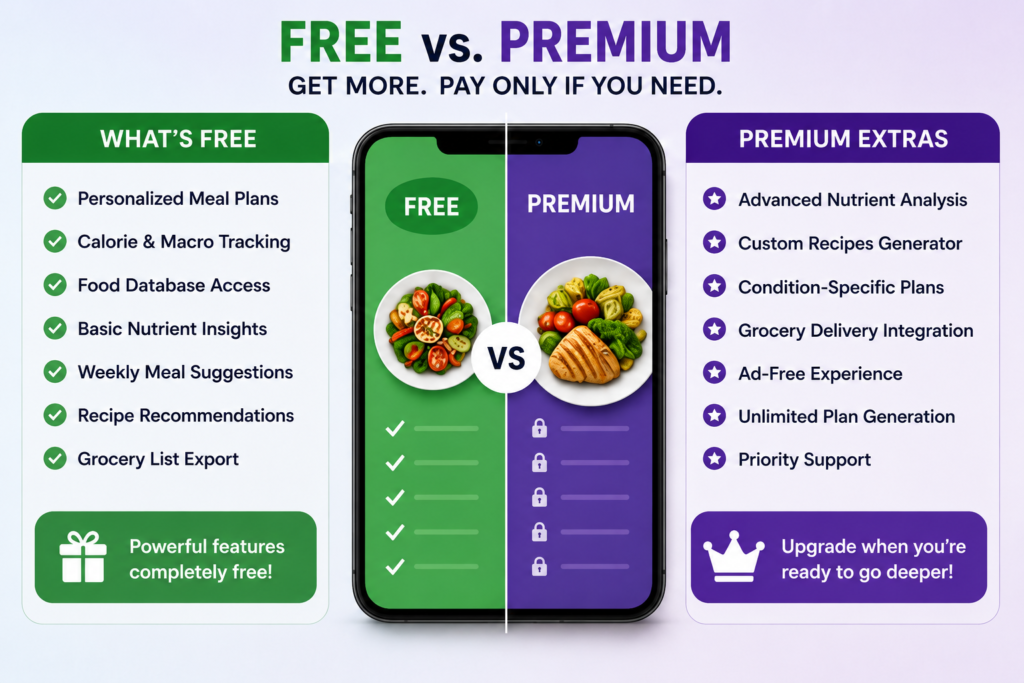
Most legitimate free AI diet planners offer basic meal suggestions, calorie tracking, and macro breakdowns without requiring payment. You can typically generate weekly meal plans, search food databases, and receive general dietary guidance at no cost. These core features are genuinely useful for the majority of users.
Common Premium Upsells and Hidden Costs
- Advanced personalization — deeper allergy filtering, micronutrient analysis, or condition-specific plans (diabetes, PCOS) often sit behind a paywall
- Ad-free experience — free tiers frequently include advertising
- Grocery list integration — syncing with delivery apps is commonly premium-only
- Unlimited plan generation — some tools cap free users at a set number of plans per month
For a broader comparison of what different apps actually deliver, see our guide on.
How to Maximize Free Tier Value
Use the free tier consistently for two to three weeks before deciding whether premium features justify the cost. Export or screenshot meal plans to reuse them — many tools reset or limit history on free accounts. If you find yourself hitting walls regularly, a premium upgrade may genuinely be worth it, but most casual users won't need to spend a cent.
Real User Success Stories and Results
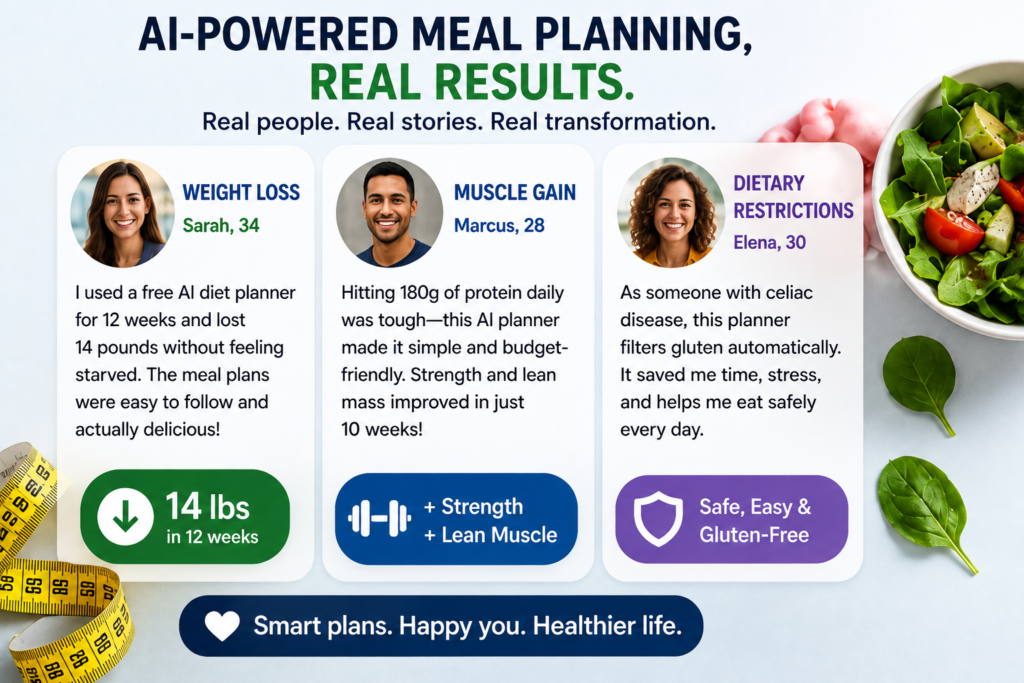
While individual results always vary, many users report meaningful progress using free AI diet planning tools consistently over time. These real-world examples illustrate what's possible with commitment and the right digital support.
Case Study: Weight Loss with AI Guidance
Sarah, a 34-year-old teacher, used a free AI meal planner for 12 weeks alongside a modest calorie deficit. By logging meals consistently and following AI-generated weekly plans, she lost approximately 14 pounds without paying for premium features. Tools like these are explored further in our guide on best AI weight loss apps science-backed features free options and real results.
Case Study: Muscle Gain and Macro Tracking
Marcus, a 28-year-old gym-goer, leveraged free AI tools to hit daily protein targets around 180g while managing a tight food budget. After 10 weeks of consistent macro tracking, he reported noticeable strength and lean mass improvements.
Case Study: Managing Dietary Restrictions
Elena, diagnosed with celiac disease, found free AI planners particularly valuable for filtering gluten-containing foods automatically. Her experience highlights how AI tools can reduce the daily mental load of navigating complex dietary restrictions safely and confidently.
Data Privacy and Ethical Considerations
How Your Dietary Data Is Protected
When using an ai diet planner free, understand how your sensitive health information is handled. Reputable services employ robust encryption and anonymization techniques to safeguard your data. Always review the privacy policy to understand data storage and usage practices.
Transparency in AI Algorithm Decision-Making
Ethical AI prioritizes transparency. While complex algorithms power these tools, understanding the general principles behind meal recommendations is crucial. Look for planners that explain *why* certain foods are suggested, rather than just presenting a list. This aligns with the growing demand for science-backed features in health technology.
Red Flags to Watch for in Free Tools
Be wary of free AI diet planners that request excessive personal information beyond what's necessary for meal planning, or those with unclear privacy policies. If a tool seems too good to be true, or if it makes unsubstantiated health claims, it's wise to exercise caution.
Frequently Asked Questions About AI Diet Planners
Are free AI diet planners actually free?
Most reputable platforms offer genuinely free tiers with core meal planning features — calorie targets, basic meal suggestions, and grocery lists — at no cost. Premium upgrades exist but aren't required to get real value.
How accurate are AI-generated meal plans?
AI planners draw on established nutritional databases and dietary guidelines, making their calorie and macronutrient calculations reliably accurate. However, they aren't a substitute for clinical advice if you have a diagnosed medical condition.
Can AI diet planners help with weight loss?
Yes — when used consistently. They create structured calorie deficits, reduce decision fatigue, and adapt to your progress. For a broader look at tools that support weight loss goals, see our guide on best AI weight loss apps.
Is my personal health data safe?
Reputable platforms use encryption and transparent privacy policies. Always review data-sharing settings before entering sensitive health information.
About the Author

Pratham Bavkar — Wellness Researcher · Founder, Yoga Therapy Guide
Pratham Bavkar is the founder of Yoga Therapy Guide and a wellness researcher focused on yoga therapy, mobility, and posture health. He creates evidence-based, beginner-friendly guides on yoga poses, stretching routines, and natural wellness practices to help readers improve daily health naturally.