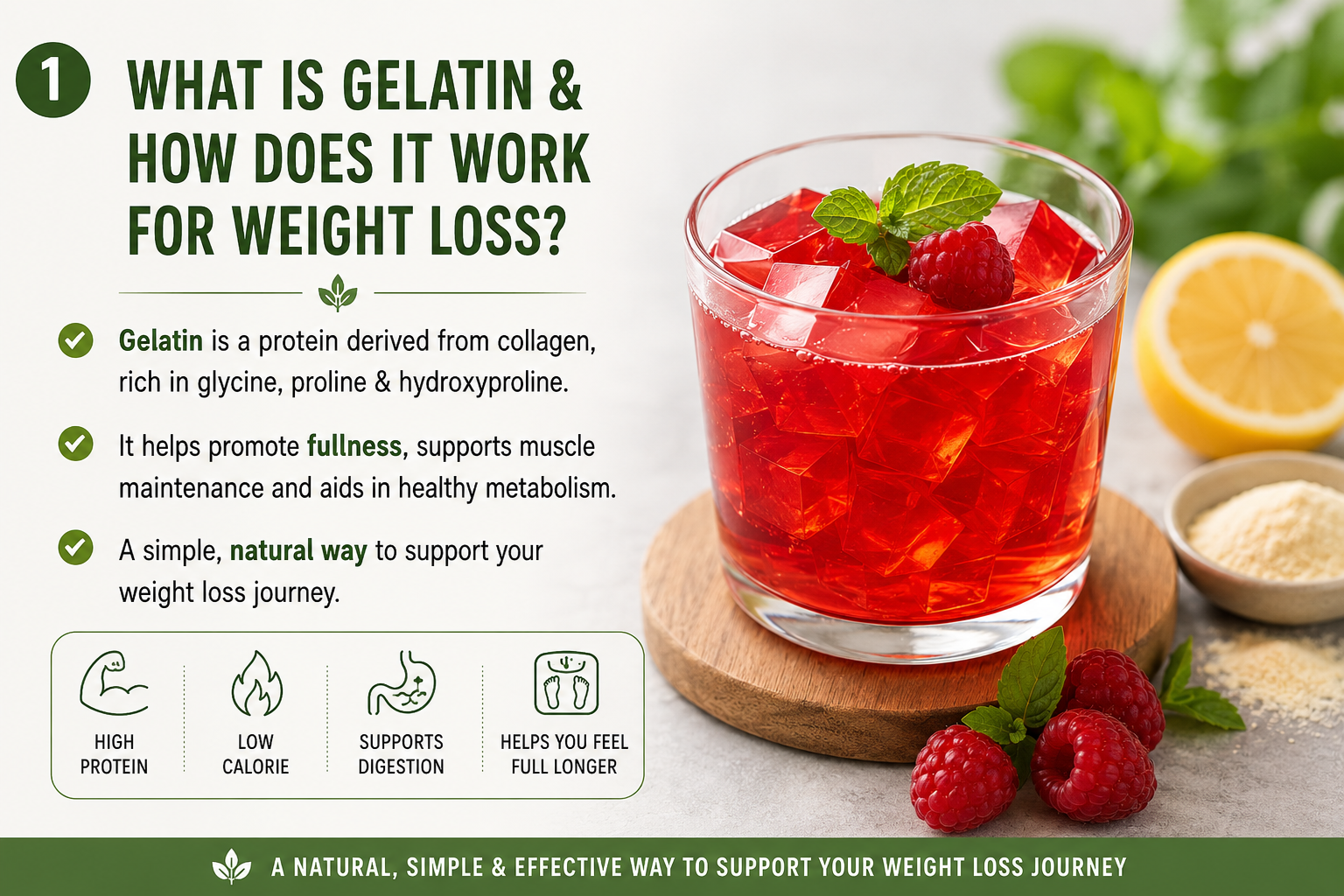
What Is Gelatin and How Does It Work for Weight Loss?
Gelatin is a protein derived from the partial hydrolysis of collagen — the structural protein found in animal bones, skin, and connective tissue. When collagen-rich tissues are cooked down slowly, the resulting gelatin is a translucent, flavorless substance packed with amino acids like glycine, proline, and hydroxyproline. It’s these specific amino acids that give gelatin its unique potential as a weight management tool.
The Science Behind Gelatin’s Weight Loss Potential
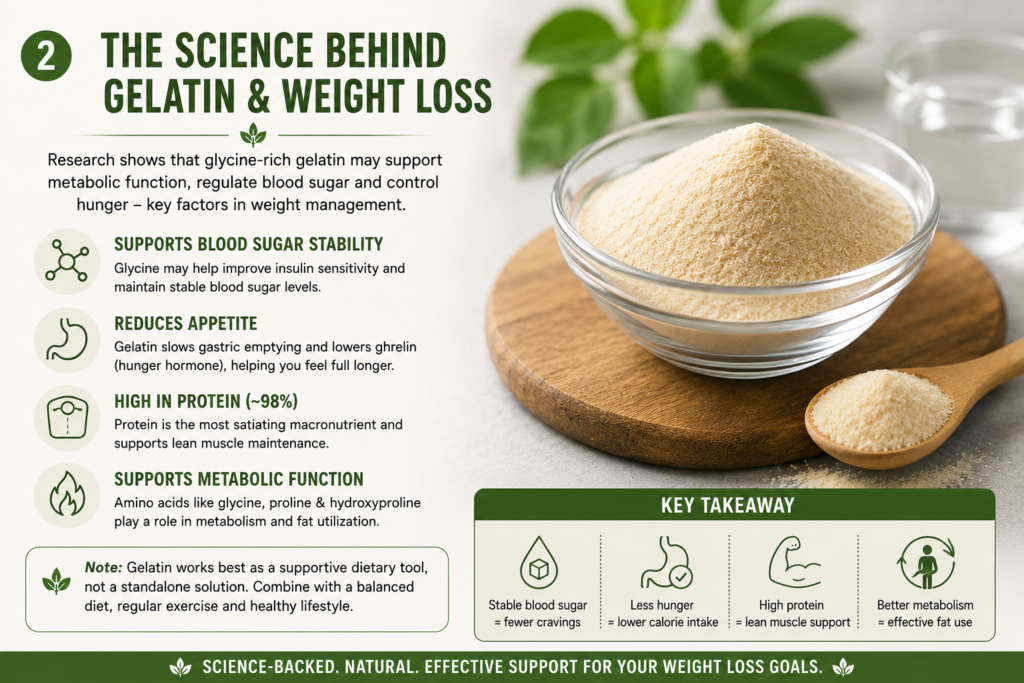
Gelatin is not a magic solution, but the research is genuinely interesting. NIH NCCIH studies on gelatin and collagen research NIH NCCIH suggest that glycine-rich proteins may support metabolic function and help regulate blood sugar stability — two factors closely tied to hunger and fat storage. The key takeaway: gelatin works best as a supportive dietary tool, not a standalone fix.
Gelatin vs. Collagen: Understanding the Difference
Many people confuse gelatin with collagen, and the distinction matters. Gelatin requires cooking to activate — it gels when cooled. Collagen peptides, by contrast, are further hydrolyzed, making them cold-water soluble and potentially more bioavailable. If cooking feels like a barrier, a quality Collagen Peptides Supplement offers a convenient, flexible alternative that delivers similar amino acids without the prep work.
How Gelatin Affects Satiety and Appetite
Protein is the most satiating macronutrient, and gelatin is roughly 98% protein by dry weight. Studies show it can suppress appetite more effectively than other proteins by slowing gastric emptying and reducing ghrelin — the hormone that triggers hunger. Pairing a gelatin weight loss recipe with an active lifestyle, similar to combining nutrition with movement strategies like those covered in our guide on yoga for belly fat, creates a far more effective foundation for sustainable results.
Types of Gelatin: Which One Works Best?
Unflavored Gelatin vs. Flavored Jell-O
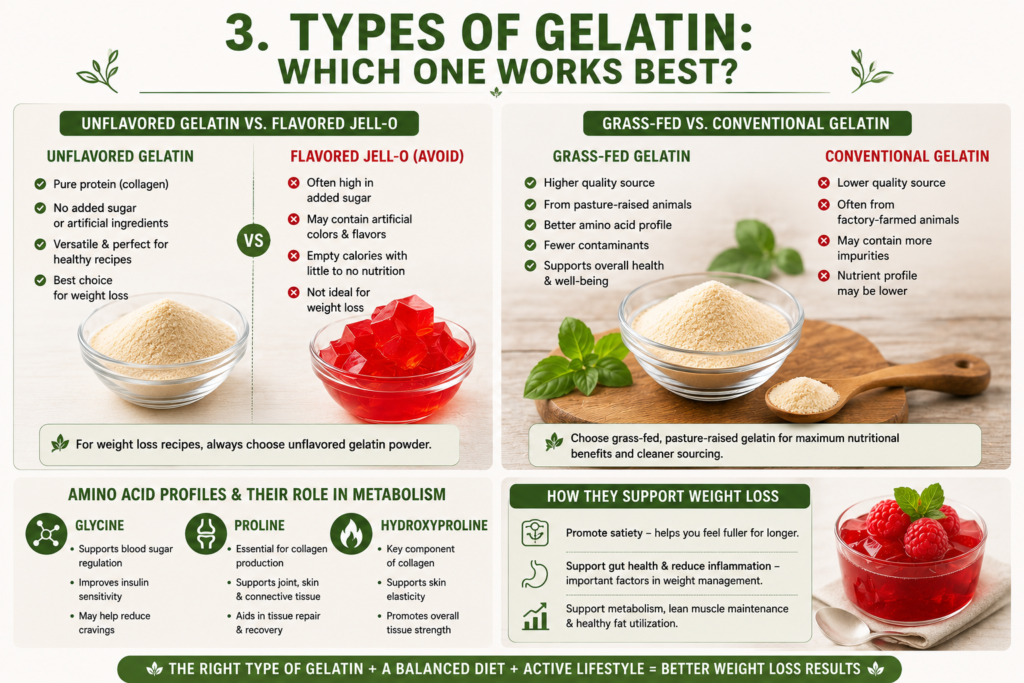
When considering gelatin for weight loss, the distinction between unflavored gelatin powder and pre-flavored gelatin mixes like Jell-O is crucial. Unflavored gelatin is pure protein, primarily collagen, offering a versatile base for various recipes. Flavored mixes, however, often contain significant amounts of added sugar and artificial ingredients, which can counteract any potential weight loss benefits. For recipes where you control the ingredients, unflavored gelatin is the superior choice.
Grass-Fed and Conventional Gelatin: Nutritional Differences
The source of gelatin matters. Grass-fed and pasture-raised gelatin is generally considered superior. Animals raised on their natural diet tend to have a more favorable nutrient profile, including a richer balance of amino acids. While both conventional and grass-fed gelatin provide amino acids like glycine and proline, grass-fed options often signal a commitment to higher quality sourcing and fewer potential contaminants. For those serious about maximizing the nutritional benefits, choosing an unflavored gelatin powder from grass-fed sources is recommended due to its transparent sourcing and excellent amino acid profile.
Amino Acid Profiles and Their Role in Metabolism
Gelatin’s weight loss potential is largely attributed to its unique amino acid composition. Glycine, in particular, plays a role in regulating blood sugar and can improve insulin sensitivity, which is beneficial for metabolic health. Proline aids in collagen production, supporting joint health and skin elasticity. While gelatin can contribute to satiety, helping you feel fuller for longer—a strategy also supported by Mayo Clinic guidance on weight loss strategies and satiety Mayo Clinic—it’s important to remember it’s a supplement to a balanced diet and exercise routine. Some find that incorporating mindful movement, like yoga, can further support metabolic health and weight management goals; see our guide on for more.
Easy Gelatin Weight Loss Recipes
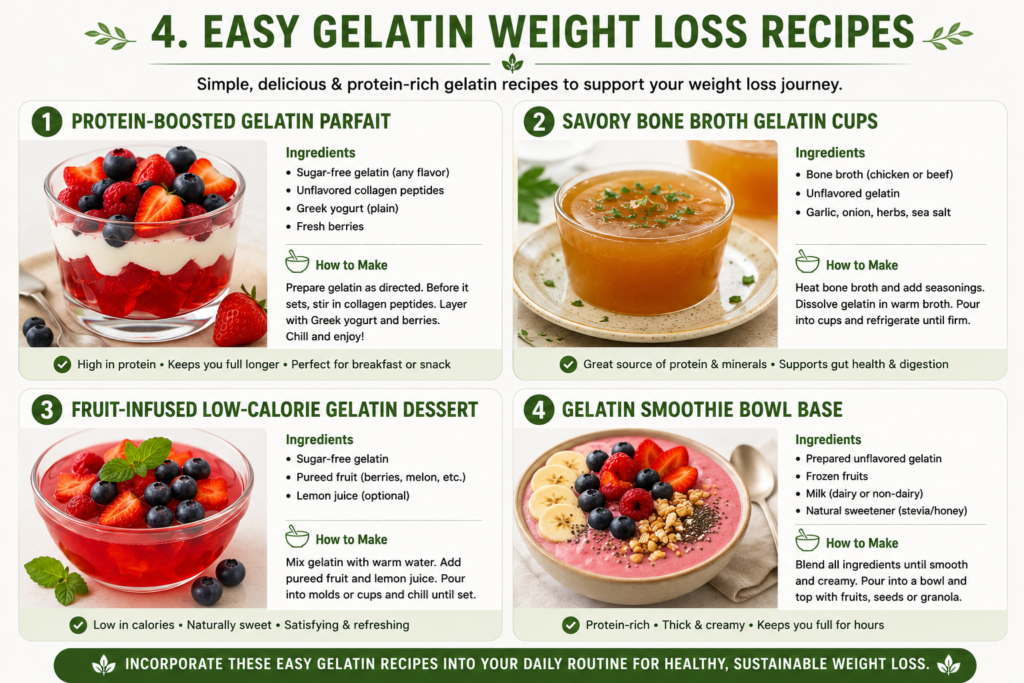
Easy Gelatin Weight Loss Recipes
Incorporating gelatin into your diet doesn’t have to be complicated or bland. These simple recipes are designed to be both delicious and supportive of your weight management goals, complementing a balanced eating plan. Remember, consistency is key, and having a structured approach can make a big difference. For those who prefer curated plans, consider a downloadable Digital Recipe E-Book or Meal Planning Tool to simplify your journey.
Protein-Boosted Gelatin Parfait
Combine sugar-free gelatin mix (prepared according to package directions) with a scoop of unflavored collagen peptides or protein powder before it sets. Layer with Greek yogurt and berries for a satisfying breakfast or snack.
Savory Bone Broth Gelatin Cups
Simmer bone broth with herbs and spices, then dissolve unflavored gelatin into it. Pour into small cups and chill until firm. These are a fantastic way to get protein and minerals, especially beneficial for gut health, which plays a role in overall wellness PubMed.
Fruit-Infused Low-Calorie Gelatin Dessert
Prepare sugar-free gelatin with pureed fruit (like melon or berries) instead of water for natural flavor and color. This offers a sweet treat without excessive calories or sugar.
Gelatin Smoothie Bowl Base
Blend prepared, unflavored gelatin with your favorite fruits, a splash of milk (dairy or non-dairy), and a touch of natural sweetener. This creates a thick, creamy base for your smoothie bowl, adding protein and aiding satiety.
Does the Gelatin Diet Actually Work? Evidence and Reality Check
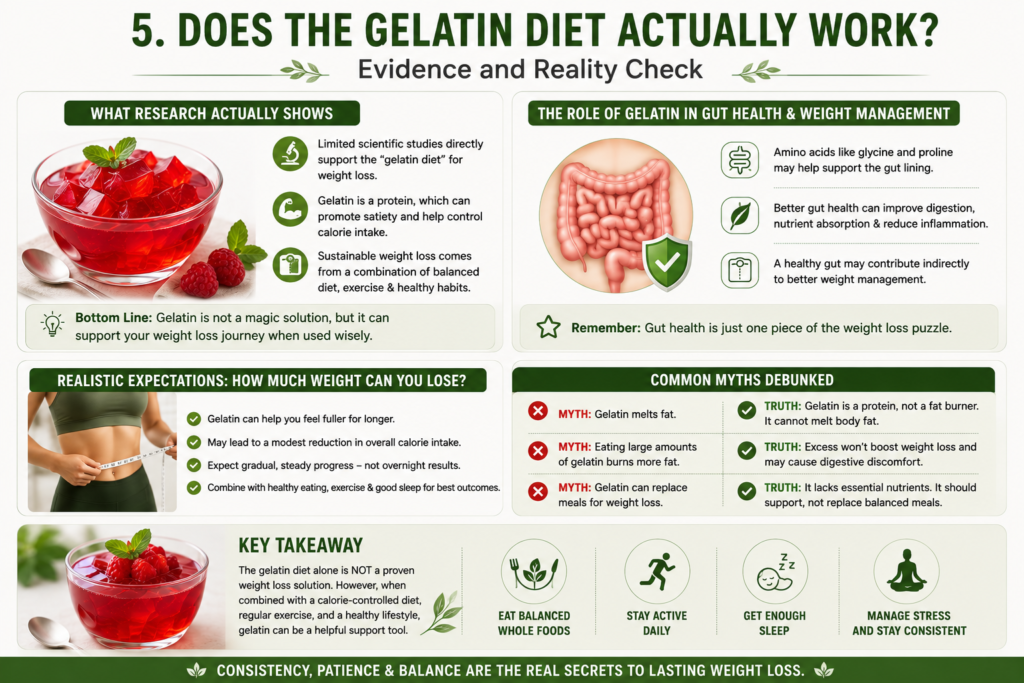
What Research Actually Shows
The idea of a “gelatin diet” for weight loss often circulates online, but robust scientific evidence directly supporting it as a standalone weight loss solution is limited. While gelatin does contain protein, which can contribute to satiety, the claims of rapid or significant weight loss solely through gelatin consumption are largely anecdotal. A Harvard Health perspective on sustainable weight loss vs. fad diets Harvard Health emphasizes that true, lasting weight loss comes from consistent, healthy lifestyle changes rather than quick fixes.
The Role of Gelatin in Gut Health and Weight Management
Gelatin is known for its potential benefits to gut health due to its amino acid profile, particularly glycine and proline. These may help support the integrity of the intestinal lining. Some proponents suggest that improved gut health can indirectly aid weight management by influencing nutrient absorption and reducing inflammation. However, this connection is complex and not solely dependent on gelatin intake. For holistic approaches to hormonal balance and weight management, especially for women, exploring practices like yoga can be beneficial, as discussed in our guide on PCOS weight loss yoga.
Realistic Expectations: How Much Weight Can You Lose?
It’s crucial to set realistic expectations. Incorporating gelatin into a balanced diet might help increase protein intake and promote feelings of fullness, potentially leading to a modest reduction in overall calorie consumption. However, expecting dramatic weight loss from gelatin alone is unlikely. Sustainable weight loss is typically achieved through a combination of a calorie-controlled diet, regular physical activity, and sufficient sleep.
Common Myths Debunked
One common myth is that gelatin can “melt” fat. This is biologically impossible. Gelatin is a protein derived from collagen and does not possess fat-burning properties. Another myth is that consuming large amounts of gelatin can replace meals for weight loss. While it can be a filling snack, it lacks the broad spectrum of nutrients found in balanced meals. Relying solely on gelatin could lead to nutrient deficiencies.
Potential Side Effects and Who Should Avoid Gelatin
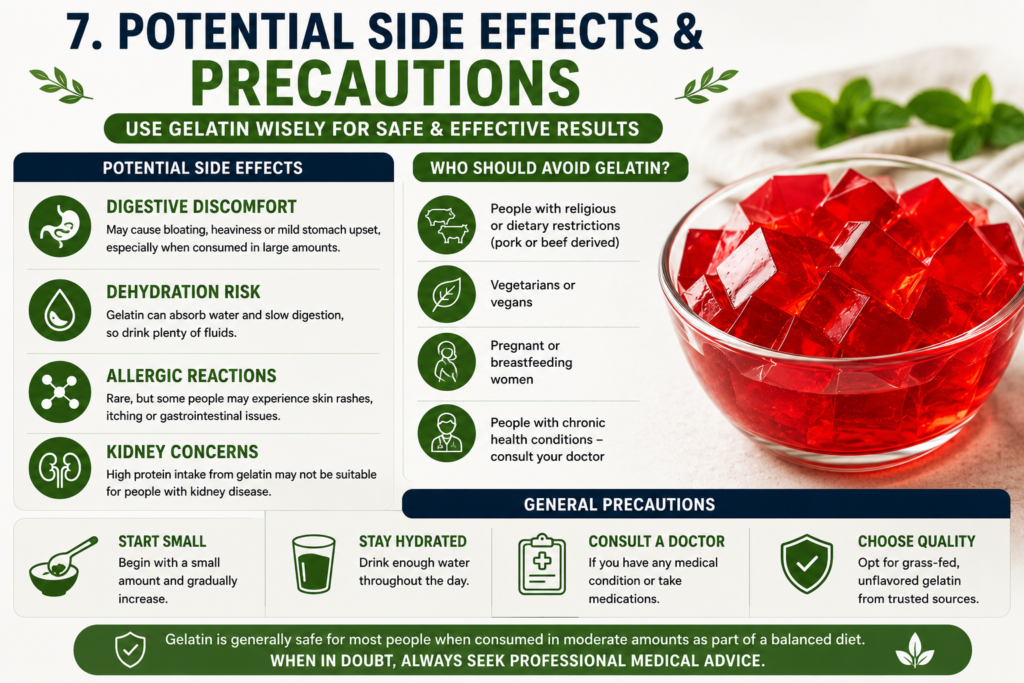
Gelatin is generally well-tolerated, but understanding its limitations helps you use it safely and effectively as part of a broader weight management approach.
Digestive Considerations
Some people experience bloating, heaviness, or mild stomach discomfort when first introducing gelatin, particularly in larger amounts. Starting with small servings — one teaspoon dissolved in liquid — and gradually increasing allows your digestive system to adjust. Adequate hydration is important, as gelatin can slow gastric emptying in some individuals.
Allergies and Sensitivities
Because most commercial gelatin derives from pork or beef collagen, people with religious dietary restrictions, vegetarian or vegan lifestyles, or known sensitivities to animal proteins should avoid it entirely. Allergic reactions, though uncommon, can include skin reactions or gastrointestinal upset.
When Gelatin May Not Be Appropriate
Pregnant or breastfeeding individuals, those with kidney disease, or anyone managing a chronic health condition should consult a qualified healthcare provider before adding concentrated gelatin supplements to their diet. WHO guidelines on healthy weight management World Health Organization consistently emphasize that no single food or supplement replaces balanced nutrition and medical supervision. If you are exploring complementary lifestyle strategies alongside gelatin, our guide on yoga for belly fat outlines sustainable, evidence-informed approaches worth considering.
Gelatin Recipes as Part of a Sustainable Weight Loss Strategy
Integrating Gelatin Into a Balanced Diet
While a specific gelatin weight loss recipe might offer some benefits, it’s crucial to view gelatin as a supportive element within a broader, balanced dietary approach. Focusing solely on one ingredient can lead to nutritional deficiencies. Instead, incorporate gelatin-rich foods or recipes into meals that already prioritize whole foods, lean proteins, fruits, vegetables, and healthy fats. This ensures you’re meeting all your body’s nutritional needs while potentially leveraging gelatin’s satiety-promoting properties.
Mindful Eating and Psychological Aspects
The allure of quick fixes, like a dedicated “gelatin diet,” often stems from the psychological desire for rapid results. However, sustainable weight management is built on mindful eating habits and a positive relationship with food. Focusing on how gelatin makes you feel fuller longer can be a tool for mindful eating, helping you recognize true hunger cues and avoid emotional overeating. It’s about understanding your body’s signals, not just adhering to a restrictive food trend.
Long-Term Sustainability Tips
For lasting weight loss success, sustainability is key. Instead of relying on a single gelatin weight loss recipe, aim for gradual, manageable lifestyle changes. This includes consistent physical activity, sufficient sleep, and stress management. If you find you enjoy incorporating gelatin, do so in a way that feels natural and enjoyable, perhaps as a healthy dessert or snack option. Remember, the most effective strategies are those you can maintain long-term, integrating enjoyable and nutritious foods like those found in balanced meals, much like the principles behind consistent physical activity and hormonal balance discussed in.
Frequently Asked Questions
Is gelatin good for weight loss?
Gelatin can support weight loss indirectly. Its high protein content promotes satiety, helping you eat less overall. However, it’s not a fat-burning ingredient on its own — results depend on your broader diet and lifestyle.
How much gelatin should I eat per day?
Most studies use between 10–20 grams daily. A serving of gelatin-based recipes typically provides 5–10 grams, so two servings per day fits comfortably within a safe, effective range.
Can I use gelatin recipes to replace meals?
Gelatin snacks work best as appetite-controlling additions between meals, not full meal replacements. Pair them with balanced, nutrient-dense meals for sustainable results.
Is collagen powder the same as gelatin?
They share the same protein source but behave differently — gelatin gels when chilled, collagen dissolves without gelling. Both offer similar nutritional benefits for weight management.
Will gelatin work without exercise?
Diet alone can produce results, but combining gelatin recipes with regular movement accelerates progress. If you’re new to exercise, our guide on yoga for belly fat offers a gentle, effective starting point.
About the Author

Pratham Bavkar — Wellness Researcher · Founder, Yoga Therapy Guide
Pratham Bavkar is the founder of Yoga Therapy Guide and a wellness researcher focused on yoga therapy, mobility, and posture health. He creates evidence-based, beginner-friendly guides on yoga poses, stretching routines, and natural wellness practices to help readers improve daily health naturally.