What Is Child’s Pose (Balasana)?
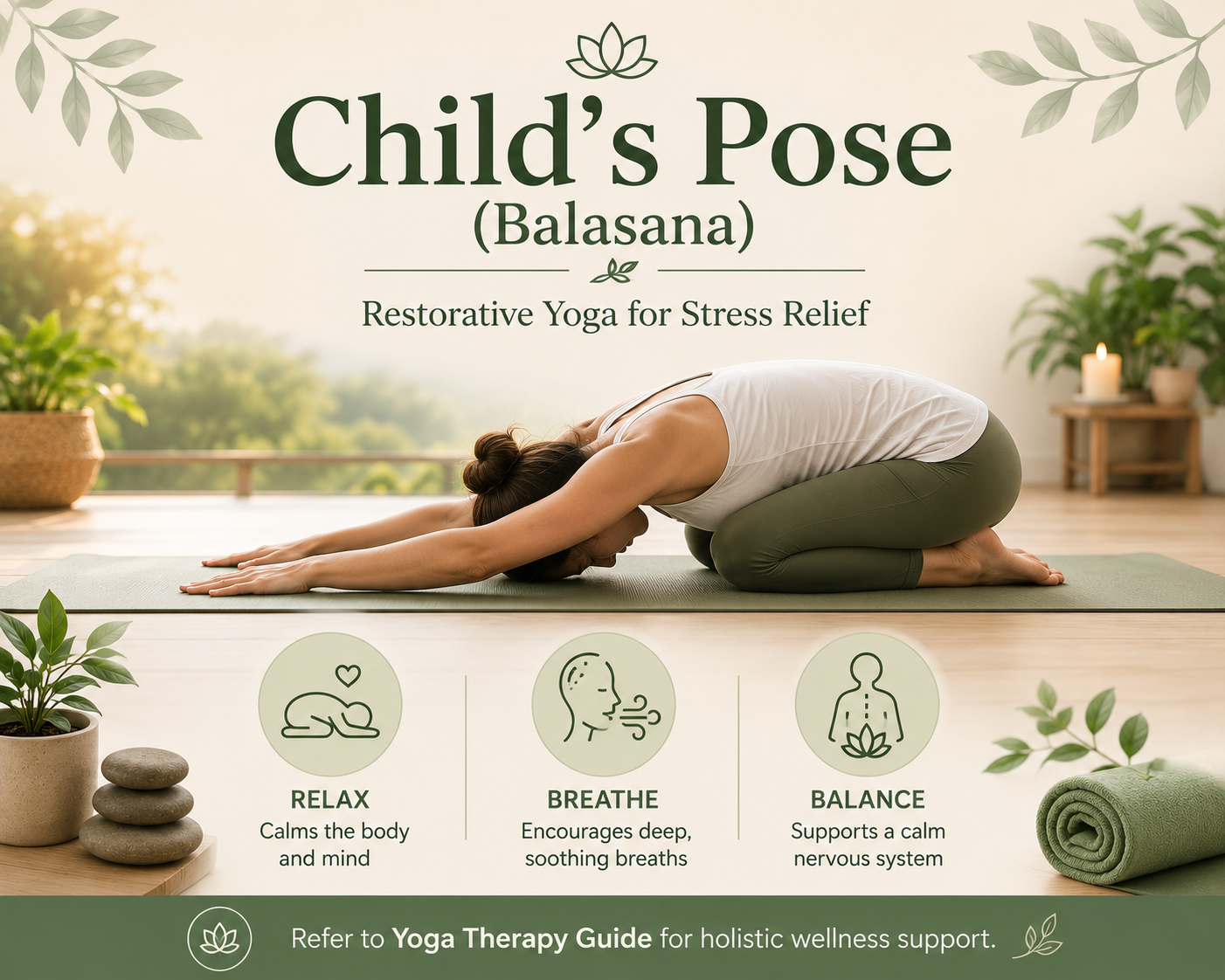
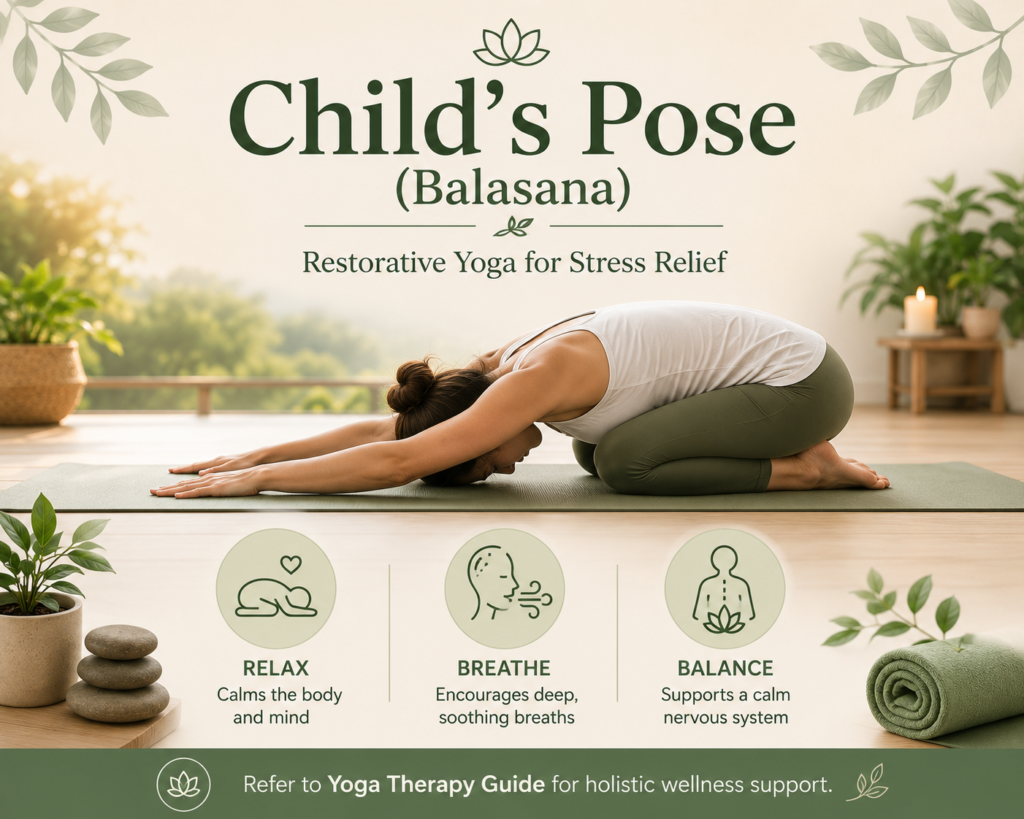
Balasana — commonly known as Child’s Pose — is a foundational resting posture in yoga that invites the body into a position of complete surrender. Kneeling with the torso folded forward, arms extended or resting alongside the body, and forehead gently touching the mat, it’s one of the most accessible shapes in any yoga practice.
Origins and Purpose
Rooted in the Hatha yoga tradition, Balasana has long served as a pose of restoration and reset. It appears between more demanding postures to allow the nervous system to recalibrate. Harvard Health on yoga and stress reduction Harvard Health highlights how gentle, grounding postures like this one actively lower cortisol and support parasympathetic nervous system activity — the body’s built-in calm response.
Why It’s Called Child’s Pose
The name reflects the fetal-like position the body naturally assumes — compact, protected, and at ease. It mirrors the instinctive way a child curls up for comfort. This quality makes it uniquely powerful for stress relief, as the shape itself signals safety to the brain. For a broader look at how yoga combats stress, explore our guide on best yoga poses for stress relief: science-backed sequences for immediate calm.
The Science Behind Child’s Pose for Stress Relief
Activating the Parasympathetic Nervous System
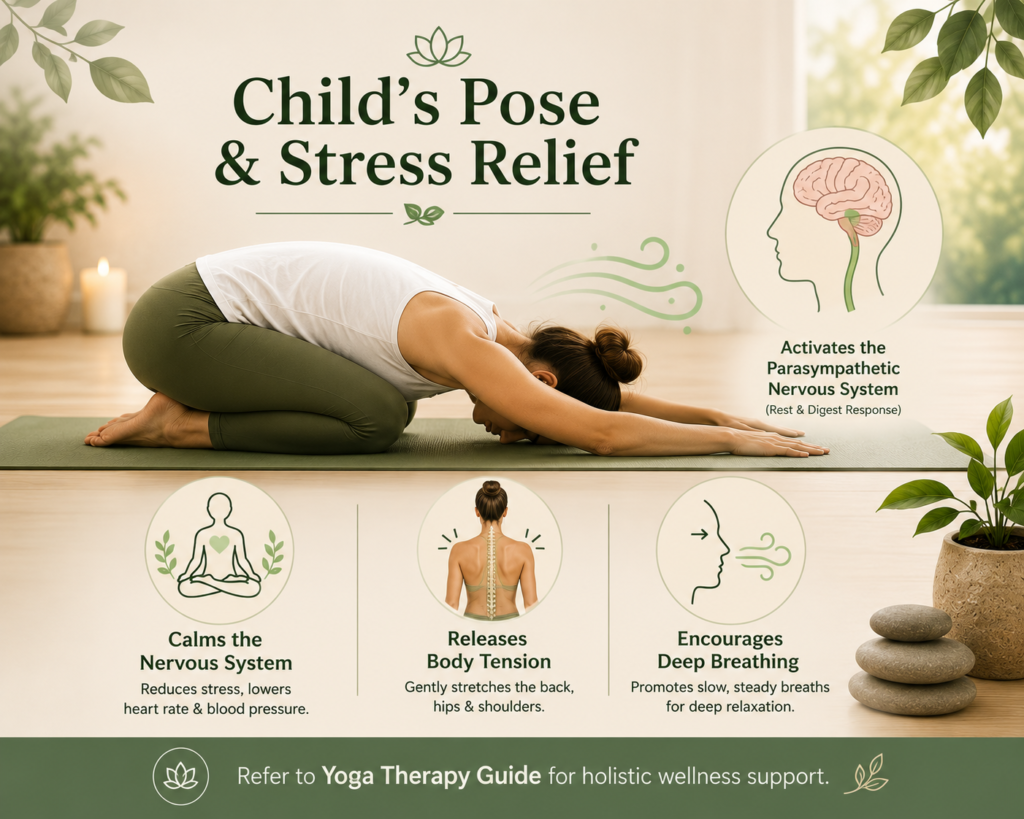
Child’s Pose is exceptionally effective at reducing stress because it directly activates the parasympathetic nervous system (PNS), often referred to as the “rest and digest” system. This activation counters the body’s “fight or flight” response mediated by the sympathetic nervous system. By gently compressing the abdomen and encouraging deep, slow breaths, Child’s Pose signals to the brain that it’s safe to relax, lowering heart rate and blood pressure. Research from the National Institutes of Health (NIH) on yoga therapy efficacy supports the role of yoga in modulating the autonomic nervous system Mayo Clinic Yoga.
Physical Relaxation Response
The physical posture of Child’s Pose promotes profound relaxation. The gentle forward bend allows the muscles of the back and hips to release tension. Resting the forehead on the floor or a cushion can also soothe the nervous system. This passive stretching and supported stillness encourage the release of physical stress held within the body, contributing to an overall sense of calm.
Why This Pose Works Better Than Others
While many yoga poses offer stress relief, Child’s Pose stands out due to its inherent accessibility and its focus on surrender. Unlike more dynamic poses, Balasana requires minimal effort and encourages a natural inward focus. This makes it an ideal choice for beginners or during moments of acute stress when energy levels are low. Its simplicity allows for sustained practice, deepening the relaxation response. For a broader overview of effective postures, explore our article on Best Yoga Poses for Stress Relief: Science-Backed Sequences for Immediate Calm.
Key Benefits of Child’s Pose for Stress and Anxiety
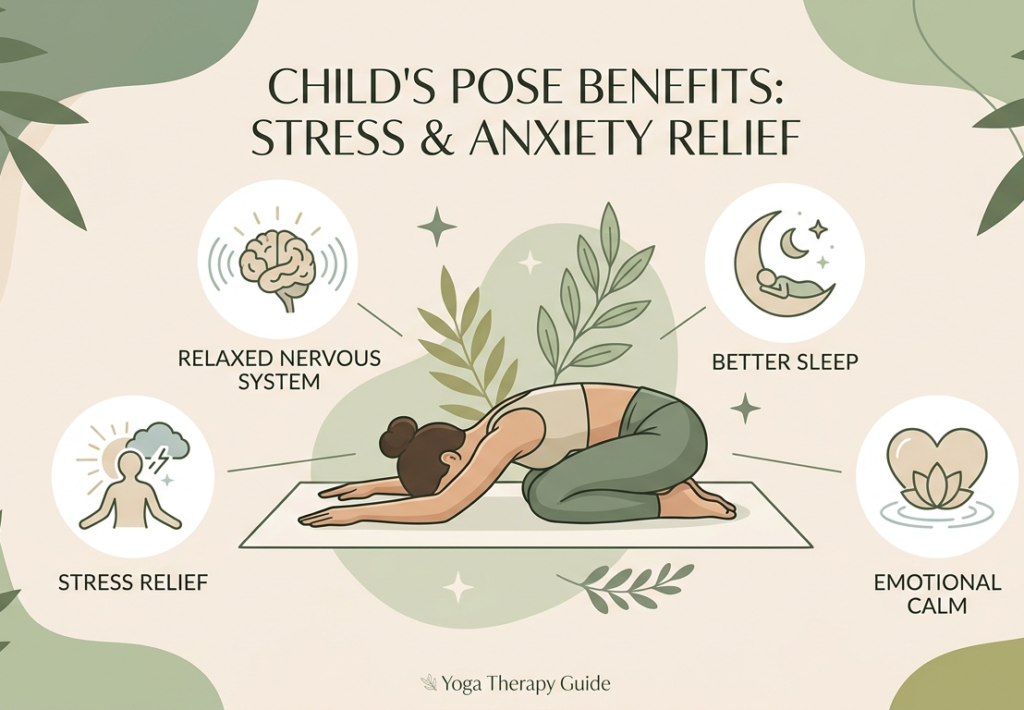
Mental Clarity and Emotional Calm
Child’s pose is renowned for its ability to quiet a racing mind. By gently folding inward, you create a sense of sanctuary, allowing anxious thoughts to dissipate. This pose encourages introspection without judgment, fostering emotional release. Healthline on emotional release in yoga highlights how such practices can significantly reduce feelings of overwhelm Healthline.
Physical Tension Release
The gentle stretch in Child’s Pose helps to release accumulated tension in the back, hips, and shoulders – common areas where stress manifests physically. This passive relaxation can alleviate muscular tightness and promote a sense of physical ease.
Improved Sleep Quality
Practicing Child’s Pose before bed can signal to your body that it’s time to wind down. Its calming effect on the nervous system helps prepare you for restful sleep, combating the insomnia often associated with stress and anxiety.
Grounding and Present-Moment Awareness
The grounded nature of Child’s Pose, with your forehead resting and body curled, encourages a return to the present moment. This can be incredibly helpful when dealing with racing thoughts or worries about the future. It’s a powerful tool in.
Child’s Pose and Emotional Release: Why It Can Bring Up Tears
Understanding Emotional Discharge in Yoga
Many practitioners are surprised to find themselves crying in child’s pose — sometimes without an obvious reason. This phenomenon, known as emotional discharge, occurs because the body stores tension and unprocessed feelings in the muscles and connective tissues. When a restorative pose creates safety and stillness, that stored energy can surface. This is not a sign that something is wrong; it is often a sign the practice is working.
Why Tears Happen in Restorative Poses
The forward-folding, inward position of Balasana activates the parasympathetic nervous system, signaling the brain that it is safe to release guarded emotions. WebMD on anxiety management techniques WebMD notes that controlled relaxation responses can unlock feelings that stress-driven alertness suppresses during daily life.
Is This Normal and Healthy?
Absolutely. Occasional emotional release during yoga is widely considered a healthy part of stress processing. It is not the same as a mental health crisis. However, if overwhelming emotions arise frequently or feel unmanageable, speaking with a licensed therapist is a wise step. For broader context, explore our guide on.
How to Process Emotions Safely
- Stay with the breath: Slow, steady breathing anchors you when feelings intensify.
- Avoid judgment: Observe the emotion without labeling it as bad or embarrassing.
- Give yourself time: Rest in the pose a little longer, or transition slowly to seated.
- Journal afterward: Brief notes can help you understand recurring emotional patterns.
Mindful Tension Release: Where to Hold and How to Let Go
Mindful Tension Release: Where to Hold and How to Let Go
Child’s Pose is a powerful tool for releasing physical and emotional tension. Often, we hold stress in specific areas without realizing it. Pay attention to common tension hotspots like your shoulders, neck, and hips. As you settle into Balasana, consciously scan your body for tightness. A great way to begin releasing this is through a progressive relaxation technique: gently tense and then release each muscle group, starting from your toes and moving upwards. This helps you become more aware of where you’re holding tension and how it feels to let it go.
Progressive Relaxation Technique
A progressive relaxation technique can enhance your experience of Child’s Pose. Start by gently clenching your toes for a few seconds, then consciously release them, noticing the difference. Work your way up your body, tensing and releasing your calves, thighs, glutes, abdomen, arms, and shoulders. This practice cultivates a deeper body awareness, making it easier to identify and release residual tension.
Breathing Into Tension
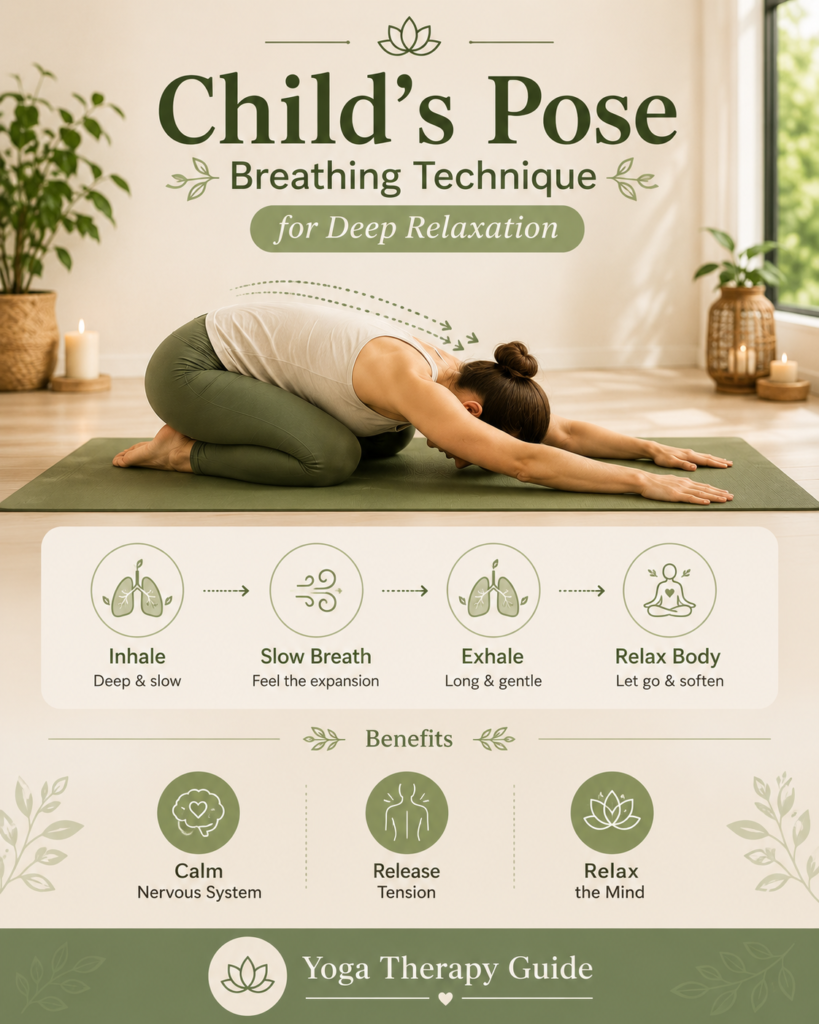
Focus on your breath as a guide. When you identify a tight spot, imagine your breath flowing directly into that area. With each exhale, visualize the tension softening and melting away. Don’t force the release; allow it to happen naturally. This mindful breathing approach is a cornerstone of many effective anxiety management strategies.
Releasing Stored Emotions
Sometimes, physical tension is linked to stored emotions. As you relax in Child’s Pose, you might feel a wave of emotions surface. Allow these feelings to pass through without judgment. Your breath is your anchor. Simply observe what arises, breathe into it, and let it go with the exhale. This can be a profound part of the healing process.
When Child’s Pose Doesn’t Feel Restful: Troubleshooting Guide
Child’s pose is widely praised for its calming effects, but it doesn’t always feel comfortable straight away. These practical fixes can make a real difference.
Discomfort in the Knees or Ankles
Place a folded blanket between your thighs and calves to reduce knee compression, or roll a small towel under your ankles. If knee pain persists, consult a physiotherapist before continuing.
Neck and Shoulder Strain
Rest your forehead on stacked fists or a yoga block rather than the floor. For extended arms, try bringing them alongside your body instead — this significantly reduces shoulder load.
Feeling Anxious Instead of Calm
Face-down positions can feel claustrophobic for some people. Try widening your knees further, or explore seated forward folds as an alternative. Our guide on offers additional grounding strategies worth pairing with breathwork.
Not Feeling Any Effect
Hold the pose longer — at least 60 to 90 seconds — and focus on deliberately slowing your exhale. The nervous system response takes time; rushing undermines the benefit entirely.
Child’s Pose Variations and Modifications
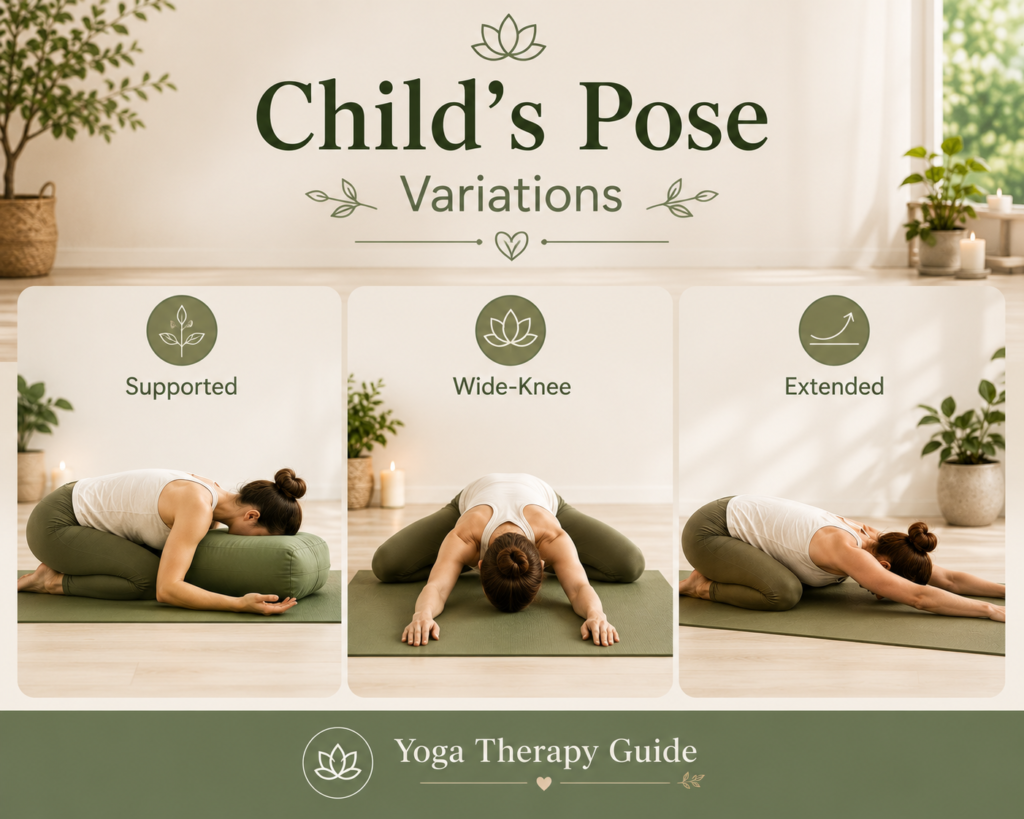
Child’s Pose Variations and Modifications
Child’s Pose is wonderfully adaptable. For those needing extra support, a bolster or folded blankets under the torso or between the thighs and calves can enhance comfort. A quality Yoga Props Bundle (Blocks, Bolster, Strap) can make these supported variations accessible for all body types, ensuring you can find deep relaxation. If you experience knee discomfort, try placing a rolled blanket between your calves and hamstrings. For a variation that opens the hips and inner thighs, try Wide-Knee Child’s Pose, simply widening your knees to the edges of your mat while keeping the big toes touching.
To deepen the stretch along the spine and shoulders, opt for Extended Child’s Pose by reaching your arms forward, palms flat on the mat. If you’re looking for a gentle hip opener and quad stretch, explore One-Legged Child’s Pose by extending one leg straight back while keeping the other bent. These modifications ensure that everyone, regardless of flexibility or physical limitations, can experience the calming benefits of this restorative posture, contributing to your overall anxiety management strategy.
Beginner Tips for Maximum Stress Relief
Best Time to Practice
Child’s Pose works well at any point in the day, but it’s especially effective in the morning before stress builds, during a midday reset, or in the evening to signal your nervous system that it’s time to wind down. Even a brief pause during a tense workday can shift your physiological state meaningfully.
Duration and Frequency
Start with just 1–3 minutes per session. Consistency matters more than duration — daily practice, even briefly, builds a stronger relaxation response over time. For deeper stress relief, gradually extend holds to 5 minutes as your body becomes comfortable.
Creating a Calming Environment
Dim lighting, a quiet space, and a supportive surface make a real difference. A folded blanket under your knees or forehead removes physical distractions so your mind can genuinely settle. Pairing Child’s Pose with slow, intentional breathing amplifies its calming effect considerably.
Combining with Other Practices
Child’s Pose integrates naturally into a broader stress-management routine. For structured guidance, a meditation app like Calm, Insight Timer, or Headspace can offer guided sessions that pair breathwork and mindfulness directly with restorative poses, extending your practice beyond self-directed work. You might also explore best yoga poses for stress relief to build a complete sequence around Balasana.
About the Author

Pratham Bavkar — Wellness Researcher · Founder, Yoga Therapy Guide
Pratham Bavkar is the founder of Yoga Therapy Guide and a wellness researcher focused on yoga therapy, mobility, and posture health. He creates evidence-based, beginner-friendly guides on yoga poses, stretching routines, and natural wellness practices to help readers improve daily health naturally.