Introduction: Why Daily Meditation Matters
More than 500 million people worldwide now practice meditation regularly — and that number is accelerating as science catches up with what ancient traditions have long claimed. If you’ve ever wondered whether a few quiet minutes each day could genuinely change your brain, your mood, or your health, the answer is a resounding yes. The research is no longer preliminary; it’s compelling.
The Growing Science Behind Meditation
Institutions at the highest levels of medicine are paying attention. Harvard Health: Meditation for anxiety and depression Harvard Health highlights how consistent practice produces measurable changes in stress hormones, emotional regulation, and even brain structure. These aren’t placebo effects — they’re documented, reproducible results that hold across age groups and lifestyles.
What This Article Covers
This guide bridges the gap between peer-reviewed evidence and your actual morning routine. Whether you have five minutes or thirty, you’ll find specific, science-backed benefits mapped to realistic time commitments — so you know exactly what to expect and when. If you’re completely new to the practice, our guide on meditation techniques for beginners is a natural companion to what follows.
Mental Health Benefits of Daily Meditation
Stress Reduction and Cortisol Management
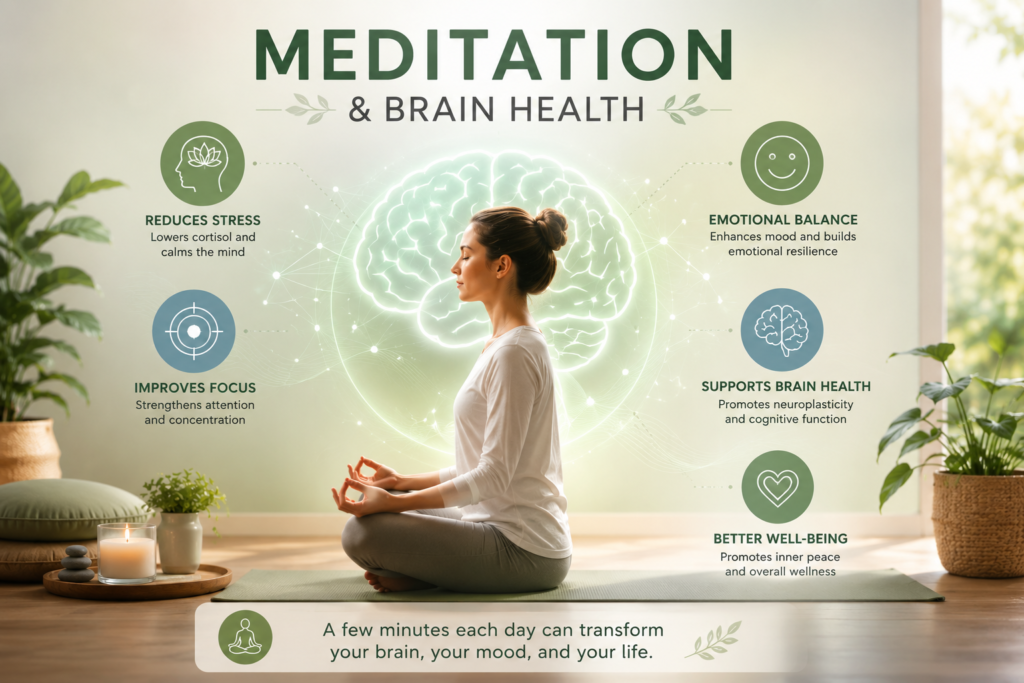
One of the most well-documented daily meditation routine benefits is its direct impact on the body’s stress response. Regular practice measurably lowers cortisol — the primary stress hormone — by calming the hypothalamic-pituitary-adrenal (HPA) axis. Even short-term practitioners report feeling less reactive within the first two weeks, while consistent meditators over six months or more show structural changes in the amygdala, the brain’s threat-detection center. Brain imaging studies on meditation effects from Johns Hopkins Medicine Johns Hopkins Medicine confirm that mindfulness practice physically reshapes stress-processing regions over time.
Enhanced Focus and Attention Span
Meditation trains the prefrontal cortex — the region governing sustained attention — much like resistance training builds muscle. Beginners often notice improved concentration after just five to ten minutes of daily practice, particularly with focused-attention techniques. Over weeks and months, this translates into longer periods of deep work, reduced mind-wandering, and faster cognitive recovery after distraction. If you’re just starting out, exploring meditation techniques for beginners can help you choose an approach that builds this mental clarity progressively.
Emotional Resilience and Mood Regulation
Daily meditation strengthens the connection between the prefrontal cortex and the limbic system, improving the brain’s ability to regulate emotional responses rather than react impulsively. Practitioners typically report greater patience and emotional stability within three to four weeks. Long-term meditators demonstrate a measurably higher baseline mood and recover more quickly from negative emotional events — a quality researchers call emotional resilience.
Anxiety and Depression Relief
Mindfulness-based practices have shown clinically meaningful reductions in anxiety and depressive symptoms. The mechanism involves interrupting repetitive negative thought cycles — rumination — by anchoring attention to present-moment experience. Short-term results include reduced worry intensity; long-term practice can produce lasting shifts in cognitive patterns. Always consult a qualified mental health professional if symptoms are severe, as meditation works best as a complement to, not a replacement for, evidence-based treatment.
Physical Health Benefits You May Not Know About
Sleep Quality Improvement
While often associated with mental calm, daily meditation routines offer tangible physical benefits. One significant area is sleep quality. Many people struggle with falling asleep or staying asleep, and studies suggest meditation can help regulate sleep patterns. By calming the mind and reducing the racing thoughts that often interfere with rest, meditation prepares the body for deeper, more restorative sleep. Research highlighted by the Mayo Clinic Penn Medicine supports the connection between meditation and improved sleep outcomes.
Blood Pressure and Heart Health
The impact of meditation on cardiovascular health is a growing area of research. Regular practice has been shown to contribute to lower blood pressure. For instance, some studies indicate reductions of 3-5 mmHg in systolic blood pressure, a measurable outcome that can significantly impact long-term heart health. By activating the body’s relaxation response, meditation counteracts the effects of chronic stress, which is a known risk factor for hypertension and other cardiovascular issues. The National Institutes of Health’s National Center for Complementary and Integrative Health (NCCIH) provides extensive information on these physiological effects American Osteopathic Association.
Pain Management and Inflammation
Beyond stress reduction, meditation may also play a role in managing chronic pain and reducing inflammation. By altering the brain’s perception of pain signals and promoting a state of relaxation, individuals may find relief from conditions like lower back pain or arthritis. While not a cure, it can be a valuable complementary approach. The mind-body connection fostered through meditation can also influence inflammatory responses, though more research is needed in this specific area.
Immune Function and Longevity
Emerging research suggests a link between consistent meditation practice and enhanced immune function. By reducing stress hormones like cortisol, which can suppress immune responses, meditation may help the body better fight off illness. While the direct impact on longevity is complex and influenced by many factors, improved health markers associated with reduced stress and better sleep could contribute to a longer, healthier life.
Hidden Benefits: Creativity and Problem-Solving
While the physical benefits are substantial, less discussed advantages include boosts to creativity and problem-solving abilities. A calmer, more focused mind is often more adept at making novel connections and approaching challenges from different angles. By quieting mental “noise,” meditation can create the mental space necessary for innovative thinking and clearer decision-making.
Time Investment vs. Real Benefits: 5 Minutes vs. 30 Minutes
One of the biggest misconceptions about meditation is that meaningful benefits require lengthy, dedicated sessions. The reality is more encouraging — even brief, consistent practice can produce measurable changes in how you think and feel.
Can 5 Minutes of Daily Meditation Work?
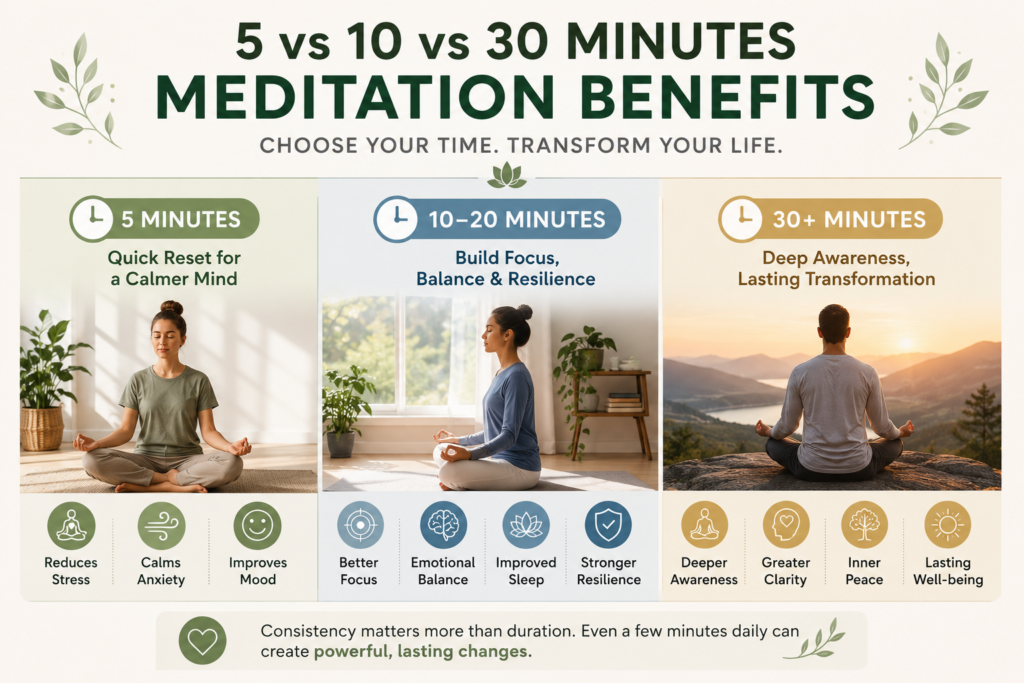
Short answer: yes. Research compiled by the NIH NCCIH: Clinical trials on meditation outcomes NIH NCCIH supports that even brief mindfulness sessions can reduce perceived stress and improve emotional regulation when practiced consistently. Five minutes of focused breathing or body-scan meditation each morning is enough to begin rewiring habitual stress responses. The key word is daily — frequency matters more than duration at the beginner stage. Think of it like physical exercise: a five-minute walk every day outperforms a two-hour hike once a month.
The Sweet Spot: 10-20 Minutes Daily
Most practitioners and researchers point to 10-20 minutes as the range where benefits become more robust and reliable. At this duration, you have enough time to move past initial mental restlessness and settle into genuine focus. Improvements in attention span, sleep quality, and anxiety management tend to become noticeable within a few weeks at this level. If you’re just starting out, our guide on meditation techniques for beginners can help you structure these sessions effectively.
Advanced Benefits: 30+ Minutes
Longer sessions — 30 minutes or more — are associated with deeper cognitive shifts, including enhanced self-awareness and more durable changes in emotional reactivity. These benefits are real, but they aren’t necessary for most people to see meaningful daily meditation routine benefits. Reserve longer sessions for when shorter practice feels genuinely comfortable and sustainable.
Building a Daily Meditation Routine: Practical Integration
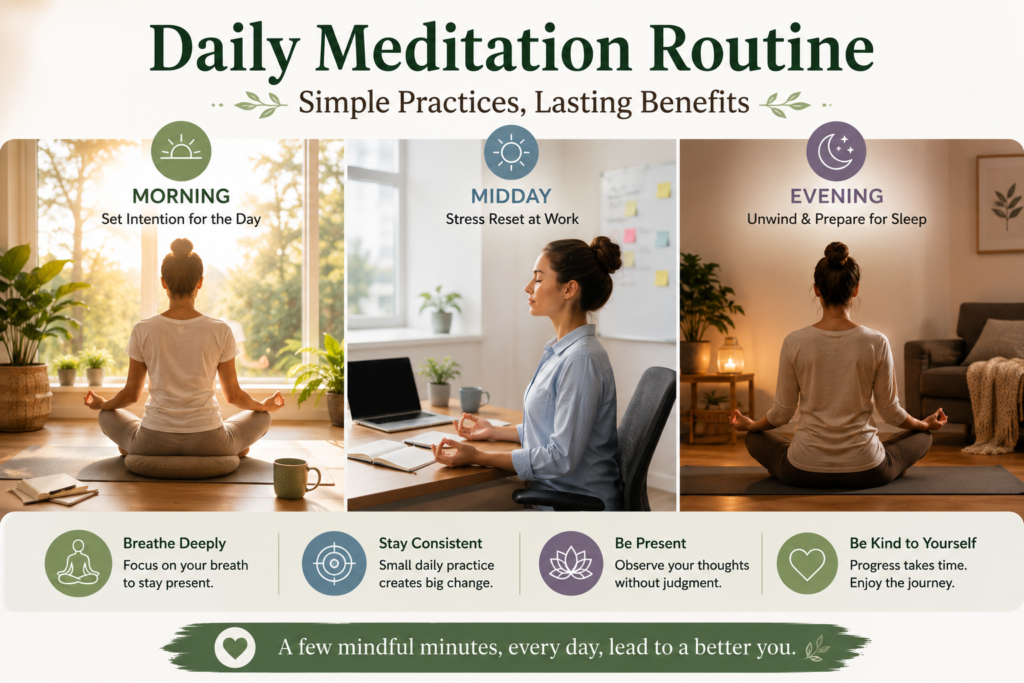
Building a Daily Meditation Routine: Practical Integration
Integrating a daily meditation routine into your life doesn’t require drastic changes. The key is consistency, even if it’s just for a few minutes. Science-backed daily meditation routine benefits can be experienced throughout your day with strategic timing.
Morning Meditation: Setting Intention for the Day
Start your day with 5-10 minutes of meditation. This practice helps clear your mind, reduce morning anxiety, and set a positive intention. Consider a simple mindfulness exercise, focusing on your breath as you wake. This early practice primes your brain for the day ahead.
Midday Meditation: Stress Reset During Work
A midday 5-minute reset can be transformative. If you’re feeling overwhelmed by work, take a short break to focus on your breath or a guided body scan. This can help you return to tasks with renewed focus and a calmer perspective. For longer sessions, a comfortable meditation cushion or yoga mat can enhance your practice by providing ergonomic support.
Evening Meditation: Sleep Preparation
Before bed, dedicate 10-15 minutes to unwinding. Techniques like a body scan meditation can release physical tension, while a focus on calm breathing signals to your body that it’s time to rest. This can lead to improved sleep quality, a crucial component of overall well-being. For more on relaxation techniques, explore child’s pose for stress relief.
Choosing Your Meditation Technique: Mindfulness vs. Transcendental vs. Body Scan
The “best” technique is the one you’ll stick with. Mindfulness meditation involves paying attention to the present moment without judgment. Transcendental Meditation (TM) uses a mantra to achieve a state of deep rest. A body scan involves systematically bringing awareness to different parts of your body. Research from Penn Medicine: Neuroscience of meditation and neuroplasticity Mayo Clinic highlights how these practices can positively impact brain function and emotional regulation, regardless of the specific method chosen.
Common Barriers and How to Overcome Them

“I Don’t Have Time” – The Reality Check
The most common hurdle is the feeling of not having enough time. However, even 5 minutes of daily meditation can yield significant benefits. The key is consistency, not duration. Think of it like brushing your teeth – a short, regular practice is more effective than infrequent long sessions. The American Osteopathic Association highlights the holistic health benefits Harvard Health that can be achieved, even with minimal time investment.
Racing Thoughts and Frustration
Many beginners become frustrated by persistent, racing thoughts. It’s important to understand that the goal of meditation isn’t to completely empty your mind. Instead, it’s about observing your thoughts without judgment and gently bringing your focus back to your breath or a chosen anchor. This practice of returning your attention is, in itself, the meditation. If you’re looking for a gentler introduction, consider exploring simple breathing exercises or even techniques found in meditation techniques for beginners.
Staying Consistent Beyond Week Two
The initial enthusiasm often wanes after the first couple of weeks. To combat this, try varying your meditation techniques or finding a meditation buddy. Setting realistic goals and tracking your progress can also be motivating. Remember why you started and focus on the cumulative benefits, not just immediate results.
Meditation Misconceptions That Hold People Back
Beyond the time constraint and racing thoughts, misconceptions about needing a perfectly quiet space or specific spiritual beliefs can deter people. Meditation is a versatile practice accessible to everyone, regardless of their background or environment. You don’t need to sit cross-legged on a mountaintop; a comfortable chair or even a short walk can be a form of meditation.
How Meditation Benefits Compound Over Time
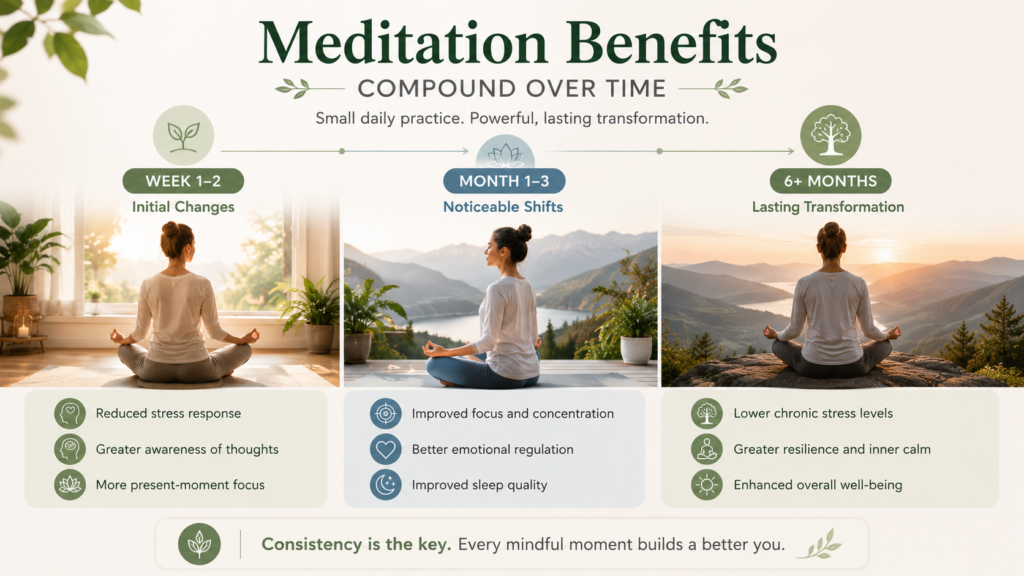
Week 1-2: Initial Changes
During the first couple of weeks, you might notice subtle shifts. Many beginners report a slight reduction in immediate stress responses and a greater awareness of their thoughts without judgment. This is often the first sign that your brain is beginning to adapt. While not dramatic, these initial changes are crucial building blocks for deeper benefits.
Month 1-3: Noticeable Shifts
As you establish a consistent practice, typically within the first month or three, the benefits become more apparent. You may experience improved focus, a calmer demeanor, and better emotional regulation. Research into neuroplasticity shows that regular meditation can actually alter brain structure and function, leading to these tangible improvements Johns Hopkins Medicine. This is when meditation starts feeling less like a chore and more like a natural part of your day.
6+ Months: Lasting Transformation
With continued practice over six months and beyond, meditation can lead to profound and lasting transformations. Chronic stress levels can decrease, resilience to life’s challenges often increases, and a general sense of well-being can become your baseline. This sustained practice supports the development of a more mindful and centered life, impacting everything from relationships to decision-making. For those seeking to integrate mindfulness into physical activity, exploring practices like those found in yoga for thyroid problems can further enhance overall well-being.
Conclusion: Your Next Step
Key Takeaways
The science is clear: a daily meditation routine delivers measurable benefits for both mind and body — reduced stress, better sleep, sharper focus, and improved emotional resilience. Crucially, consistency matters far more than duration. Five focused minutes every day outperforms an occasional hour-long session. Whether you’re managing anxiety, improving concentration, or simply seeking more calm, the evidence supports starting small and building gradually.
Starting Your Practice Today
You don’t need special equipment, a quiet retreat, or prior experience. Choose one time, commit to just five minutes, and treat it like any other non-negotiable appointment. If you’re unsure where to begin, our guide on meditation techniques for beginners walks you through finding the right style for your personality and lifestyle. The only step that truly matters is the first one — take it today.
About the Author

Pratham Bavkar — Wellness Researcher · Founder, Yoga Therapy Guide
Pratham Bavkar is the founder of Yoga Therapy Guide and a wellness researcher focused on yoga therapy, mobility, and posture health. He creates evidence-based, beginner-friendly guides on yoga poses, stretching routines, and natural wellness practices to help readers improve daily health naturally.