What is Yoga?
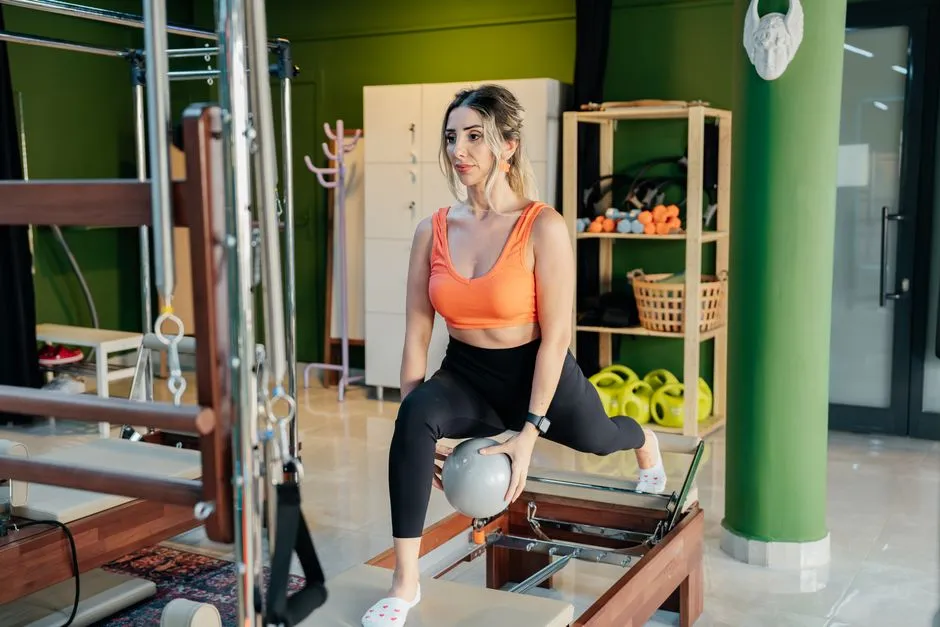
Yoga is one of the world’s oldest mind-body practices, originating in ancient India more than 5,000 years ago. Far more than a workout, it is a complete philosophical system designed to unite the mind, body, and spirit.
Origins and Philosophy
Rooted in Hindu, Buddhist, and Jain traditions, yoga was first codified in Patanjali’s Yoga Sutras around 400 CE. The word “yoga” itself derives from the Sanskrit root yuj, meaning “to yoke” or “to unite.” Modern Western practice draws primarily from Hatha yoga, which emphasizes physical postures (asanas), breathwork (pranayama), and meditation as interconnected tools for well-being.
Core Principles and Practice
A typical yoga session weaves together physical postures, conscious breathing, and mindful awareness. This combination produces measurable benefits well beyond flexibility — NIH NCCIH studies on yoga efficacy for anxiety and depression NIH NCCIH confirm significant improvements in mental health outcomes. Styles range from gentle restorative classes to vigorous Vinyasa flows, making yoga accessible across all fitness levels. If stress relief is a primary goal, explore our guide on best yoga poses for stress relief for science-backed sequences you can start today.
What is Pilates?
History and Development
Pilates, originally called “Contrology,” was developed by German physical trainer Joseph Pilates in the early 20th century. He created this system of exercises to rehabilitate soldiers returning from World War I, focusing on improving physical strength, posture, and flexibility. The practice gained significant traction in the United States when Joseph Pilates opened his first studio in New York City in the 1920s, attracting dancers and athletes who praised its effectiveness in building a strong, balanced physique.
Core Principles and Practice
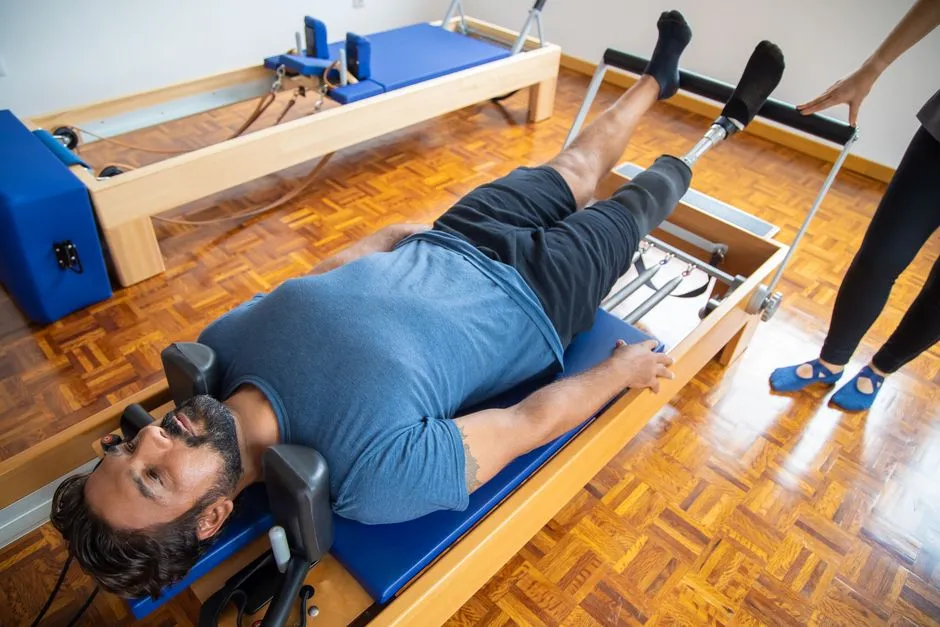
Pilates is a low-impact exercise system designed to build core strength, flexibility, and muscular endurance. It emphasizes precise, controlled movements originating from the core “powerhouse”—the abdomen, lower back, hips, and buttocks. Unlike yoga, which often incorporates spiritual elements and a wider variety of poses, Pilates focuses intensely on body mechanics and alignment. Key principles include concentration, control, centering, flow, precision, and breath. While it can be performed on a mat, many find specialized equipment like the Reformer enhances the experience, offering resistance and support for a deeper workout. Mayo Clinic guidelines on pilates for core strength and rehabilitation highlight its benefits for injury recovery and overall physical conditioning Mayo Clinic.
Yoga vs. Pilates: Key Differences
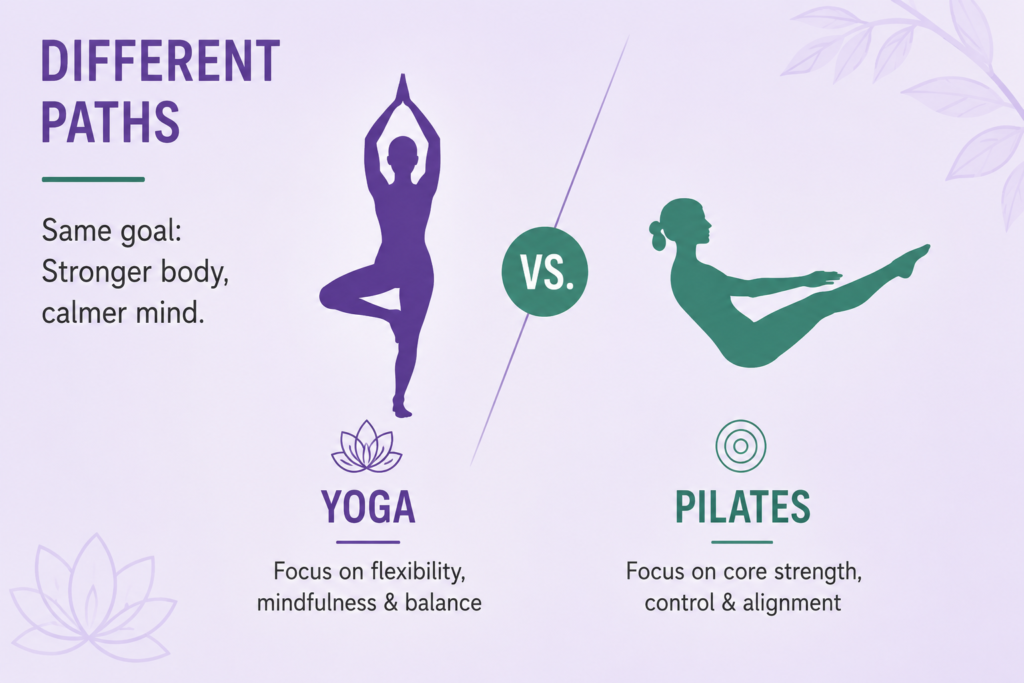
While yoga and Pilates share a commitment to mindful movement, their underlying philosophies, physical demands, and practical outcomes differ in meaningful ways. Understanding these distinctions helps you choose the practice — or combination — that genuinely serves your goals.
Mind-Body Connection: Different Pathways
Both disciplines emphasize the link between mental focus and physical movement, but they arrive there differently. Yoga cultivates awareness through breath-synchronized postures and inward attention, training the nervous system to shift between effort and ease. Pilates, by contrast, uses precise muscular cues and movement sequencing to build what Joseph Pilates called “contrology” — conscious control of the body. The mental engagement in Pilates is largely biomechanical, while yoga’s tends to be contemplative.
Muscle Groups Targeted
Pilates places a strong, deliberate emphasis on the deep stabilizing muscles of the core — the transverse abdominis, pelvic floor, and multifidus — making it particularly effective for spinal support and postural correction. Yoga targets a broader, more varied range of muscle groups depending on the style practiced: standing poses challenge the legs and hips, inversions recruit the shoulders and upper back, and balancing postures demand full-body integration. PubMed research on yoga’s cardiovascular benefits PubMed also highlights that dynamic styles like Vinyasa can meaningfully elevate heart rate, adding an aerobic dimension Pilates rarely matches.
Spiritual and Meditative Aspects
Yoga is rooted in an ancient philosophical tradition that includes ethical guidelines, breathwork (pranayama), and meditation — dimensions that extend well beyond physical fitness. For those managing stress or anxiety, this holistic framework can be transformative. See our guide on Best Yoga Poses for Stress Relief: Science-Backed Sequences for Immediate Calm for practical applications. Pilates carries no spiritual lineage; it is a secular, rehabilitation-influenced method focused entirely on physical performance.
Injury Prevention and Exacerbation Profiles
Pilates is frequently recommended by physical therapists for lower back pain and post-surgical rehabilitation because its controlled, low-impact nature minimizes joint stress. Yoga can also support injury recovery, but certain styles — particularly hot yoga or aggressive backbend-heavy classes — carry a higher risk of overstretching ligaments or aggravating existing conditions. Always consult a qualified healthcare professional before beginning either practice if you have a pre-existing injury or chronic condition.
Benefits of Yoga
Physical Benefits
Yoga offers a holistic approach to physical well-being. Beyond the common understanding of stretching, yoga poses (asanas) build strength, improve balance, and enhance cardiovascular health. Regular practice can lead to better posture and can be particularly beneficial for managing conditions like high blood pressure Harvard Health. The mindful movement and breathwork also contribute to improved circulation and can even aid in managing chronic diseases Mayo Clinic Yoga.
Mental Health Impact: Beyond Stress Reduction
The mental health benefits of yoga extend far beyond simple stress relief. A Harvard Health analysis of mind-body practices and mental health outcomes highlights yoga’s significant impact on mood regulation. It’s found to be effective in managing symptoms of anxiety and depression Cleveland Clinic. The practice encourages introspection and mindfulness, fostering a deeper connection between mind and body, which can lead to profound emotional and even spiritual growth for practitioners.
Flexibility and Mobility Gains
One of yoga’s most celebrated benefits is its ability to dramatically improve flexibility and long-term mobility. Unlike quick stretching routines, yoga involves holding poses that gradually lengthen muscles and increase the range of motion in joints. This sustained effort helps to prevent stiffness and can be crucial in maintaining an active lifestyle as we age. For those experiencing menopausal changes, specific yoga practices can offer targeted relief and improved comfort NIH NCCIH.
Benefits of Pilates
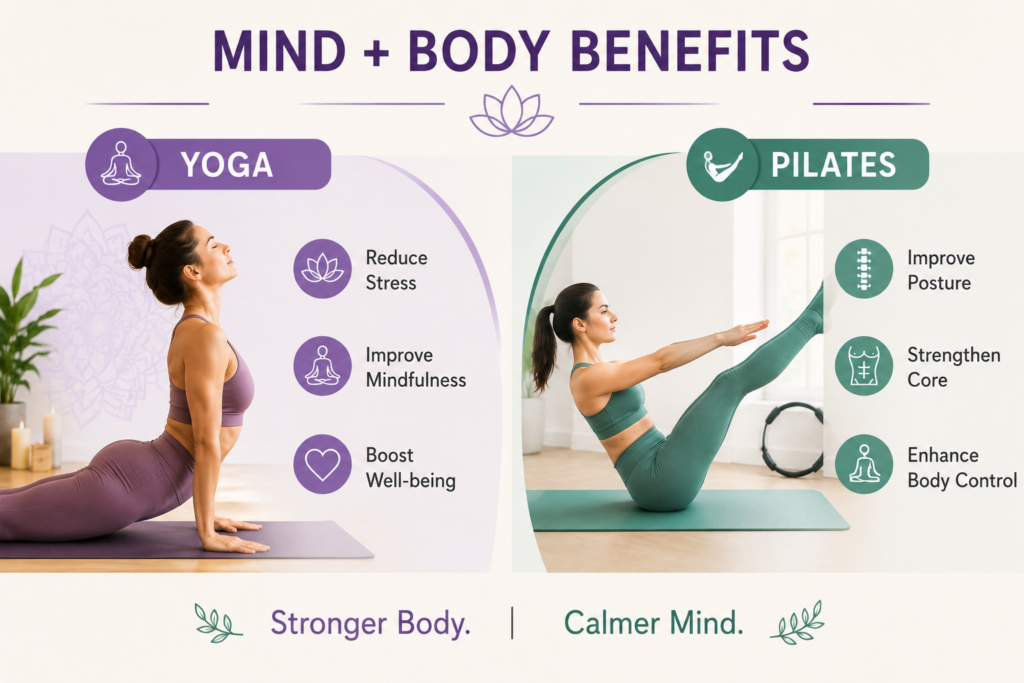
Core Strength and Postural Alignment
Pilates is built around deliberate, controlled movements that target the deep stabilizing muscles of the trunk. Unlike general fitness training, it emphasizes the precise engagement of the transverse abdominis, pelvic floor, and spinal extensors — muscles that support posture and protect the spine during everyday movement. Cleveland Clinic data on Pilates for injury prevention and posture Mayo Clinic highlights how consistent practice measurably improves spinal alignment and reduces chronic back discomfort.
Mental Health and Mindfulness
While Pilates is often seen as purely physical, its focus on breath coordination and movement precision cultivates genuine mental presence. Practitioners frequently report reduced anxiety and improved concentration, benefits that parallel those explored in our guide on Best Yoga Poses for Stress Relief: Science-Backed Sequences for Immediate Calm. The structured, methodical nature of Pilates encourages a meditative focus without formal meditation.
Rehabilitation and Injury Prevention
Pilates has a strong clinical track record in rehabilitation settings. Physical therapists regularly incorporate it for post-surgical recovery, joint instability, and chronic pain management. Its low-impact format allows gradual strength rebuilding without overloading vulnerable tissues — making it particularly valuable for those returning from injury or managing long-term musculoskeletal conditions.
Yoga vs. Pilates: Cost Comparison
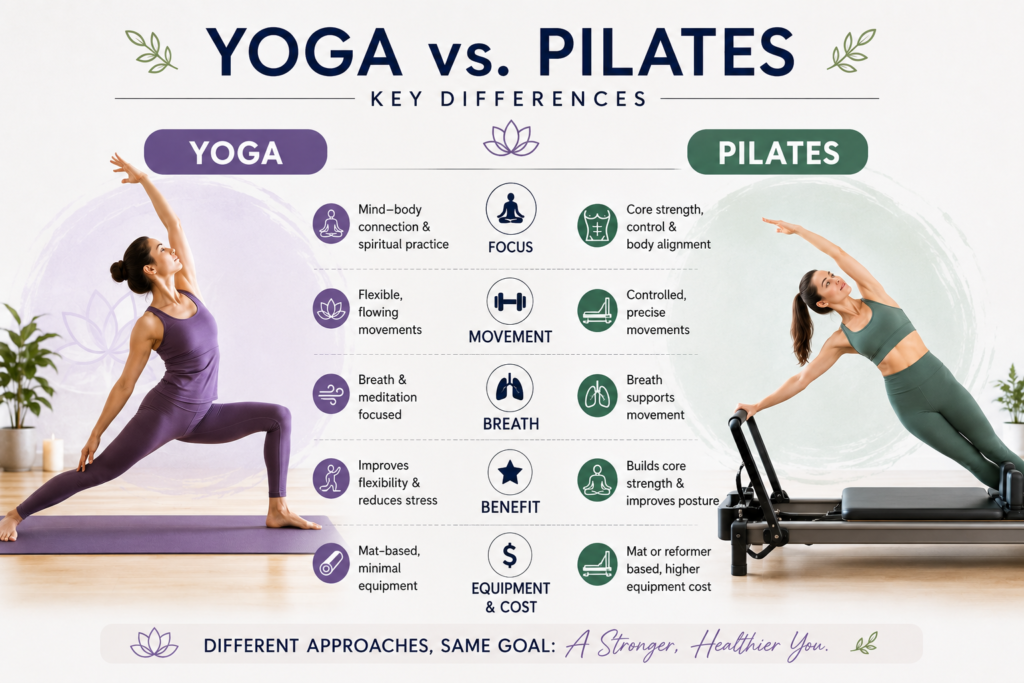
Studio Memberships and Class Pricing
Both practices carry similar studio costs, though pricing varies by location and format. Group yoga classes typically run $15–$25 per session, with monthly memberships averaging $80–$150. Pilates group reformer classes often cost more — $25–$40 per class — due to equipment maintenance. Private sessions for either discipline can reach $75–$150 per hour.
Equipment and Home Setup Costs
Yoga’s home setup is budget-friendly: a quality mat costs $30–$100, with optional blocks and straps adding minimal expense. Pilates is significantly pricier if you want reformer access at home — equipment runs $500–$3,000+. Mat-based Pilates, however, requires almost no investment beyond a mat.
Long-term Investment Analysis
Over time, yoga tends to be the more accessible option financially, especially for home practice. Pilates delivers strong value for rehabilitation or core-focused goals, but reformer dependency raises ongoing costs. If budget is a primary concern, starting with yoga — or mat Pilates — makes practical sense. Those managing stress-related conditions may find particular value in yoga’s dual physical and mental benefits; see our guide on best yoga poses for stress relief for accessible, low-cost routines.
Combining Yoga and Pilates: Synergistic Benefits
Why Combine Both Practices?
Many find that yoga and Pilates offer a powerful synergy when practiced together. Yoga excels in building flexibility, mindfulness, and stress reduction, often focusing on breathwork and longer holds. Pilates, on the other hand, is renowned for its core strengthening, precise movements, and improved posture. By integrating both, you can achieve a more comprehensive fitness regimen that addresses both mobility and stability, mental calm and physical power. For those looking to deepen their understanding and practice of both, an Online Yoga + Pilates Hybrid Course can offer structured guidance and curated routines. This approach ensures you gain the distinct benefits of each discipline while learning how they complement each other beautifully.
Sample Weekly Integration Schedule
A balanced week might look like this:
- Monday: Pilates (Core focus)
- Tuesday: Yoga (Flow & flexibility, perhaps focusing on Best Yoga Poses for Stress Relief: Science-Backed Sequences for Immediate Calm)
- Wednesday: Rest or light activity
- Thursday: Pilates (Full body)
- Friday: Yoga (Restorative or Vinyasa)
- Saturday/Sunday: Active recovery or a hybrid class
Which is Better for Me? A Goal-Based Guide
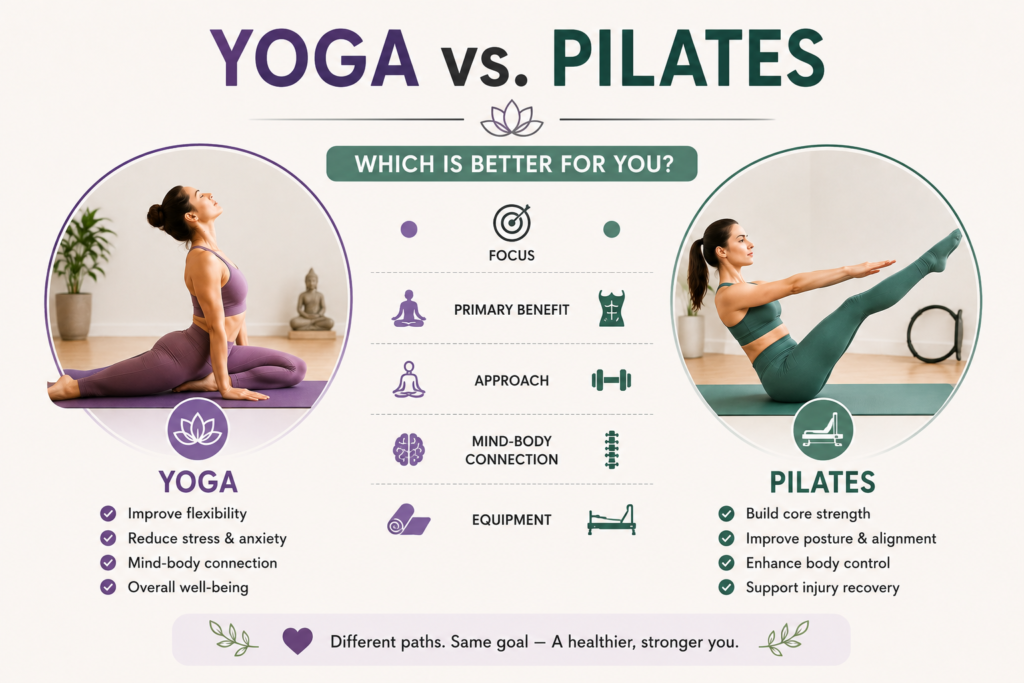
Choosing between yoga or pilates becomes much clearer when you anchor the decision to your specific goals. Here’s a practical breakdown:
For Weight Loss
Neither practice burns calories at the rate of cardio-based exercise, so neither should be your sole weight-loss strategy. That said, more vigorous yoga styles — Vinyasa, Ashtanga, hot yoga — elevate heart rate meaningfully. Pilates builds lean muscle that supports a higher resting metabolism over time. Both work best alongside a balanced diet and regular aerobic activity.
For Muscle Gain and Strength
Pilates has the edge here, particularly for core and stabilizer muscles. Yoga builds functional bodyweight strength, but if progressive resistance and muscle hypertrophy are your primary goals, supplement both with traditional strength training.
For Rehabilitation and Injury Recovery
Clinical Pilates is widely used in physiotherapy settings for spinal and joint rehabilitation. Yoga can also support recovery, though modifications are essential — always consult a qualified healthcare professional before starting either practice post-injury.
For Stress and Mental Health
Yoga holds a clear advantage, combining breathwork, mindfulness, and movement into a proven stress-reduction system. For targeted relief, see our guide on best yoga poses for stress relief. Pilates offers mental benefits too, but the meditative dimension is less central.
For Overall Fitness: Are They Enough?
For most people, neither alone covers all fitness components — particularly cardiovascular endurance. Used together, or combined with aerobic exercise, they form a genuinely well-rounded program.
Beginner’s Guide: Getting Started at Home
Essential Equipment for Yoga
Starting yoga at home is incredibly accessible. You’ll primarily need a comfortable, non-slip yoga mat to provide cushioning and grip during poses. Comfortable, breathable clothing that allows for a full range of motion is also essential. Many find that starting with online classes or guided videos is a great way to learn foundational poses and sequences. If you’re looking for ways to de-stress, consider exploring Best Yoga Poses for Stress Relief: Science-Backed Sequences for Immediate Calm.
Essential Equipment for Pilates
Pilates can be practiced on a mat or using specialized equipment. For beginners, a good quality mat is sufficient and a cost-effective starting point. If you’re considering investing in equipment, a Pilates Reformer or Mat Package offers versatility, though reformers represent a significant investment. Like yoga, comfortable clothing is key. Many find beginner Pilates mat classes online to be an excellent introduction to the core principles.
Choosing Your First Practice
The best way to decide between yoga or pilates at home is to try both! Many online platforms offer free introductory classes for both disciplines. Consider what you want to achieve: increased flexibility and stress relief might point you towards yoga, while core strength and controlled movements might be more aligned with Pilates. Don’t feel pressured to buy expensive equipment immediately; a simple mat is all you need to begin exploring either practice.
Common Myths Debunked
Myth: Pilates is Only for Women
This is a persistent myth, but Pilates was actually developed by Joseph Pilates, a man. While it’s true that many women practice Pilates, its focus on core strength, flexibility, and controlled movements offers significant benefits for athletes and individuals of all genders looking to improve physical conditioning and prevent injuries.
Myth: Yoga is Just Stretching
While flexibility is a key component, yoga is far more comprehensive. It involves physical postures (asanas), breathing techniques (pranayama), and meditation or relaxation. The mind-body connection fostered in yoga can lead to stress reduction Best Yoga Poses for Stress Relief: Science-Backed Sequences for Immediate Calm, improved focus, and enhanced overall well-being.
Myth: You Must Choose One, Not Both
This couldn’t be further from the truth! Many people find immense value in practicing both yoga and Pilates. They can complement each other beautifully, with Pilates building core strength and yoga enhancing flexibility and mindfulness. Exploring both might reveal a more well-rounded fitness routine than sticking to just one.
Conclusion and Next Steps
Choosing between yoga or pilates doesn’t have to be complicated. Yoga excels at building flexibility, reducing stress, and fostering mind-body connection, while Pilates delivers targeted core strength and postural precision. Neither is universally superior — the right choice depends entirely on your goals, lifestyle, and what you’ll actually enjoy doing consistently.
If stress relief is your primary concern, yoga may offer the most immediate impact. For more on that, explore our guide on best yoga poses for stress relief. And remember: combining both practices often produces the best long-term results.
Your next step is simple — try one class of each this week, stay curious, and let your body guide the decision.
About the Author

Pratham Bavkar — Wellness Researcher · Founder, Yoga Therapy Guide
Pratham Bavkar is the founder of Yoga Therapy Guide and a wellness researcher focused on yoga therapy, mobility, and posture health. He creates evidence-based, beginner-friendly guides on yoga poses, stretching routines, and natural wellness practices to help readers improve daily health naturally.