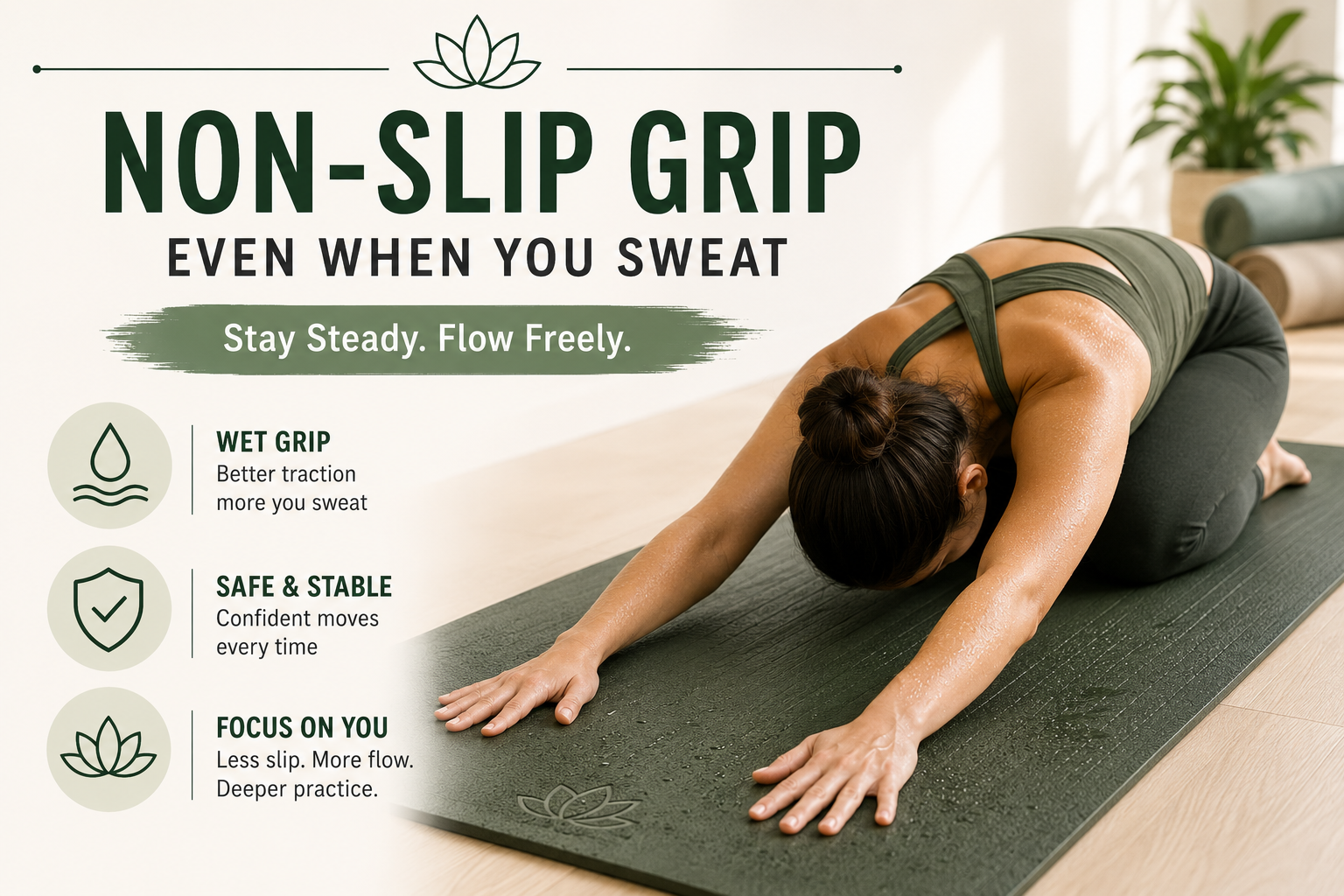
Why Sweaty Hands Make Yoga Mat Grip So Challenging
Not all grip problems are created equal. When sweat enters the equation, the physics of your yoga practice shift in ways that go far beyond simply having “wet hands.” Understanding the mechanics behind mat slippage can help you make a smarter purchasing decision — and keep you safer in every pose.
The Science of Sweat and Mat Slippage
Human sweat is a complex mixture of water, sodium, lactic acid, and trace minerals. When this solution coats your palms, it acts as a lubricant rather than an adhesive, dramatically reducing the coefficient of friction between skin and mat surface. The Mayo Clinic NIH NCCIH notes that physical activity rapidly accelerates sweat output, meaning even a moderate flow session can quickly overwhelm a standard mat’s grip capacity.
How Mat Materials React to Moisture
Standard PVC mats have a closed-cell surface that repels moisture, causing sweat to pool and create a literal slip-and-slide effect. Natural rubber and polyurethane-topped mats, by contrast, feature micro-porous or textured surfaces that absorb and channel moisture, maintaining friction even as intensity builds. This material difference is the single biggest factor separating a safe practice from a dangerous one. For context on how intensity levels affect your overall practice needs, see our guide on Vinyasa Yoga: A Complete Guide to Flow, Benefits, and Getting Started.
The Role of Practice Intensity and Heat
Hot yoga and vigorous vinyasa amplify the problem exponentially. Elevated room temperatures increase sweat volume while simultaneously warming the mat surface, which softens certain materials and further reduces grip. The result is a compounding effect — more sweat, less friction, higher risk — that makes choosing the right mat texture and material absolutely critical for sweaty-handed practitioners.
Best Non-Slip Yoga Mats for Sweaty Hands: Top Recommendations
Material Comparison: PU Rubber vs. Natural Rubber vs. Cork vs. TPE
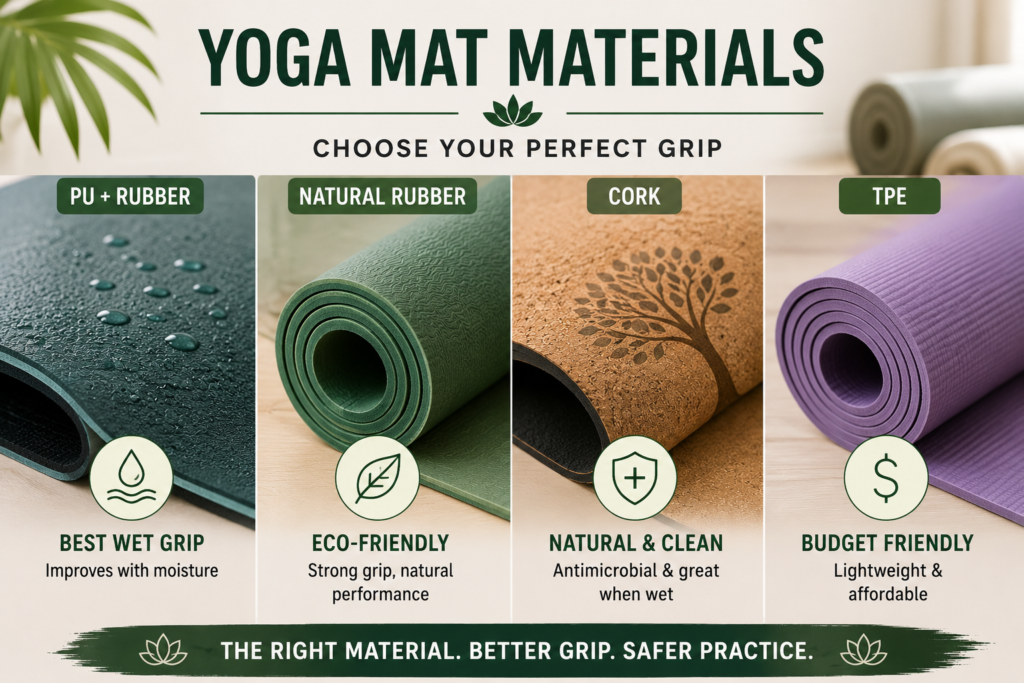
The surface material is the single biggest factor determining how a mat performs when your palms are dripping. Polyurethane (PU) leather tops the list for wet-grip performance — its micro-textured, closed-cell surface actually improves traction as moisture increases, making it ideal for hot yoga and power flows. Natural rubber offers excellent baseline grip and eco-credentials, with open-cell structures that absorb light sweat effectively. The Eco-Friendly Natural Rubber Mat exemplifies this category well: dense, responsive, and reliably grippy through moderate perspiration, with a thoughtfully textured surface that channels moisture rather than pooling it. Cork is antimicrobial and naturally tacky when wet, though it can feel rigid underfoot. TPE (thermoplastic elastomer) is budget-friendly but typically performs weakest in high-sweat conditions, as its smooth surface becomes slippery quickly.
Dry Grip vs. Wet Grip Performance Ratings
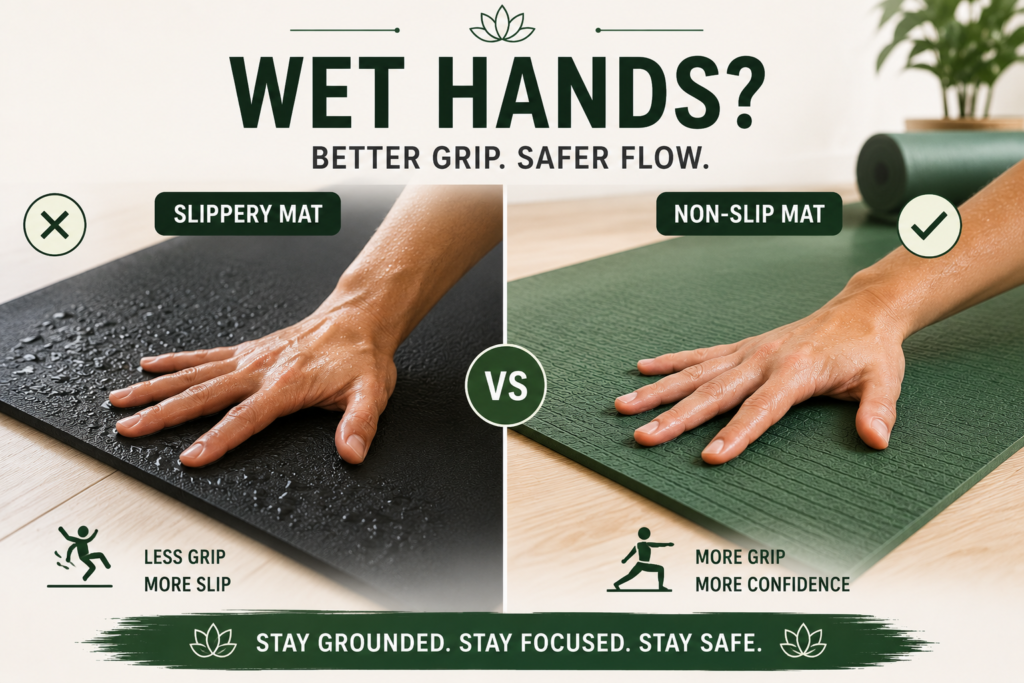
Not all grip is created equal. Many mats marketed as “non-slip” excel in dry conditions but deteriorate significantly once sweat enters the equation. PU-topped mats consistently score highest for wet grip, often rated 9/10 in high-humidity testing. Natural rubber typically scores 7–8/10 wet and 8/10 dry. Cork rates around 7/10 wet once saturated. TPE rarely exceeds 5/10 in wet conditions. The NIH NCCIH Mayo Clinic notes that physical safety during yoga practice — including stable footing and hand placement — is a meaningful consideration, particularly for dynamic styles like vinyasa. For those exploring faster-paced flows where sweat accumulates quickly, see our guide on Vinyasa Yoga: A Complete Guide to Flow, Benefits, and Getting Started.
Our Top 5 Mats Tested for High-Sweat Conditions
- PU/Natural Rubber Hybrid Mats — Best overall wet grip; premium price justified by dual-layer performance
- Eco-Friendly Natural Rubber Mat — Strong all-rounder; excellent for moderate sweaters prioritizing sustainability
- Cork-Surface Mat — Best for antimicrobial needs; improves with water but requires a break-in period
- Microfiber-Topped Mat — Towel-like surface absorbs sweat aggressively; pairs well with a light water mist
- Open-Cell Rubber Mat — Budget-conscious pick with decent wet traction; requires more frequent cleaning
Key Factors to Consider When Choosing Your Mat
Material Type and Porosity
The material of your yoga mat significantly impacts its grip, especially when moisture is involved. Natural rubber and polyurethane are renowned for their excellent traction, even when wet, due to their porous nature that absorbs sweat. Conversely, PVC mats can become very slippery. For those dealing with excessive sweating, a common condition known as hyperhidrosis PubMed, choosing a highly absorbent or quick-drying material is paramount.
Surface Texture and Micro-Pattern Design
Beyond the base material, the surface design plays a crucial role. Mats with a subtle texture or a micro-pattern, like small dots or lines, create more points of contact, enhancing grip. This is especially beneficial during dynamic sequences where hands and feet might shift frequently. Think of it like the tread on a tire – more grooves mean better traction.
Thickness and Cushioning for Stability
While cushioning is important for joint comfort, an overly thick mat can sometimes compromise stability. A mat that’s too soft might allow your hands or feet to sink in, reducing direct contact with the gripping surface. For practices requiring precise alignment and strong poses, a mat with moderate thickness (around 4-5mm) often provides the best balance of comfort and stability.
Yoga Style Considerations
Your preferred yoga style dictates the demands placed on your mat’s grip. Fast-paced, flowing styles like Vinyasa yoga Vinyasa Yoga: A Complete Guide to Flow, Benefits, and Getting Started involve continuous movement and increased perspiration, making a highly non-slip mat essential. In contrast, slower styles like Hatha or Yin yoga might be more forgiving, but good grip is still important for maintaining proper alignment and preventing slips during longer holds.
Troubleshooting: Why Your ‘Non-Slip’ Mat Still Feels Slippery
Common Reasons for Unexpected Slippage
Even high-quality non-slip mats can underperform for a few predictable reasons. New mat residue is the most common culprit — many mats ship with a light factory coating that reduces grip until broken in. Excessive sweat pooling (rather than absorbing) overwhelms surface texture, and dirty mats clogged with skin oils lose traction fast. Temperature matters too: cold studio floors can stiffen rubber backing, reducing the suction-like grip that keeps mats stable.
How to Test Your Mat’s True Grip Performance
Before blaming the mat, run a simple test. Place your palm flat on the surface and apply lateral pressure — a quality mat should resist sliding noticeably. Repeat after lightly misting the surface with water to simulate sweat. If grip improves when wet, your mat suits hot yoga styles like those covered in our guide on Vinyasa Yoga: A Complete Guide to Flow, Benefits, and Getting Started. If grip worsens dramatically, the surface material likely isn’t suited to your sweat level.
When to Replace vs. When to Improve
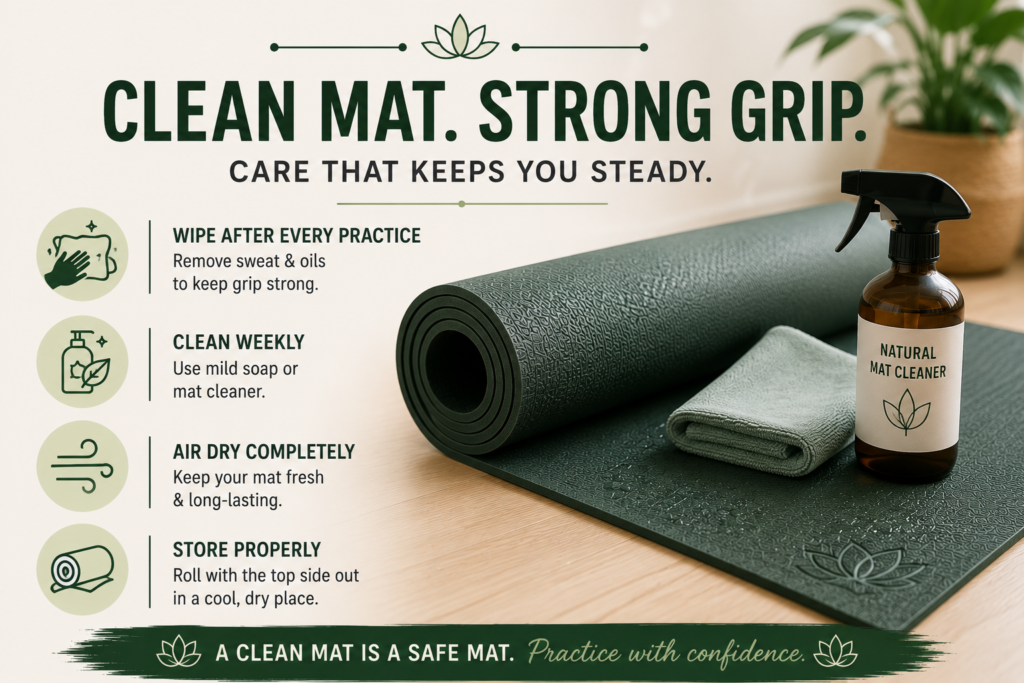
Try a deep clean first — scrub with mild soap, rinse thoroughly, and air-dry completely. Pilling, visible surface wear, or permanent compression in high-contact zones signal genuine replacement time. Otherwise, a microfiber yoga towel layered on top can restore grip affordably without buying a new mat.
How to Improve Grip on Your Current Mat
Using Yoga Towels and Grip Aids
If replacing your mat isn’t in the budget right now, a yoga grip towel laid over your existing surface can dramatically improve traction during sweaty sessions. A quality yoga grip towel or mat topper is a cost-effective solution that actually improves with moisture — the more you sweat, the more it grips. Liquid chalk or grip-enhancing sprays designed for yoga can also provide temporary traction boosts between washes.
DIY Surface Treatments and Maintenance
Lightly spritzing your mat with water before practice activates grip on many rubber and PU surfaces. Avoid using oils or fabric softeners near your mat, as these degrade traction over time. Storing your mat unrolled in a cool, dry space prevents compression that flattens the surface texture.
Proper Cleaning Techniques to Restore Traction
Residue from skin oils and sweat is the most common cause of a slippery mat. Wipe down your mat after every practice with a diluted solution of mild dish soap and water, then air-dry fully before rolling it up. Deep-clean weekly if you practice high-intensity styles — for context on how sweat output varies by practice type, our guide on Vinyasa Yoga: A Complete Guide to Flow, Benefits, and Getting Started is worth reviewing. Avoid machine washing unless your manufacturer explicitly permits it.
Cleaning and Maintaining Your Mat for Optimal Grip
Cleaning and Maintaining Your Mat for Optimal Grip
Proper cleaning is crucial for maintaining the grip of your best non slip yoga mat for sweaty hands. Different materials require different care:
- Rubber/Natural Rubber: Use a mild soap and water solution, or a specialized yoga mat cleaner. Wipe down after each sweaty session.
- TPE/PVC: These can typically be cleaned with a damp cloth and a diluted vinegar solution (1 part vinegar to 3 parts water).
- PU (Polyurethane) Top Layer: Often, a simple wipe-down with water is best to preserve the PU’s grip. Avoid harsh chemicals.
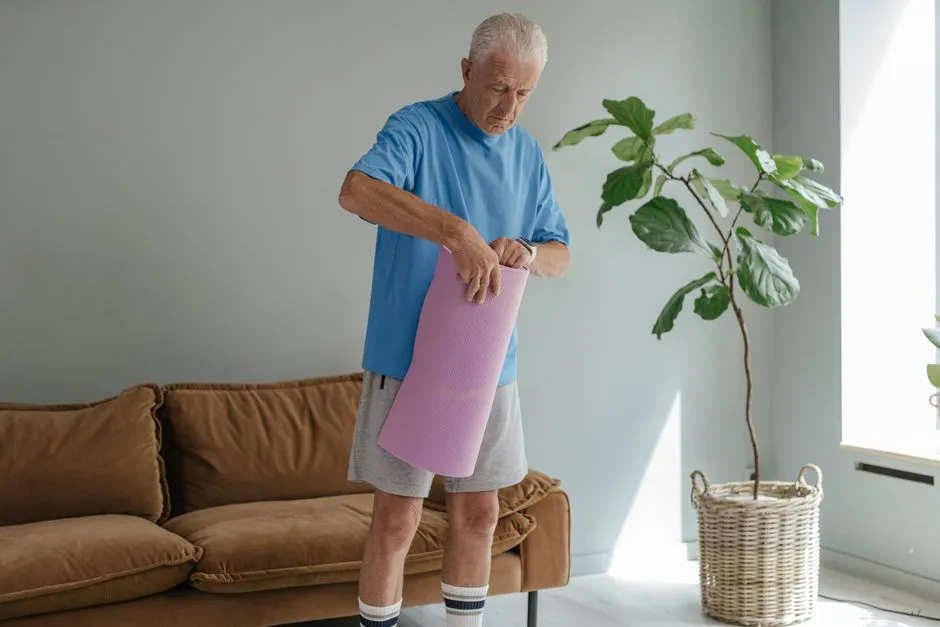
Sweat contains oils and minerals that can build up on the mat’s surface over time. This residue creates a barrier, reducing friction and making the mat feel slippery, even if it’s designed for grip. Regular cleaning removes this buildup, ensuring your mat performs as intended. Proper storage, like rolling your mat with the grip side facing outwards and avoiding direct sunlight, also helps preserve its traction and longevity.
Frequently Asked Questions
Will any yoga mat work if I have hyperhidrosis?
Standard PVC mats become dangerously slippery with hyperhidrosis. You need a mat with an open-cell natural rubber or polyurethane top layer, which actively absorbs moisture rather than repelling it. Brands like Manduka PRO and Liforme are specifically designed for high-sweat conditions.
Is natural rubber better than PVC for sweaty hands?
Yes. Natural rubber provides superior grip because its texture and density maintain traction even when wet. PVC mats are durable and affordable but rely on dry friction, making them poorly suited for sweaty practitioners.
How often should I clean my mat if I sweat heavily?
Wipe down after every session and do a deep clean weekly. Sweat residue builds up quickly, degrading grip over time. If you practice dynamic styles, see our guide on Vinyasa Yoga: A Complete Guide to Flow, Benefits, and Getting Started for additional mat care tips suited to high-intensity flow practice.
Do yoga towels replace a good non-slip mat?
No — a towel works best on top of a quality grip mat. Used alone on a standard mat, a towel can bunch and slide. The combination of both gives maximum sweat absorption and stability.
About the Author

Pratham Bavkar — Wellness Researcher · Founder, Yoga Therapy Guide
Pratham Bavkar is the founder of Yoga Therapy Guide and a wellness researcher focused on yoga therapy, mobility, and posture health. He creates evidence-based, beginner-friendly guides on yoga poses, stretching routines, and natural wellness practices to help readers improve daily health naturally.