
What Is Sciatica and How Yoga Can Help
Sciatica affects up to 40% of people at some point in their lives, producing that unmistakable shooting pain that radiates from the lower back through the buttock and down the leg. Yet many sufferers don’t realize that a targeted yoga practice can offer genuine, lasting relief — not just temporary comfort.
Understanding Sciatica: Causes and Symptoms
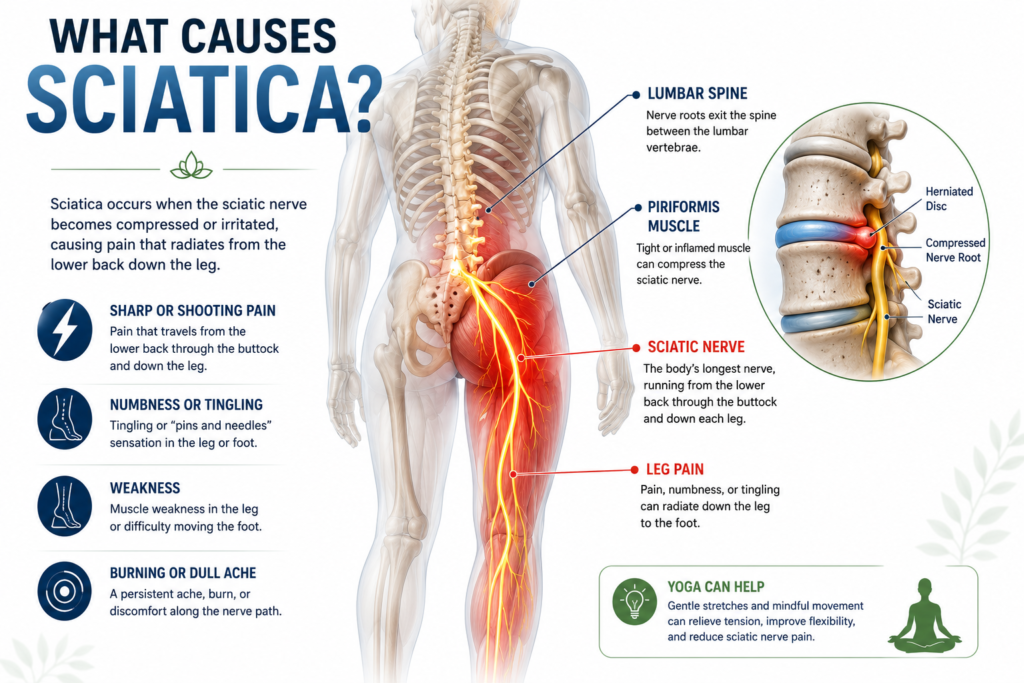
The sciatic nerve is the body’s longest nerve, running from the lumbar spine through the piriformis muscle and down each leg. Sciatica occurs when this nerve becomes compressed or irritated — most commonly by a herniated disc, bone spur, or tight piriformis muscle. Symptoms range from a dull ache to sharp, burning pain, numbness, or tingling anywhere along the nerve’s path.
The Science Behind Yoga for Sciatica Relief
NIH NCCIH research on yoga efficacy for chronic pain NIH NCCIH confirms that yoga meaningfully reduces pain intensity and functional disability. Yoga works by gently decompressing the lumbar spine, releasing muscular tension around the nerve, and improving circulation to irritated tissue — addressing the physical source rather than masking symptoms.
How Yoga Addresses Root Causes
Because sciatica stems from different causes — disc-related compression versus piriformis syndrome, for example — not every pose helps every person. Disc-related sciatica often responds to gentle backbends that restore disc space, while piriformis-driven pain typically benefits from deep hip rotator stretches. Understanding your specific trigger matters enormously. For those whose nerve pain connects to broader tension patterns, our guide on somatic yoga exercises for nervous system regulation offers complementary strategies for calming the nervous system alongside targeted stretching.
Best Yoga Poses for Sciatica Relief
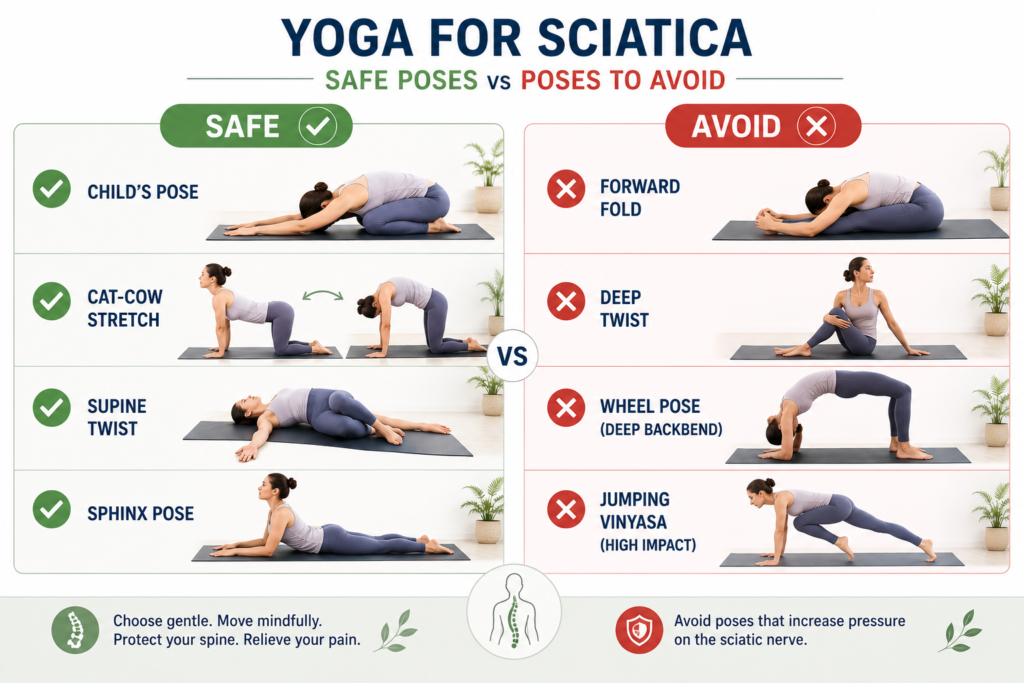
When dealing with sciatica, the goal of yoga is to gently decompress the sciatic nerve, reduce inflammation, and improve flexibility in the hips and lower back. It’s crucial to listen to your body and avoid any poses that cause sharp pain. Using a quality yoga mat with alignment guides can help you maintain proper form and track your progress.
Child’s Pose (Balasana)
This restorative pose gently stretches the lower back and hips, relieving tension that can contribute to sciatica. Kneel on the floor, then sit back on your heels. Separate your knees about hip-width apart, or keep them together for a gentler stretch. Fold forward, resting your torso between your thighs, and extend your arms forward or rest them alongside your body. Let your forehead rest on the mat. Hold for 30 seconds to 1 minute, breathing deeply.
Pigeon Pose (Eka Pada Rajakapotasana Prep)
Pigeon pose is excellent for targeting the piriformis muscle, a common culprit in sciatica due to its proximity to the sciatic nerve. Start in a tabletop position. Bring your right knee forward towards your right wrist, with your right shin angled across the mat. Extend your left leg straight back. Keep your hips square to the mat. You can stay upright or fold forward over your front leg. To deepen the stretch, gently draw your front foot closer to your groin. Hold for 30 seconds to 1 minute, then switch sides. If this is too intense, try “Figure Four” stretch lying on your back.
Supine Spinal Twist (Supta Matsyendrasana)
This twist gently mobilizes the spine and can help release tension in the lower back and hips, which may be compressing the sciatic nerve. Lie on your back with your knees bent and feet flat on the floor. Extend your arms out to the sides in a T-shape. Drop both knees to the right, keeping your left shoulder blade grounded. Gaze towards your left hand. Hold for 30 seconds to 1 minute, breathing into the stretch, then return to center and repeat on the other side.
Cat-Cow Stretch (Marjaryasana-Bitilasana)
This gentle flow warms up the spine and can improve mobility. Start on your hands and knees, wrists aligned under shoulders and knees under hips. Inhale, drop your belly towards the mat, arch your back, and look up (Cow pose). Exhale, round your spine towards the ceiling, tuck your chin to your chest, and draw your navel in (Cat pose). Move fluidly between the two poses for 5-10 breaths.
Modified Downward-Facing Dog (Adho Mukha Svanasana)
A standard Downward-Facing Dog can sometimes aggravate sciatica. A modified version with bent knees can still offer a beneficial hamstring and calf stretch without overstretching the sciatic nerve. Start on your hands and knees. Tuck your toes and lift your hips up and back, keeping your knees generously bent. Focus on lengthening your spine. You can “walk the dog” by pedaling your feet, bending one knee and then the other, to gently stretch your calves and hamstrings. Hold for 30 seconds to 1 minute.
Sphinx Pose (Salamba Bhujangasana)
This gentle backbend can help strengthen the back muscles and open the chest without putting excessive pressure on the lower spine. Lie on your stomach and place your elbows directly under your shoulders, forearms parallel on the mat. Press into your forearms and lift your chest off the floor, keeping your hips and pubic bone on the mat. Avoid crunching your neck; keep your gaze forward. Hold for 30 seconds to 1 minute. This pose is often recommended as part of complementary therapies for sciatica, according to Mayo Clinic guidelines Mayo Clinic.
Yoga Poses to Avoid With Sciatica
Knowing which poses to skip is just as important as knowing which ones help. Certain movements increase pressure on the sciatic nerve or inflame surrounding tissue — and the risk varies depending on whether your sciatica stems from a herniated disc or piriformis syndrome. PubMed studies on yoga and nerve pain PubMed consistently highlight that poorly chosen poses can worsen symptoms significantly.
Forward Folds and Deep Hamstring Stretches
Standing forward folds and seated hamstring stretches (like Paschimottanasana) round the lumbar spine and increase disc pressure. For herniated disc sciatica, this can push disc material further into the nerve root. Those with piriformis syndrome may tolerate gentle hamstring work better, but deep folds still risk overstretching an already irritated nerve.
Full Spinal Twists
Deep rotational poses like Marichyasana compress spinal discs unevenly and can aggravate herniated disc sciatica. Even piriformis-related cases may flare if twisting torques the sacroiliac joint. For gentler nervous system support, explore our guide on.
High-Impact Poses
Dynamic flows, jumps, and rapid transitions — common in Vinyasa sequences — create jarring spinal compression. These movements are best avoided during active flare-ups regardless of sciatica subtype.
Deep Backbends
Poses like Wheel (Urdhva Dhanurasana) or full Camel compress the posterior spine and can narrow the spinal canal, worsening nerve impingement, particularly with disc-related sciatica. Gentle, supported backbends are safer alternatives.
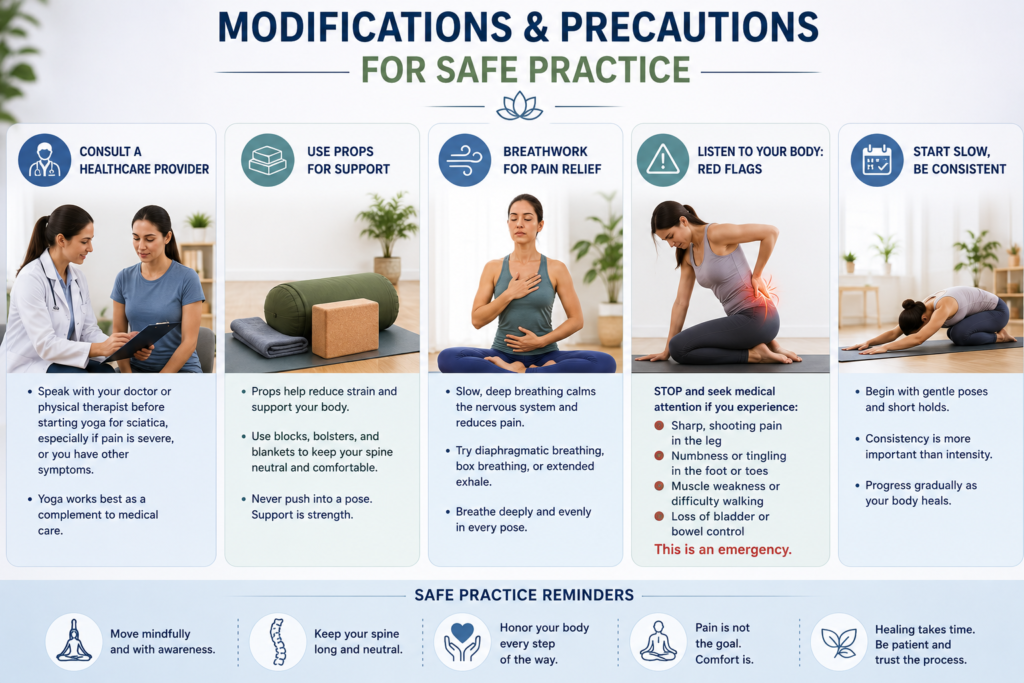
Modifications and Precautions for Safe Practice
When to Consult a Healthcare Provider
Before beginning any yoga practice for sciatica, speak with your doctor or a qualified physical therapist — especially if your pain is severe, recent, or accompanied by other symptoms. A Harvard Health perspective on yoga for musculoskeletal conditions Harvard Health reinforces that while yoga can be a valuable complementary approach, it works best alongside, not instead of, professional medical guidance.
Using Props for Support
Props are not optional extras — they are essential tools for safe sciatica practice. A Yoga Blocks and Bolster Set allows you to modify poses safely and reduce strain on the affected nerve, bringing the floor closer to you and keeping your spine in a neutral, protected position. Never push into a pose your body cannot comfortably reach.
Breathwork (Pranayama) for Pain Management
Slow, diaphragmatic breathing activates the parasympathetic nervous system, reducing both pain perception and anxiety. Techniques like box breathing or extended exhale breathing can make challenging poses more manageable. For a deeper understanding of how breathwork supports nervous system recovery, see our guide on.
Listening to Your Body: Red Flags
Stop immediately and seek medical attention if you experience:
- Sharp, shooting pain that worsens during or after a pose
- Numbness or tingling spreading into the foot or toes
- Muscle weakness in the leg or difficulty bearing weight
- Loss of bladder or bowel control — this requires emergency care
Mild discomfort is normal; nerve pain is not. When in doubt, ease out of the pose and rest.
Long-Term Prevention and Recovery Strategy
Building a Consistent Yoga Practice
While specific poses offer immediate relief, long-term recovery and prevention of sciatica involve a consistent yoga practice. Focus on poses that gently strengthen your core and glutes, and improve flexibility in your hips and hamstrings. Consider structured online yoga programs designed specifically for sciatica recovery to ensure progression and accountability. This can be a powerful tool for maintaining momentum and building confidence in your healing journey.
Complementary Lifestyle Changes
Yoga is a vital component, but it works best alongside other lifestyle adjustments. Pay close attention to your posture throughout the day, whether sitting or standing. Implementing ergonomic changes at your workstation can significantly reduce strain on your sciatic nerve, aligning with general clinical recommendations for sciatica treatment from sources like the Cleveland Clinic Mayo Clinic Yoga. Gentle heat therapy and regular, targeted stretching outside of your yoga sessions can also aid muscle relaxation and prevent stiffness.
Tracking Progress and Adjusting Your Routine
Monitor how your body responds to your yoga practice and any lifestyle changes. Keeping a journal can help you identify patterns and understand what brings the most relief. As your sciatica improves, you may need to adjust your routine, perhaps incorporating more challenging poses or exploring different styles like Vinyasa Yoga: A Complete Guide to Flow, Benefits, and Getting Started. This adaptive approach ensures your recovery remains effective and tailored to your evolving needs.
Frequently Asked Questions
Is yoga actually helping my sciatica, or is it making it worse?
Yoga helps when it gently lengthens tight muscles compressing the sciatic nerve and reduces inflammation through controlled movement. It’s making things worse if you notice sharp, shooting pain during or after a session, or increasing numbness and weakness. Track your symptoms honestly — mild discomfort that fades within an hour is normal; escalating pain is a warning sign to stop and reassess.
What specific yoga poses are best for sciatica nerve relief?
Poses that target the piriformis, hip flexors, and lower back tend to offer the most relief. Reclined Pigeon, Supine Twist, and Child’s Pose are consistently well-tolerated starting points. For a broader nervous system approach, see our guide on somatic yoga exercises for nervous system regulation.
Can starting yoga be a bad idea if I already have sciatica?
Not necessarily, but timing matters. During an acute flare with severe pain, rest takes priority. Once symptoms stabilise, gentle yoga is generally safe and beneficial — provided you avoid forward folds and deep twists in early stages.
How do I know if a yoga pose is safe for my sciatica?
A pose is safe when it produces no radiating pain down the leg, no increased tingling, and no worsening symptoms within 24 hours. Start with the gentlest variation, hold briefly, and build duration gradually based on your response.
What are the key differences in yoga poses for different causes of sciatica?
Piriformis-related sciatica responds well to hip-opening poses. Disc-related sciatica often benefits from gentle backbends and neutral spine positions, while forward folds may aggravate it. Individual variation is significant — consulting a physiotherapist or spine specialist helps identify which approach suits your specific diagnosis.
About the Author

Pratham Bavkar — Wellness Researcher · Founder, Yoga Therapy Guide
Pratham Bavkar is the founder of Yoga Therapy Guide and a wellness researcher focused on yoga therapy, mobility, and posture health. He creates evidence-based, beginner-friendly guides on yoga poses, stretching routines, and natural wellness practices to help readers improve daily health naturally.