
What Are AI Yoga Pants? Separating Fact from Marketing Hype
Walk into any activewear store or scroll through a fitness brand’s website, and you’ll likely encounter the phrase “AI yoga pants” — but what does that actually mean? The term gets thrown around so freely that it’s created genuine confusion among shoppers trying to make smart purchasing decisions.
Understanding the ‘AI’ Label in Yoga Apparel
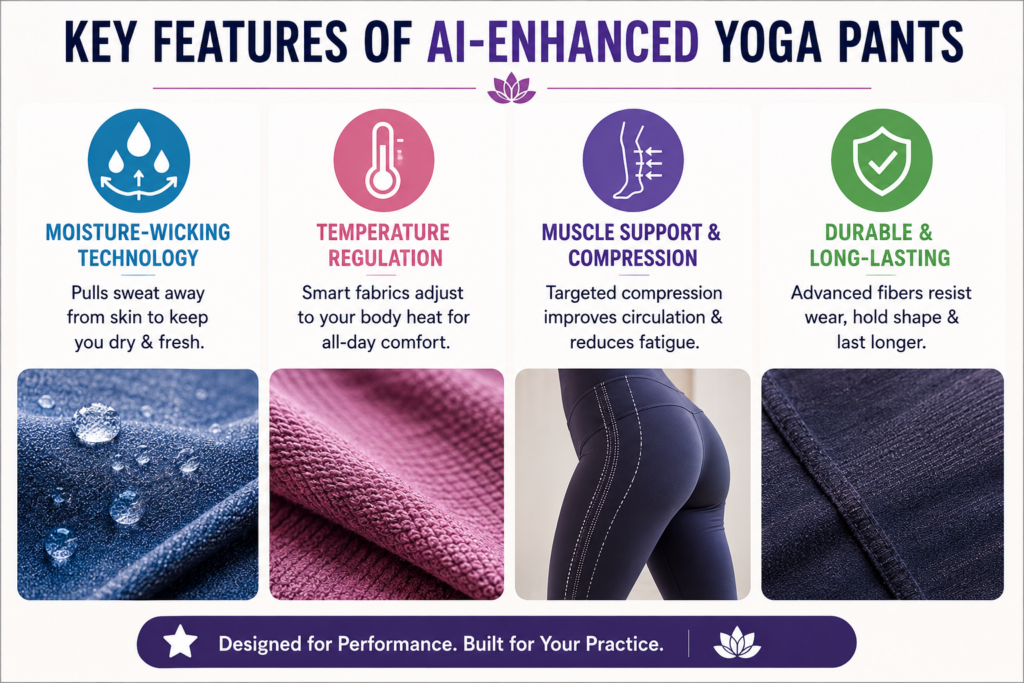
In most cases, “AI” in yoga pants doesn’t refer to artificial intelligence at all. Brands typically use it as shorthand for adaptive intelligence — a marketing term describing fabrics engineered to respond to body movement, heat, and moisture. Think compression zones that flex with your poses, not a microchip analyzing your downward dog.
Is ‘AI Yoga Pants’ a Real Product Category?
Technically, no — not in any standardized sense. It’s a loose marketing umbrella covering everything from moisture-wicking blends to four-way stretch fabrics. For women focused on safe, effective practice, the Mayo Clinic Yoga resources NIH NCCIH emphasize that comfort and unrestricted movement matter far more than buzzword-heavy labels. Our guide on yoga for strength explores how the right apparel supports performance-focused practice.
Common Misconceptions About AI in Yoga Wear
- Myth: AI pants track your movements automatically — Reality: Most have no sensors whatsoever
- Myth: The technology improves your form — Reality: Only smart-fabric compression provides passive support
- Myth: All brands use the term consistently — Reality: Definitions vary wildly by manufacturer
Key Features of High-Performance AI-Enhanced Yoga Pants
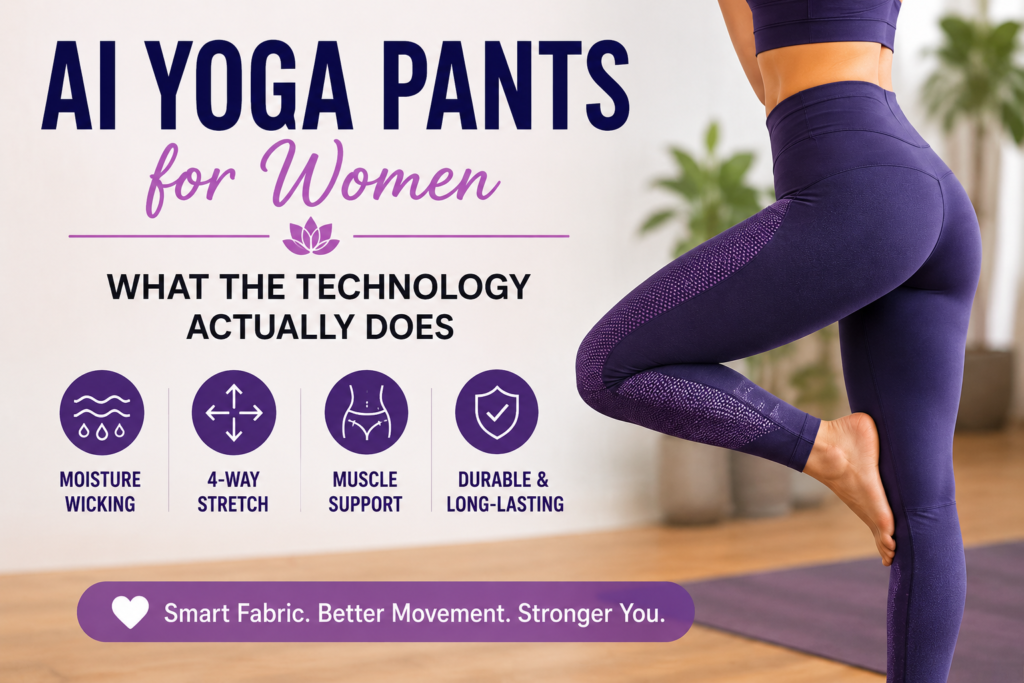
Premium yoga pants marketed with AI or advanced technology claims distinguish themselves through measurable performance improvements — not just clever branding. Understanding what these features actually deliver helps you invest wisely in gear that supports your practice.
Advanced Fabric Technology and Smart Materials
High-performance yoga pants increasingly use engineered fabric blends — often combining nylon, spandex, and polyester with proprietary fiber treatments — to achieve specific mechanical properties. Some manufacturers incorporate phase-change materials or graphene-infused threads that respond dynamically to body heat and movement. The practical result is fabric that moves with your body during demanding poses rather than against it, reducing friction and skin irritation during extended sessions. If you’re building a serious strength-focused practice, Yoga for Strength: The Complete Guide to Building Muscle Without Weights highlights why supportive, flexible clothing matters for progressive training.
Moisture-Wicking and Temperature Regulation
Advanced moisture-wicking systems pull sweat away from skin at a faster rate than standard activewear fabrics. Quality AI-marketed pants typically claim moisture transfer rates that keep skin drier during high-intensity flows, reducing chafing and bacterial buildup. Temperature-regulating fabrics aim to maintain a comfortable microclimate against the skin, which the NIH NCCIH Mayo Clinic acknowledges as relevant to safe, comfortable yoga practice.
Muscle Support and Compression Technology
Graduated compression — tighter at the ankle, gradually releasing toward the hip — is a well-documented design approach that may support circulation and reduce muscle oscillation during repetitive movements. Look for pants specifying compression zones mapped to major muscle groups rather than uniform tightness throughout.
Durability and Longevity Benefits
Reinforced stitching at high-stress points, colorfast dyes, and abrasion-resistant fabric finishes distinguish genuinely durable pants from budget alternatives. Premium options typically maintain elasticity and shape through 50–100 wash cycles, representing real long-term value despite higher upfront costs.
Benefits of AI Yoga Pants for Women’s Practice and Daily Wear
Understanding the technology is one thing — but how do these features actually translate to a better experience on the mat and beyond? The real test is whether AI-enhanced design solves the problems women consistently report with standard activewear.
Enhanced Comfort During Intense Yoga Sessions
Heat management is where smart fabric engineering earns its keep. During hot yoga or vigorous vinyasa flows, moisture-wicking structures that respond to body temperature help regulate skin surface conditions, reducing chafing and the distraction of soaked fabric. Harvard Health PubMed notes that appropriate exercise apparel can meaningfully support performance and comfort during sustained physical activity. Compression mapping — another AI-assisted design feature — places targeted support around the hips and thighs without restricting deep hip openers. If you practice challenging poses regularly, our guide on Pigeon Pose Yoga: Complete Guide to Benefits, Alignment & Variations explains why unrestricted hip mobility matters so much.
Versatility: Yoga Studio to Everyday Wear
Thoughtful construction means these pants transition naturally from a morning class to errands or casual work settings. Clean seam placement and neutral silhouettes make them genuinely wearable beyond the studio, reducing the need for multiple wardrobe changes.
Long-Term Value and Cost-Per-Wear Analysis
Higher upfront costs become more reasonable when durability is factored in. Reinforced fibers and colorfastness technology mean fewer replacements over time, lowering your actual cost-per-wear significantly compared to budget alternatives that pill or lose shape quickly.
Sustainability Considerations in Tech-Enhanced Apparel
Many brands incorporating AI-assisted design are simultaneously investing in recycled materials and responsible manufacturing. Buying fewer, longer-lasting garments is itself a sustainability choice — and certifications like bluesign® or OEKO-TEX® offer meaningful signals about ethical production standards worth looking for before purchasing.
How to Choose the Right AI Yoga Pants for Your Body and Practice
Fit and Sizing Considerations for Different Body Types
Finding the right fit matters more than any embedded technology. The Cleveland Clinic Harvard Health emphasizes that properly fitted athletic wear supports joint alignment and reduces injury risk during movement — a poorly fitting waistband that rolls or fabric that restricts hip flexion can undermine your entire practice. Tall women should prioritize brands offering a 30″+ inseam option, as standard 28″ lengths create bunching at the knee that affects both comfort and compression performance. For curvier figures, look for a high waistband with at least four-way stretch and flatlock seams to prevent chafing. Petite frames benefit from a 7/8 length cut, which typically eliminates excess fabric without requiring alterations.
Identifying Genuine Tech Features vs. Marketing Buzzwords
Not every claim of “smart fabric” or “AI-optimized fit” reflects real engineering. Use this quick checklist before purchasing:
- Ask for specifics: Legitimate compression technology cites graduated mmHg pressure ratings, not just “supportive feel”
- Look for third-party testing: Genuine moisture-wicking fabrics reference independent performance certifications
- Check sensor claims: Biometric tracking requires physical hardware — if none is visible or described, it’s likely a marketing term
- Read the fabric composition: Real performance fabrics list technical fiber names and percentages
Comparing multiple options across these criteria takes time. Our free Yoga Pants Comparison Chart (Digital Download) lets you evaluate AI yoga pants side-by-side across fit, price, verified features, and user ratings — a practical shortcut before spending $80–$200 on a single pair.
Matching Pants to Your Yoga Style (Hot Yoga, Vinyasa, Casual)
Your practice type should drive your fabric choice. Hot yoga demands maximum breathability and sweat-wicking capacity — look for open-knit mesh panels and moisture-transfer fabrics rather than dense compression. Vinyasa and flow styles benefit from four-way stretch with strong recovery so the fabric snaps back after deep hip openers like pigeon pose. For more on hip-focused movement demands, see our guide on Pigeon Pose Yoga: Complete Guide to Benefits, Alignment & Variations. Casual or restorative practice allows softer, less technical fabrics where comfort outweighs performance engineering.
Price vs. Performance: What’s Worth the Investment?
Premium pricing is justified when it reflects durable technical construction, not branding alone. A $120–$180 pair with verified compression ratings, reinforced gussets, and colorfastness after repeated washing represents genuine value. A $150 pair marketed as “AI-powered” with no substantiated technology does not. Set a realistic ceiling based on how frequently you practice: daily practitioners benefit from investing in two or three quality pairs that hold their structure over time, while occasional yogis may find mid-range options fully adequate.
Top Brands and Models: What’s Actually Available
Leading Brands Claiming AI or Advanced Tech
A handful of established activewear brands have moved beyond basic spandex blends into genuinely engineered fabrics, though the word “AI” is applied loosely across the market.
- Lululemon Align and Nulu fabric line – Uses proprietary fabric engineering for four-way stretch and moisture management. Shop Now
- Alo Yoga Airbrush collection – Markets compression-mapped construction with targeted support zones. Shop Now
- Athleta Salutation collection – Focuses on recycled performance fabrics with body-mapped ventilation. Shop Now
Price ranges typically run $60–$148. Claims vary considerably in how much genuine technology backs them versus marketing language.
Real-World Performance Reviews and User Feedback
User reviews consistently praise compression consistency and durability over time. For women using these during demanding movement patterns — similar to those in yoga for strength — fabric recovery and squat-proof construction are the most valued features, not AI branding specifically.
Where to Buy and What to Expect
Purchase directly from brand websites or authorized retailers for authenticity. Affiliate disclosure: links above may earn a small commission at no extra cost to you.
Care Instructions and Maximizing Longevity
Washing and Drying Best Practices
Premium AI yoga pants — especially those with embedded sensors, compression zones, or moisture-wicking treatments — require gentle handling. Always turn them inside out and wash in cold water on a delicate cycle. Use a mild, fragrance-free detergent, as harsh chemicals degrade technical fabric coatings over time. Never use fabric softener — it clogs moisture-wicking fibers and reduces their effectiveness significantly.
Skip the dryer entirely. Heat breaks down elastane fibers and can damage any embedded technology. Air-dry flat to preserve shape and compression integrity.
Maintaining Fabric Technology Over Time
Even with careful washing, technical fabrics gradually lose performance. Wash only when necessary — not after every light session. Avoid sitting on rough surfaces that cause pilling, and rotate between multiple pairs to reduce wear frequency.
Storage Tips for Yoga Apparel
Fold rather than hang yoga pants to prevent waistband stretching. Store away from direct sunlight, which fades color and weakens fibers. For a deeper dive into extending the life of your investment, our free Yoga Pants Care & Maintenance Guide covers fabric-specific tips in detail — well worth bookmarking alongside our guide on yoga for strength.
About the Author

Pratham Bavkar — Wellness Researcher · Founder, Yoga Therapy Guide
Pratham Bavkar is the founder of Yoga Therapy Guide and a wellness researcher focused on yoga therapy, mobility, and posture health. He creates evidence-based, beginner-friendly guides on yoga poses, stretching routines, and natural wellness practices to help readers improve daily health naturally.