
What Is Yoga for Strength?
Most people assume yoga is purely a flexibility practice — something you do to stretch out after “real” training. That assumption undersells it dramatically. Yoga for strength is a legitimate, research-supported method of building functional muscle using one of the most sophisticated pieces of equipment available: your own bodyweight.
How Yoga Builds Strength Differently Than Weightlifting
Where weightlifting isolates muscles through external load, yoga builds strength by demanding that multiple muscle groups stabilize, lengthen, and contract simultaneously. Holding Warrior III or Chaturanga requires your muscles to work under sustained tension — a stimulus that drives real hypertrophy and neuromuscular adaptation. The result is balanced, functional strength rather than size alone.
The Science Behind Yoga and Muscle Development
NIH NCCIH studies on yoga and muscle strength outcomes NIH NCCIH confirm measurable gains in muscular endurance, upper-body strength, and core stability among regular practitioners. Isometric holds increase time-under-tension, a key driver of muscle fiber recruitment. If you’re also interested in how this translates to targeted core work, our guide on yoga for belly fat explores the connection in depth.
Benefits of Yoga for Building Strength

Many people assume yoga belongs in the “flexibility only” category — but that view doesn’t hold up under scrutiny. Holding a Warrior III or sustaining a Chaturanga demands real muscular effort, and Mayo Clinic research on yoga for functional fitness Mayo Clinic confirms that consistent practice meaningfully improves strength, balance, and overall physical function. Yoga challenges your muscles through sustained isometric contractions and bodyweight resistance, stimulating growth in ways that complement — or even replace — conventional weight training.
Functional Strength and Stability
Unlike isolated machine exercises, yoga builds strength through compound, full-body movements that mirror real-life demands. Poses like Plank, Boat, and Chair develop the deep stabilizing muscles around your spine, hips, and shoulders — the same muscles responsible for posture, coordination, and athletic performance. This translates directly to everyday movement quality.
Injury Prevention and Joint Health
Yoga strengthens the muscles surrounding joints rather than just the primary movers, creating protective stability that reduces injury risk. If joint pain or nerve sensitivity is already a concern, see our guide on Yoga for Sciatica: 6 Safe Poses to Relieve Nerve Pain before advancing to more demanding strength sequences.
Mental Resilience and Mind-Muscle Connection
Holding a challenging pose for five slow breaths trains focus and discomfort tolerance — qualities that directly improve training performance. This deliberate attention also sharpens the mind-muscle connection, helping you recruit muscle fibers more efficiently in every workout you do.
Best Yoga Poses for Strength: Targeted Muscle Breakdown
Upper Body Strength: Chaturanga, Handstand, and Arm Balances
Building upper body strength through yoga often starts with foundational poses. Chaturanga Dandasana (Four-Limbed Staff Pose) is a cornerstone, strengthening the triceps, chest, and shoulders. Beginners can modify by dropping their knees to the mat. Progress by holding the pose longer and eventually straightening the legs. For more advanced practitioners, transitioning into Adho Mukha Svanasana (Downward-Facing Dog) and then lifting into Bakasana (Crow Pose) or even Adho Mukha Vrksasana (Handstand) offers significant challenges for the arms, wrists, and shoulders. A quality yoga mat with alignment markers helps ensure proper form during strength-building poses, reducing injury risk and maximizing muscle engagement.
Core Strength: Plank Variations and Navasana Progressions
A strong core is vital for stability and power in all yoga poses. Phalakasana (Plank Pose) is an excellent starting point, engaging the entire abdominal wall. Progressions include side planks and forearm planks. Navasana (Boat Pose) directly targets the rectus abdominis and hip flexors. Beginners can start with bent knees, gradually straightening the legs and extending the arms forward as strength increases. Advanced variations involve holding the pose for extended periods or lifting and lowering the legs with control. For a deeper dive into core work, explore our guide on yoga for belly fat.
Lower Body Strength: Warrior Poses and Chair Pose Progressions
The lower body is powerfully engaged in many yoga postures. Virabhadrasana I, II, and III (Warrior I, II, and III) build strength and endurance in the quadriceps, hamstrings, and glutes, while also improving balance. Holding these poses for longer durations increases their strengthening effect. Utkatasana (Chair Pose) is a potent exercise for the thighs and glutes. Beginners can start by holding the pose for shorter breaths, while advanced practitioners can hold it longer, add arm variations, or even transition to standing splits from Chair Pose. Consistent practice has also been shown to improve bone density, as highlighted by Harvard Health findings PubMed.
Full-Body Integration: Vinyasa Flow for Compound Strength
Vinyasa, or flow yoga, excels at building compound strength by linking poses together in a dynamic sequence. This style engages multiple muscle groups simultaneously, mimicking functional movements. A typical flow might include Sun Salutations, which seamlessly integrate upper body (Chaturanga), core (Plank), and lower body (Warrior poses) work. The continuous movement elevates the heart rate and builds muscular endurance. To learn more about this style, see our guide on Vinyasa Yoga: A Complete Guide to Flow, Benefits, and Getting Started.
Yoga Styles for Maximum Strength Gains
Power Yoga and Vinyasa: Dynamic Strength Building
These styles are characterized by flowing sequences and continuous movement, making them excellent for building lean muscle and cardiovascular health. Power yoga, in particular, often incorporates more challenging poses and faster transitions to increase intensity. For those new to dynamic flows, structured online platforms offer curated power yoga and Vinyasa sequences specifically designed for strength—ideal for those wanting guided progression. You can explore the fundamentals of Vinyasa in our comprehensive guide on Vinyasa Yoga: A Complete Guide to Flow, Benefits, and Getting Started.
Ashtanga Yoga: Structured Progression and Consistency
Ashtanga follows a set sequence of poses that are performed in the same order every time. This structured approach allows for consistent practice and a clear path for progression, enabling practitioners to build strength systematically. The discipline of Ashtanga can also be beneficial for mental fortitude.
Iyengar Yoga: Precision and Deep Muscle Engagement
Iyengar yoga emphasizes precise alignment and often uses props like blocks and straps to help students achieve the correct form. This focus on detail allows for deep engagement of specific muscle groups, leading to targeted strength development and improved body awareness. This meticulous approach is also lauded by Cleveland Clinic data on yoga for injury prevention. Harvard Health
Progression Strategies: From Beginner to Advanced Strength

Progression Strategies: From Beginner to Advanced Strength
As you build strength, consistently challenging your muscles is key. This progression can be achieved in several ways. Initially, focus on increasing your hold duration for poses like Plank or Warrior III. Once you can comfortably hold a pose for an extended period, you might notice less muscle engagement. At this point, it’s time to increase intensity by exploring variations or using props. Props like yoga blocks and straps are essential tools for progressive overload—they allow you to modify poses for your current level and gradually increase difficulty. For instance, using blocks to bring the floor closer in Triangle Pose can help you maintain proper alignment while deepening the stretch and engaging supporting muscles more effectively. This principle of progressive overload is well-supported by PubMed peer-reviewed studies on isometric strength and yoga poses Mayo Clinic Yoga.
Hold Duration vs. Intensity: When to Increase Each
Start by holding poses for longer durations, building muscular endurance. Once a hold feels easy, focus on variations that require more effort or stability. For example, progressing from a standard Plank to Plank Jacks or Forearm Plank increases the intensity. This mirrors the principles of progressive overload essential for muscle growth.
Adding Variations and Props for Progressive Overload
Don’t underestimate the power of subtle changes. Adding variations like hopping into Chaturanga from Plank, or transitioning to a more challenging pose like Crow Pose from a stable base, increases the demand on your muscles. Props such as yoga blocks and straps are invaluable here, enabling you to modify poses for deeper engagement or increased stability, facilitating continuous progress without adding external weight.
Sample 12-Week Progression Plan for Key Poses
Weeks 1-4 (Foundation): Focus on mastering basic form and holding poses like Downward-Facing Dog and Warrior II for 30-60 seconds. Use props as needed for alignment.
Weeks 5-8 (Building Endurance): Increase hold times to 60-90 seconds. Introduce simple variations, such as shifting weight in Warrior II to engage glutes more, or moving to Forearm Plank from Plank. Consider exploring dynamic flows like those found in Vinyasa Yoga: A Complete Guide to Flow, Benefits, and Getting Started.
Weeks 9-12 (Increasing Intensity): Hold poses for 90+ seconds or introduce more challenging variations. This could include attempting Crow Pose, lifting one leg in Plank, or transitioning between poses with greater control and speed.
Breathwork (Pranayama) for Enhanced Strength and Endurance
How Breath Control Amplifies Muscle Engagement
While poses build muscle, breathwork, or pranayama, unlocks deeper engagement. Conscious breathing synchronizes with movement, stabilizing the core and promoting better posture. This focused breath can also help regulate your nervous system, allowing for more sustained effort during challenging poses, which is crucial for progressive overload in your strength journey.
Ujjayi Breath for Sustained Strength Holds
The technique of Ujjayi breath, often called “victorious breath” or “ocean breath,” involves a gentle constriction in the back of the throat, creating an audible, rhythmic sound. This controlled exhalation helps to lengthen your breath, promoting a sense of calm focus and improving endurance. Practicing Ujjayi breath can significantly enhance your ability to hold strength-building poses longer, leading to greater muscle development.
Nutrition and Recovery for Yoga-Based Strength Gains
Protein Requirements for Muscle Development
To maximize muscle development from your yoga practice, adequate protein intake is essential. Aim for around 20-30 grams of protein post-workout to support muscle repair and growth. Convenient options like a can be blended into smoothies after intense sessions.
Recovery Strategies: Sleep, Hydration, and Active Rest
Effective recovery is as crucial as the yoga poses themselves for building strength. Prioritize 7-9 hours of quality sleep per night, as this is when your muscles repair and rebuild. Staying well-hydrated throughout the day is also vital for cellular function and muscle recovery. Incorporate active rest, such as gentle stretching or a light walk, on your non-practice days to promote blood flow and reduce muscle soreness. For those interested in the restorative aspects of movement, exploring can further enhance your recovery.
Combining Yoga with Traditional Strength Training
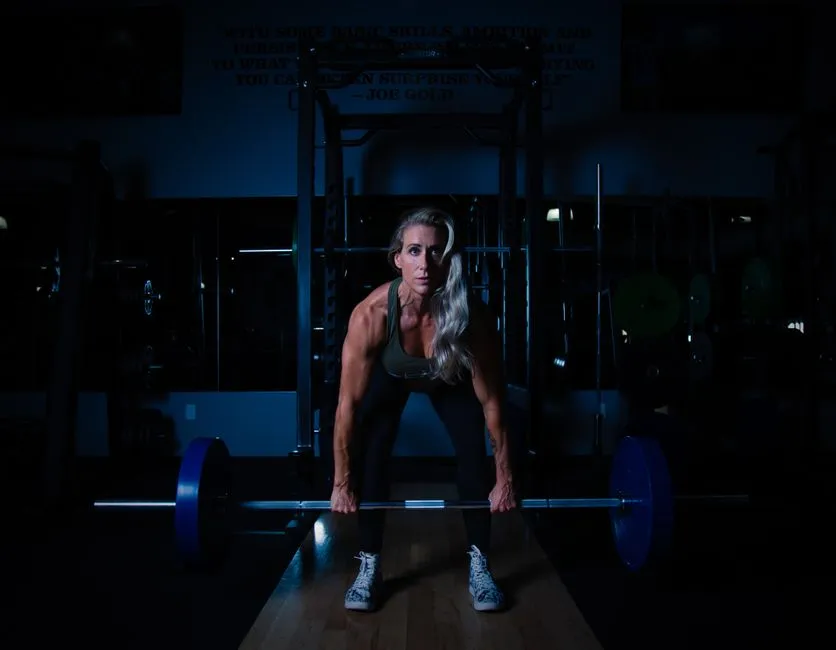
Complementary Approaches: Yoga + Weightlifting
Integrating yoga into a traditional strength training regimen offers a powerful hybrid approach. Yoga’s focus on flexibility, balance, and core stability can enhance your weightlifting performance and reduce injury risk. Conversely, the progressive overload of weightlifting builds muscle mass, which can then be sculpted and defined through yoga practice. This combination targets both strength and mobility, creating a well-rounded physique and promoting overall functional fitness. For those looking to build a strong core, exploring poses that complement abdominal work is key, as discussed in our article on.
Sample Weekly Integration Schedule
A balanced weekly schedule might look like this:
- Monday: Weightlifting (Lower Body)
- Tuesday: Vinyasa Yoga (Focus on Flow and Core)
- Wednesday: Rest or Active Recovery (e.g., light walk)
- Thursday: Weightlifting (Upper Body & Core)
- Friday: Restorative Yoga or Gentle Stretching
- Saturday: Full Body Weight Training or Long Yoga Session
- Sunday: Rest
Adjust this template based on your recovery needs and goals. Listen to your body and prioritize rest days to allow muscles to repair and grow stronger.
Common Misconceptions About Yoga for Strength
Myth: Yoga Won’t Build ‘Real’ Muscle
A common misconception is that yoga is too gentle to build significant muscle. However, many yoga poses require you to hold your body weight for extended periods, effectively acting as resistance training. Studies from institutions like Harvard Health Cleveland Clinic have shown that consistent practice can lead to increased muscle mass and strength, comparable to some traditional weightlifting routines. The key lies in proper form and progressive challenges.
Myth: You Need Weights to Get Strong
This couldn’t be further from the truth. While weights are one tool for building strength, your own body is a powerful source of resistance. Holding poses like Plank, Chaturanga, and Warrior III engages multiple muscle groups simultaneously, forcing them to work and adapt. This functional strength training can translate to improved performance in everyday activities and other physical pursuits. For those looking to deepen their core work, exploring can offer additional targeted exercises.
Myth: Yoga Is Only for Flexibility
Flexibility is certainly a benefit of yoga, but it’s not the sole purpose. Many styles, especially those focused on holding poses and building heat, are incredibly effective for strength development. Think of poses like Downward-Facing Dog or High Plank – these are challenging strength builders. The isometric contractions involved in holding these postures are crucial for muscle hypertrophy and endurance.
Conclusion: Your Yoga Strength Journey Starts Now
Yoga is a legitimate, complete path to building real, functional strength — no gym required. You’ve seen how targeted poses challenge every major muscle group, how progressive overload works through bodyweight and leverage, and how breathwork amplifies every rep. The key now is consistency: show up, track your progress, and trust the process.
If you want to deepen your practice alongside your strength work, exploring Vinyasa Yoga: A Complete Guide to Flow, Benefits, and Getting Started can help you build the dynamic sequencing that keeps muscles adapting. Start with two to three sessions per week, revisit the progression strategies outlined above, and watch your strength — and confidence — grow steadily from the mat up.
About the Author

Pratham Bavkar — Wellness Researcher · Founder, Yoga Therapy Guide
Pratham Bavkar is the founder of Yoga Therapy Guide and a wellness researcher focused on yoga therapy, mobility, and posture health. He creates evidence-based, beginner-friendly guides on yoga poses, stretching routines, and natural wellness practices to help readers improve daily health naturally.