Personal AI Meditation Guide
Let’s create a custom mindfulness session tailored to your current needs.
Introduction to AI Meditation Guides
Imagine having a meditation teacher available at 3 a.m., infinitely patient, never judgmental, and tailored precisely to your stress level that day. That’s the quiet promise of the ai meditation guide — and millions of people are already exploring it.
What Are AI Meditation Guides?
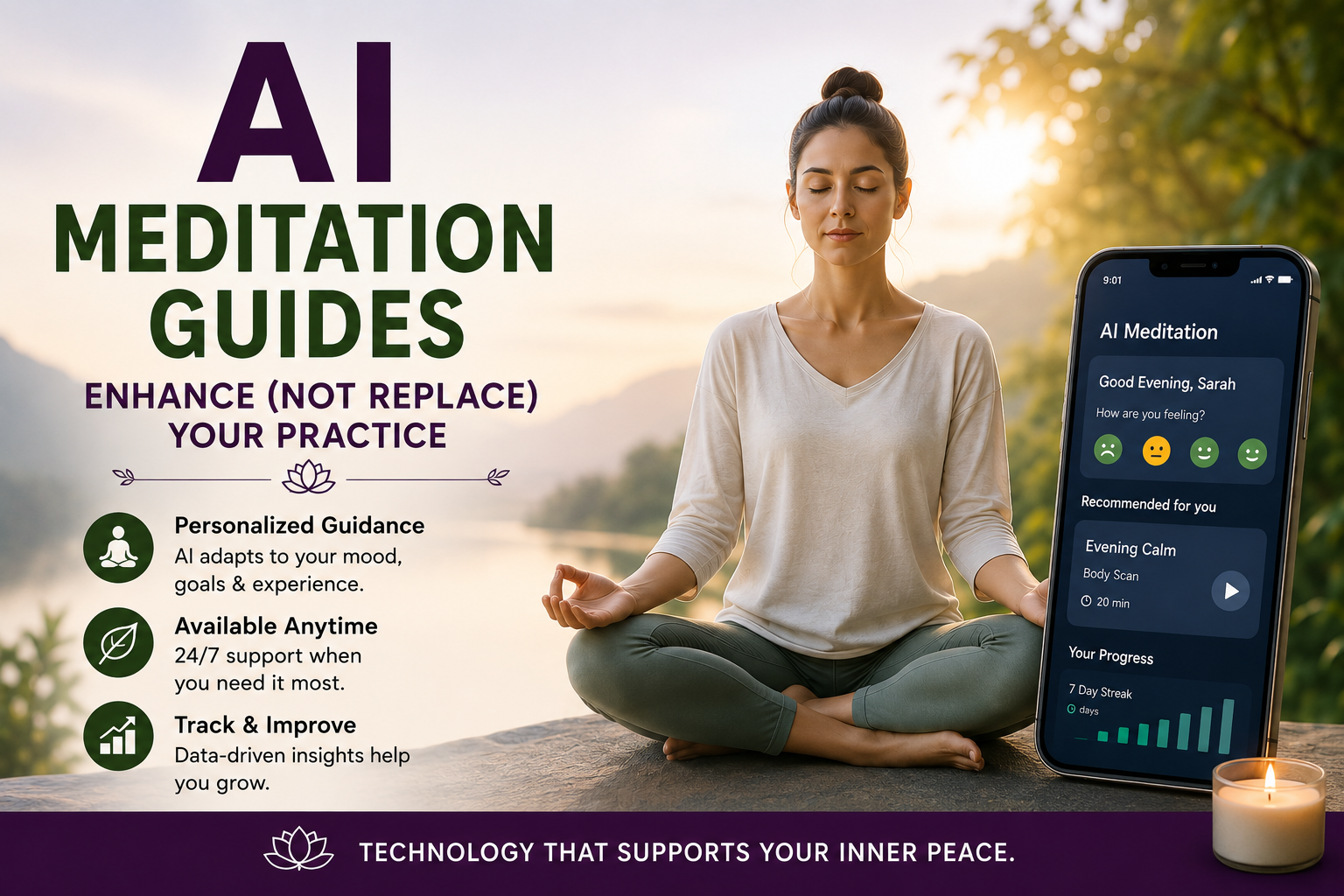
AI meditation guides are software-driven tools that use artificial intelligence to deliver personalized, adaptive meditation sessions. Unlike static audio recordings, they can respond to your input, adjust pacing, and offer guidance that shifts based on your mood, goals, or experience level — bringing a layer of interactivity that traditional apps simply can’t match.
Why the Growing Interest?
Global mental health challenges have surged, and the World Health Organization WHO mental health and meditation guidelines World Health Organization highlight meditation as a meaningful support tool. Yet access to qualified human teachers remains uneven. AI fills that gap with convenience and consistency — though it also raises genuine questions about depth and authenticity. If you’re newer to the practice, our guide on Meditation Techniques for Beginners: A Complete Guide to Finding Your Practice offers essential grounding before diving into AI-assisted sessions.
How AI Creates Personalized Meditation Experiences
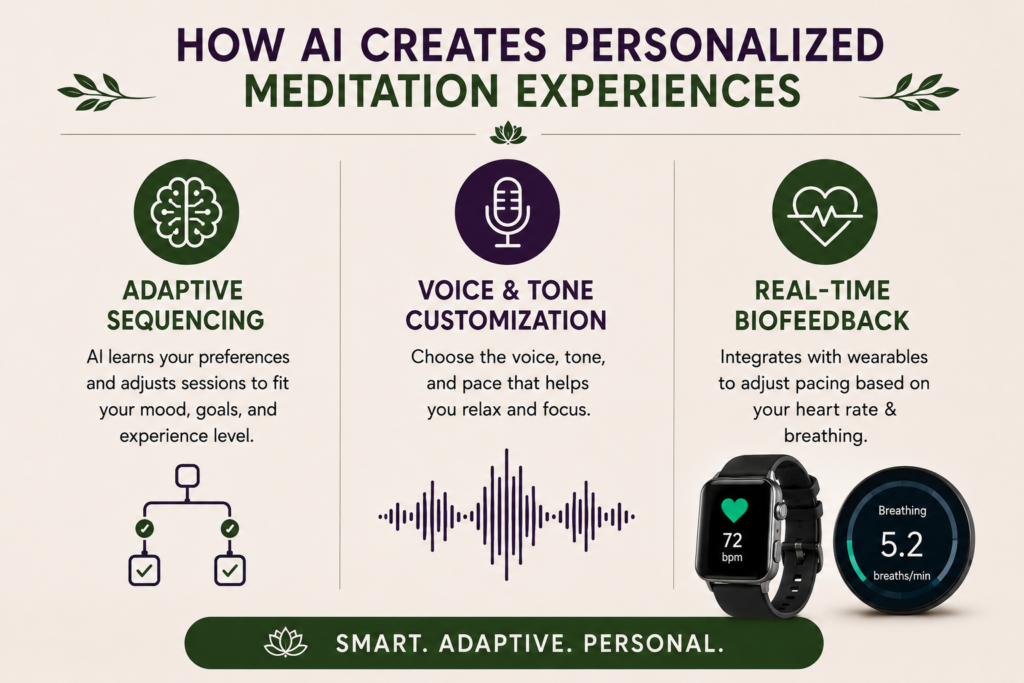
Modern AI meditation guides go far beyond pre-recorded audio with a pleasant voice. They analyze your session history, stated goals, stress levels, and even time of day to build a practice that genuinely fits you — not a generic user profile.
Adaptive Meditation Sequencing
An AI meditation guide tracks which session lengths, styles, and themes resonate with you over time. If you consistently skip body-scan sessions but return to breath-focused practices, the system adjusts your queue accordingly. This kind of responsive sequencing mirrors what a skilled human teacher does naturally — noticing what works and building on it. If you’re just starting out, our guide on Meditation Techniques for Beginners: A Complete Guide to Finding Your Practice pairs well with understanding how these tools adapt to early-stage learners.
Voice and Tone Customization
Voice authenticity is a fair concern. Leading platforms now offer multiple voice profiles — varying pace, warmth, and accent — and some allow you to dial in tone for different session types. A grounding evening session might use slower cadence and deeper resonance, while a morning focus session uses a crisper, more energizing delivery.
Real-Time Biofeedback Integration
When paired with wearables, AI guides can read your heart rate variability or breathing rhythm and adjust pacing mid-session. Research on mindfulness and physical wellbeing from the CDC CDC Physical Activity supports the value of consistent, low-barrier practice — exactly what responsive biofeedback integration makes possible.
Key Benefits of AI-Assisted Meditation Guides
AI meditation guides offer several practical advantages that complement traditional practice. NIH NCCIH research on meditation efficacy NHS UK confirms measurable benefits across stress reduction, sleep quality, and emotional regulation — benefits an AI guide can help users pursue more consistently. If you’re just starting out, our guide on Meditation Techniques for Beginners: A Complete Guide to Finding Your Practice provides a strong foundation to build on.
24/7 Accessibility
Unlike human instructors, AI guides are available whenever anxiety spikes at 2 a.m. or a stressful moment strikes mid-afternoon. This on-demand availability removes scheduling barriers that often derail consistent practice.
Cost-Effective Scaling
Quality instruction traditionally carries a significant price tag. AI platforms deliver structured, adaptive sessions at a fraction of the cost, making evidence-informed meditation accessible to a much broader audience.
Data-Driven Effectiveness Tracking
AI tools can log session frequency, duration, and self-reported mood shifts over time, helping practitioners identify which techniques genuinely work for them. This objective feedback loop encourages accountability — something even experienced meditators find valuable when motivation wavers.
Ethical Considerations and Limitations
Authenticity vs. Automation
While an ai meditation guide can offer structured sessions, it lacks the genuine empathy and lived experience of a human teacher. The spiritual journey is deeply personal; an algorithm, however sophisticated, cannot replicate the nuanced understanding that comes from shared human consciousness. This distinction is crucial for practitioners seeking authentic connection, not just automated instruction.
Privacy and Data Handling
Using AI tools involves sharing personal data, raising significant privacy concerns. It’s essential to understand how your meditation data is collected, stored, and used. Reputable platforms should prioritize robust security measures and transparent policies to protect sensitive user information.
When AI Falls Short
An AI guide is a tool, not a replacement for human connection or deeper spiritual exploration. For complex emotional blocks or profound insights, the guidance of an experienced human instructor or therapist remains invaluable. While AI can support a consistent practice, it cannot foster the same depth of community or spiritual mentorship that a human guide can provide. For beginners exploring different approaches, resources like those on Meditation Techniques for Beginners: A Complete Guide to Finding Your Practice offer a solid foundation.
Selecting the Right AI Tools for Your Practice
Evaluating Tool Features
When choosing an ai meditation guide, look beyond basic playback. Consider features like adaptive pacing, customizable soundscapes, and progress tracking. Some advanced platforms, like, use adaptive algorithms to adjust meditation depth and pacing based on your progress. Consider tools that offer transparency reports on how your data improves recommendations.
Matching Tools to Meditation Goals
Your meditation goals should steer your choice. If you’re seeking stress reduction, look for guided sessions focused on mindfulness and breathing. For improved sleep, prioritize tools with calming soundscapes and longer, sleep-focused meditations. For beginners, resources like Meditation Techniques for Beginners: A Complete Guide to Finding Your Practice can help clarify initial objectives before selecting an AI companion.
Creating Meditations in Your Own Voice
Many AI meditation tools are evolving to allow for personalization. Some platforms enable you to record your own voice for guided meditations, offering a deeply personal touch that can enhance familiarity and comfort. This feature allows the AI to act as a facilitator for your own voice, creating a unique and comforting meditation experience. Research into AI-assisted wellness interventions is ongoing, with many PubMed studies on AI-assisted wellness interventions NIH NCCIH showing promise in enhancing user engagement.
The Future of AI in Meditation

Emerging Trends
The landscape of AI in mindfulness is rapidly evolving. Beyond simple guided sessions, expect AI to offer more nuanced support, potentially analyzing user feedback to refine techniques. While still nascent, this technology could eventually assist with more complex meditation styles, moving beyond beginner basics.
Integration with Advanced Practices
Future AI meditation guides may offer personalized feedback loops for advanced practitioners. Imagine AI helping to identify subtle energetic blockages or suggesting adjustments for longer, deeper meditative states, augmenting rather than replacing the profound introspection required for mastery. This could be particularly helpful for those exploring techniques similar to those found in.
Conclusion: AI as a Meditation Ally
The most effective meditation practice is one you’ll actually sustain — and if an ai meditation guide helps you show up consistently, build better habits, and deepen your self-awareness, it’s doing exactly what a good tool should. Throughout this article, one theme has remained constant: AI works best as a complement to human wisdom, not a substitute for it.
Use AI to lower the barriers — the scheduling friction, the uncertainty about technique, the difficulty tracking progress — while preserving space for the qualities no algorithm can replicate: genuine stillness, human connection, and inner inquiry. If you’re just beginning this journey, our guide on meditation techniques for beginners offers a strong human-centered foundation to pair with any digital tool you choose.
- Start small: Let AI guide one session per week alongside your existing practice.
- Stay curious: Treat AI feedback as a prompt for reflection, not a verdict.
- Keep the human at the center: You are the practitioner — the technology simply supports you.
Ready to explore? Choose one AI meditation tool, commit to two weeks, and notice what shifts. Your practice, your pace, your growth.
About the Author

Pratham Bavkar — Wellness Researcher · Founder, Yoga Therapy Guide
Pratham Bavkar is the founder of Yoga Therapy Guide and a wellness researcher focused on yoga therapy, mobility, and posture health. He creates evidence-based, beginner-friendly guides on yoga poses, stretching routines, and natural wellness practices to help readers improve daily health naturally.