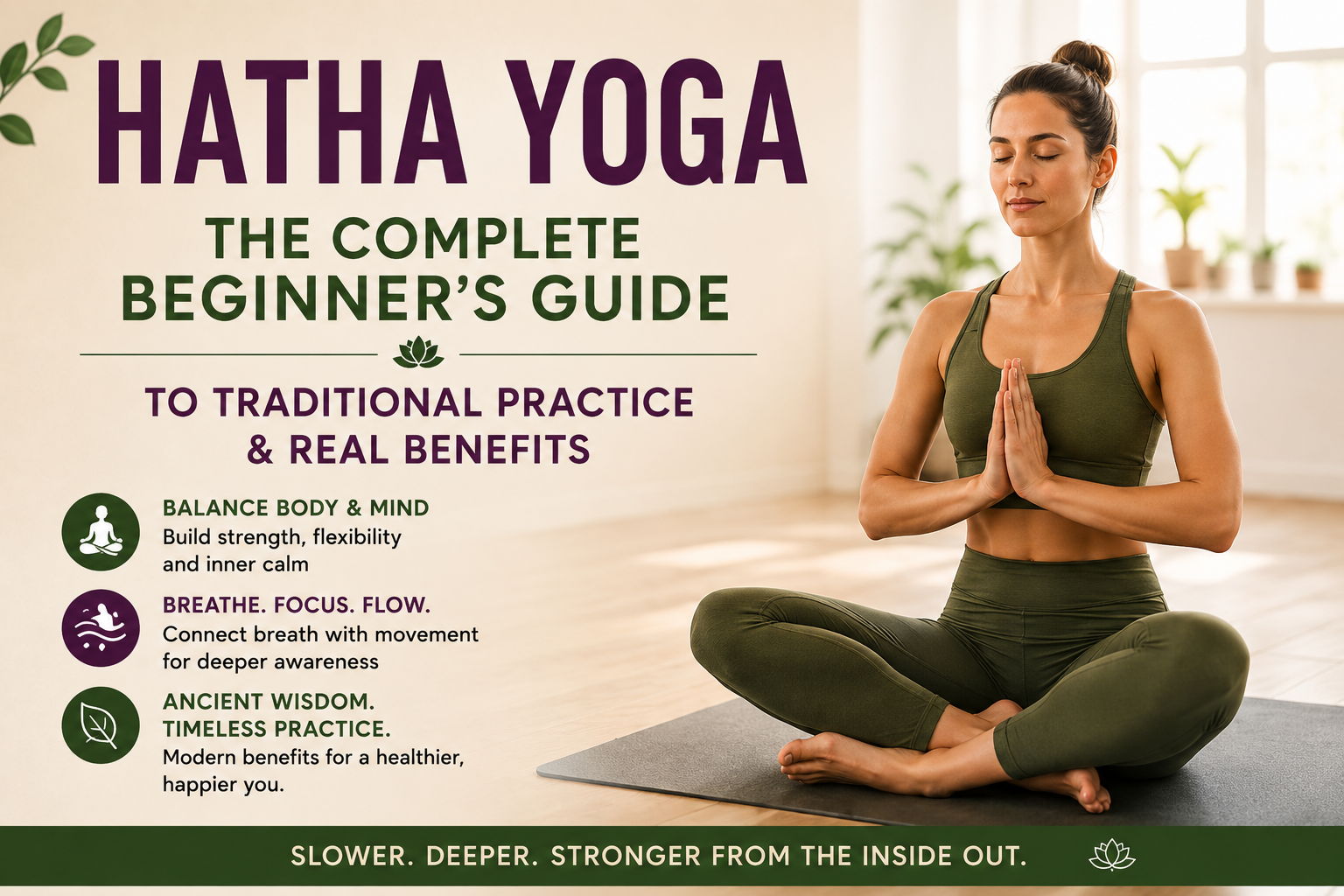
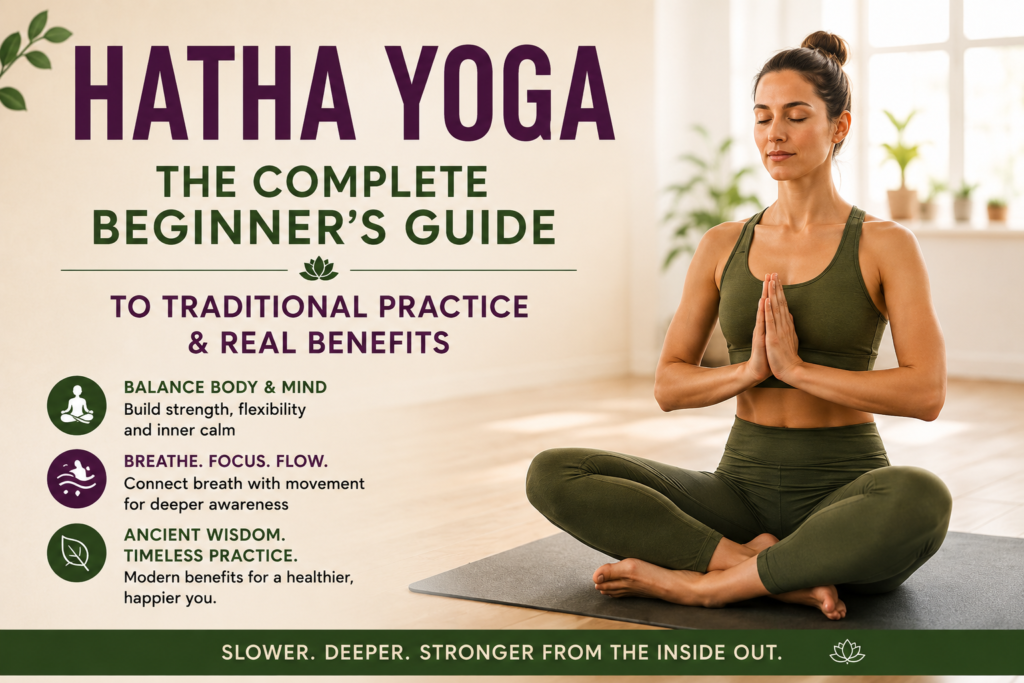
What Is Hatha Yoga?
Walk into almost any gym and you’ll see “Hatha” on the schedule — but ask ten instructors what it means and you’ll get ten different answers. That confusion is worth clearing up before anything else, because understanding what Hatha yoga actually is changes how you practice it.
Definition and Core Principles
Hatha yoga is a branch of classical yoga that uses physical postures (asanas), breath control (pranayama), and meditation to balance opposing energies in the body — “ha” meaning sun, “tha” meaning moon. It is not a single style but a broad category, the root from which most modern physical yoga traditions grew. NIH NCCIH studies on yoga and health outcomes NIH NCCIH consistently group these practices together because they share the same foundational tools: deliberate movement, conscious breathing, and focused awareness.
Hatha Yoga vs. Modern Yoga Marketing
Today, “Hatha class” often signals a slow-paced, beginner-friendly session — which is partially accurate but incomplete. Traditional Hatha encompasses vigorous practices too. The real distinction is intentionality: every posture serves a physiological and energetic purpose rather than being purely athletic. If you’re also curious how specific poses support emotional wellbeing, our guide on connects directly to these principles.
Origins and Philosophy of Hatha Yoga
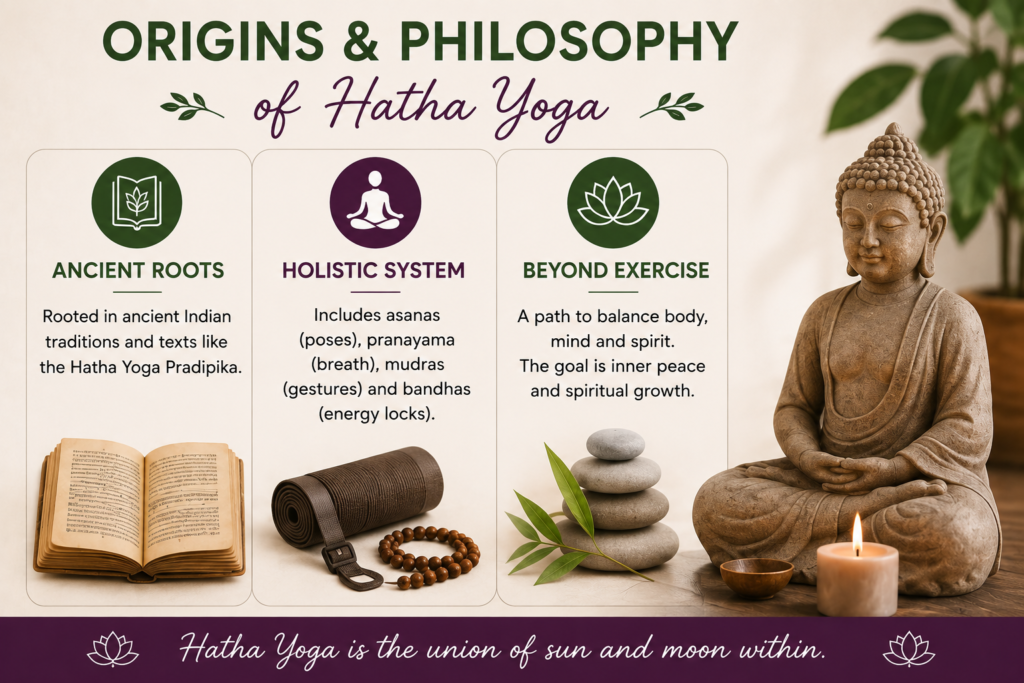
Ancient Roots and Traditional Texts
Hatha yoga’s lineage traces back centuries, deeply embedded in ancient Indian traditions. While often perceived in the West primarily as physical postures, its origins are far more profound. The foundational texts, such as the Hatha Yoga Pradipika, describe hatha yoga as a holistic system designed to prepare the body and mind for higher states of consciousness. It encompasses not just asanas (poses) but also pranayama (breath control), mudras (gestures), and bandhas (energy locks).
The Spiritual Foundation Beyond Exercise
The ultimate goal of hatha yoga, as outlined in its ancient texts, is not merely physical fitness but spiritual liberation. It’s a path of self-discipline and purification, aiming to balance the body’s energies and quiet the mind. This spiritual dimension is crucial for understanding the practice’s full scope, aligning with its potential to foster inner peace and well-being, which is why many turn to it for relief from stress, as explored in our article on. The Mayo Clinic guidelines on yoga safety and benefits Mayo Clinic acknowledge its multifaceted advantages, extending beyond physical health.
How to Practice Hatha Yoga: A Beginner’s Guide
Key Poses and Their Benefits
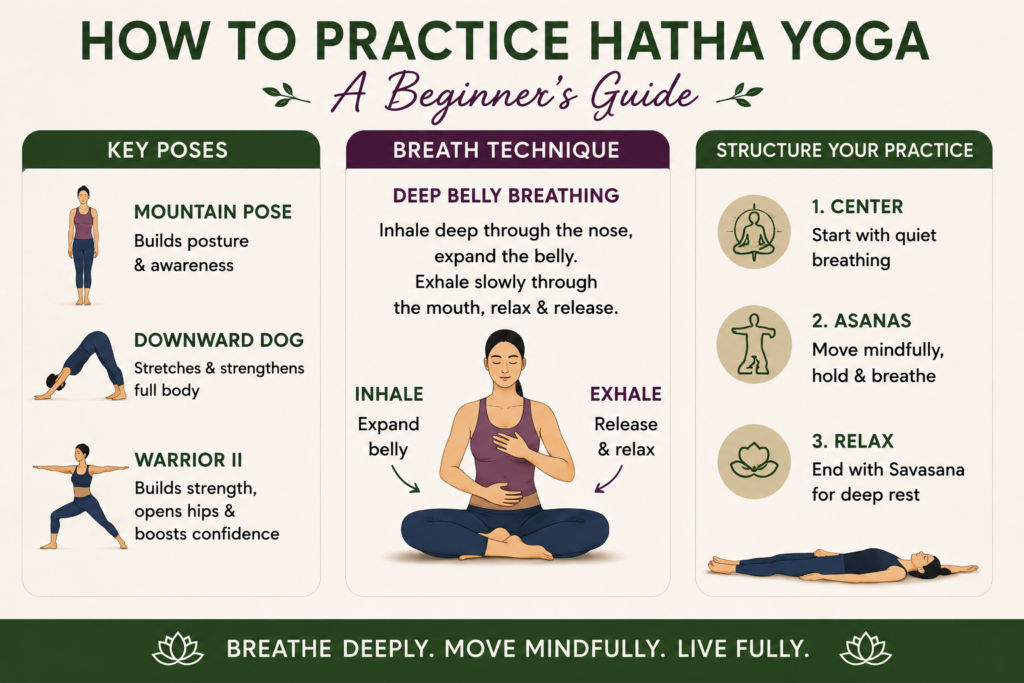
Hatha yoga emphasizes foundational poses, or asanas, that build strength, flexibility, and body awareness. For beginners, starting with simple yet effective poses is key. Mountain Pose (Tadasana) is the cornerstone of standing poses, promoting good posture and grounding. Downward-Facing Dog (Adho Mukha Svanasana) is a gentle inversion that stretches the hamstrings and shoulders, while also building upper body strength. Warrior II (Virabhadrasana II) strengthens the legs and opens the hips, fostering confidence and stability. Regular practice of these poses, as supported by Harvard Health research on yoga for stress and flexibility PubMed, can significantly improve physical well-being and mental calm.
Breathing Techniques (Pranayama)
Central to hatha yoga is pranayama, or breath control. The simplest and most beneficial technique for beginners is Deep Belly Breathing (Diaphragmatic Breathing). To practice, lie down or sit comfortably. Place one hand on your belly and the other on your chest. Inhale deeply through your nose, allowing your belly to expand; your chest hand should move minimally. Exhale slowly through your mouth, feeling your belly contract. This practice calves the nervous system, reduces anxiety, and prepares the body for deeper poses. For more on breathwork’s impact on mental health, explore our article on.
Structuring Your First Practice
A typical hatha yoga session begins with centering, often involving quiet sitting and deep breathing. This is followed by a sequence of asanas, moving mindfully from one pose to the next. It’s beneficial to hold each pose for several breaths, focusing on alignment and breath. A good beginner sequence might include the poses mentioned above, perhaps adding Child’s Pose (Balasana) for rest and Corpse Pose (Savasana) at the end for deep relaxation. Using a yoga mat with alignment markers can be particularly helpful for newcomers to ensure proper form and avoid strain. Conclude your practice with a few minutes of Savasana to integrate the benefits of your session.
Physical and Mental Benefits of Hatha Yoga
Physical and Mental Benefits of Hatha Yoga
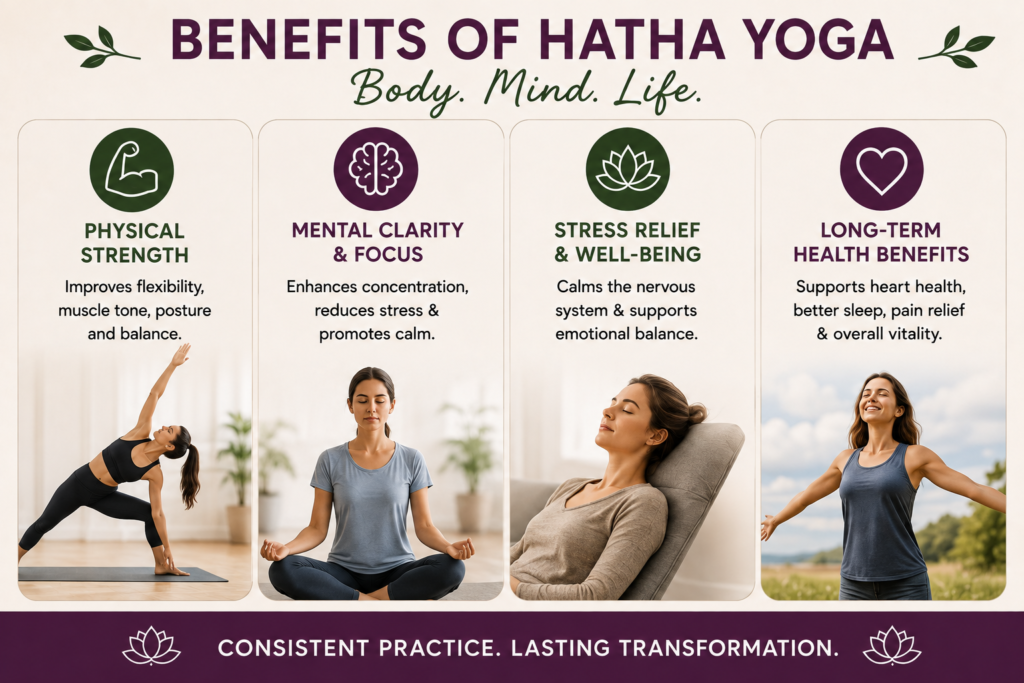
Hatha yoga offers a holistic approach to well-being, impacting both body and mind. While not a high-intensity workout, consistent practice can lead to improved muscle tone and flexibility. The gentle yet sustained poses strengthen core muscles and improve posture, contributing to overall physical fitness. Beyond the physical, the deliberate focus on breath and movement cultivates a sense of calm. Many find that hatha yoga significantly reduces stress and anxiety levels, promoting mental clarity and emotional balance. This mindful practice can be a powerful tool for managing daily pressures and enhancing overall mood.
Body Toning and Fitness Outcomes
The deliberate holding of poses (asanas) in hatha yoga engages various muscle groups, leading to increased strength and endurance over time. This can contribute to a more toned physique and improved body awareness. Research from leading health institutions like the Mayo Clinic Harvard Health highlights yoga’s role in enhancing flexibility and balance, crucial components of overall physical health.
Mental Clarity and Stress Relief
The meditative aspect of hatha yoga, combined with controlled breathing (pranayama), is profoundly beneficial for mental well-being. This practice encourages mindfulness, helping to quiet the mental chatter that often fuels stress and anxiety. For those seeking to manage these conditions, exploring specific techniques can be very effective. You can learn more about this in our article on.
Long-Term Health Improvements
Regular hatha yoga practice has been linked to numerous long-term health benefits. Studies suggest it can aid in managing chronic pain conditions, as noted in Cleveland Clinic resources on yoga for chronic conditions Mayo Clinic Yoga. Furthermore, it may contribute to improved cardiovascular health and better sleep quality, supporting a more robust and resilient body.
Hatha Yoga vs. Vinyasa Yoga: Key Differences
Pace and Flow Comparison
The most immediate difference between Hatha and Vinyasa yoga is tempo. Vinyasa links breath to movement in a continuous, flowing sequence — classes feel dynamic and cardiovascular. Hatha, by contrast, holds each pose for several breaths before transitioning, creating a slower, more deliberate rhythm. Neither is inherently superior; they simply serve different intentions.
Why Hatha May Feel Harder (And Why That’s Beneficial)
Sustained stillness is genuinely demanding. Holding Warrior II for five full breaths recruits stabilizing muscles that flowing movement often bypasses, and it forces the mind to stay present rather than coast through momentum. PubMed peer-reviewed studies on Hatha yoga efficacy Cleveland Clinic consistently show improvements in muscular endurance, flexibility, and stress reduction — outcomes tied directly to this slower, held approach. If you find Hatha surprisingly challenging, that difficulty signals depth, not inadequacy. For those managing stress or anxiety, that mindful stillness carries additional value, as explored in our guide on.
Choosing the Right Style for You
If you’re new to yoga, rebuilding after injury, or prioritizing alignment and body awareness, Hatha is the stronger starting point. If you crave aerobic intensity and variety, Vinyasa may feel more engaging. Many practitioners eventually practice both — using Hatha to refine technique and Vinyasa to build heat and stamina.
Finding Traditional Hatha Yoga Instruction
Identifying Qualified Instructors
When seeking traditional Hatha yoga instruction, look for instructors who emphasize foundational poses (asanas), breathwork (pranayama), and meditation. A qualified teacher will often have extensive training and experience, perhaps certified through a reputable organization NIH NCCIH. They should be able to explain the purpose and alignment of each pose, offering modifications as needed. Don’t hesitate to ask about their teaching background and lineage.
Red Flags in Modern Hatha Classes
Be wary of classes that rush through poses, focus heavily on advanced or acrobatic postures, or neglect the core principles of breath and mindful awareness. If a class feels more like a fitness workout than a holistic practice, it might be a diluted version of traditional Hatha. Look for an environment that encourages introspection and inner focus rather than solely external performance. For those seeking to manage specific physical discomforts, understanding the difference is crucial; see our article on.
Resources for Authentic Practice
Finding authentic instruction can sometimes be challenging. Consider exploring a well-curated if you’re looking for structured guidance. When evaluating any online course or membership, check for instructor credentials, reviews, and whether the curriculum aligns with traditional Hatha principles. Local studios that emphasize a slower pace and deeper understanding of yoga’s philosophical roots are also excellent starting points.
Potential Challenges and Realistic Expectations
Common Beginner Struggles
Most beginners encounter the same early frustrations: tight hamstrings that prevent forward folds, limited shoulder mobility, difficulty balancing, and a restless mind that resists stillness. These are normal starting points, not signs that yoga “isn’t for you.” Progress in Hatha yoga is genuinely slow — that’s by design. Expecting flexibility gains or meditative calm within a few sessions sets you up for disappointment. Realistic timelines measure improvement in months, not weeks.
When Hatha Yoga Isn’t the Right Fit
Hatha yoga’s slower pace suits most people, but it isn’t a universal solution. Those seeking intense cardiovascular conditioning will find it insufficient on its own. People managing acute injuries, severe osteoporosis, or certain cardiovascular conditions should consult a physician before starting any yoga practice. Hatha also demands a degree of body awareness that can feel uncomfortable for complete beginners — if frustration consistently outweighs benefit, a gentler restorative class or one-on-one instruction may be a better entry point.
Injury Prevention and Modifications
The most common Hatha injuries involve the lower back, knees, and wrists — almost always from pushing too hard into a pose before the body is ready. Never force a stretch. Props are not a crutch; they are intelligent tools that allow correct alignment without strain. A Yoga Props Bundle (Blocks, Straps, Bolster) gives you the support to practice safely at your current range of motion, which is especially valuable if you’re working around stiffness or past injuries. For pose-specific guidance on protecting a vulnerable spine, our offers practical, evidence-informed modifications.
Conclusion: Is Hatha Yoga Right for You?
Hatha yoga is one of the most accessible and well-rounded practices available, regardless of your age, fitness level, or prior experience. Through deliberate postures, conscious breathing, and moments of genuine stillness, it builds strength and flexibility while quietly reshaping how you handle stress, sleep, and self-awareness. The pace is forgiving, the learning curve is real but manageable, and the benefits compound steadily over time.
If you’ve been searching for a practice that addresses both body and mind without demanding athletic intensity, hatha yoga is a strong fit. It’s equally valuable for someone recovering from injury, managing anxiety, or simply wanting a sustainable movement habit. For those dealing with persistent discomfort, our guide on asanas for back pain shows how yoga postures can directly target common physical complaints.
The most important step is simply beginning. Find a qualified teacher, commit to consistency over perfection, and trust that even a short, regular practice will move you forward. Your mat is waiting.
About the Author

Pratham Bavkar — Wellness Researcher · Founder, Yoga Therapy Guide
Pratham Bavkar is the founder of Yoga Therapy Guide and a wellness researcher focused on yoga therapy, mobility, and posture health. He creates evidence-based, beginner-friendly guides on yoga poses, stretching routines, and natural wellness practices to help readers improve daily health naturally.