

Introduction to Low Sugar Lunches
That mid-afternoon slump — the foggy thinking, drooping eyelids, and sudden craving for something sweet — often traces directly back to what you ate at lunch. The good news? It’s almost entirely preventable. This guide delivers 20+ low sugar lunch ideas designed to keep your energy steady, your focus sharp, and your appetite satisfied well into the evening.
Why Lunch Matters for Blood Sugar Control
Lunch sits at a critical point in your day. Harvard Health on blood glucose and sustained energy NIH NCCIH highlights how midday meals high in added sugars trigger rapid glucose spikes followed by sharp crashes — precisely the pattern that derails afternoon productivity. Building lunches around whole foods, fiber, and protein interrupts that cycle at the source.
What Counts as ‘Low Sugar’?
Low sugar is not the same as low carb or low calorie. A low sugar lunch simply minimizes added sugars and fast-digesting refined carbohydrates, while still welcoming complex carbs, healthy fats, and lean proteins. If you’re also managing blood glucose levels more broadly, our collection of low blood sugar recipes offers complementary meal options with full carb counts to guide your choices.
Why Choose Low Sugar Lunches? The Science Behind Sustained Energy
Avoiding the 3 PM Energy Crash
Ever hit that midday slump, feeling groggy and unfocused? High-sugar lunches are often the culprit. When you consume sugary foods, your blood glucose levels spike rapidly, followed by a sharp crash. This rollercoaster effect leads to fatigue, irritability, and cravings for more sugar. Choosing low sugar lunch ideas helps maintain a steady release of energy, keeping you alert and productive throughout the afternoon.
Blood Sugar Stability and Long-Term Health
Beyond immediate energy levels, consistently stable blood sugar is crucial for long-term health. Frequent blood sugar spikes and crashes can contribute to insulin resistance and increase the risk of type 2 diabetes and heart disease Mayo Clinic. Understanding how to read nutrition labels and identify hidden sugars, as recommended by the Mayo Clinic PubMed, is a vital step in managing your intake and supporting overall well-being.
Beyond Weight Loss: Energy, Focus, and Mood
The benefits of a low-sugar lunch extend far beyond weight management. Stable blood sugar levels directly impact your cognitive function, improving concentration and memory. This sustained energy can also positively influence your mood, reducing feelings of anxiety and irritability. If you’re looking for more ways to stabilize your energy, check out our guide on.
What a Low Sugar Lunch Plate Looks Like: The Balanced Macronutrient Guide
What a Low Sugar Lunch Plate Looks Like: The Balanced Macronutrient Guide
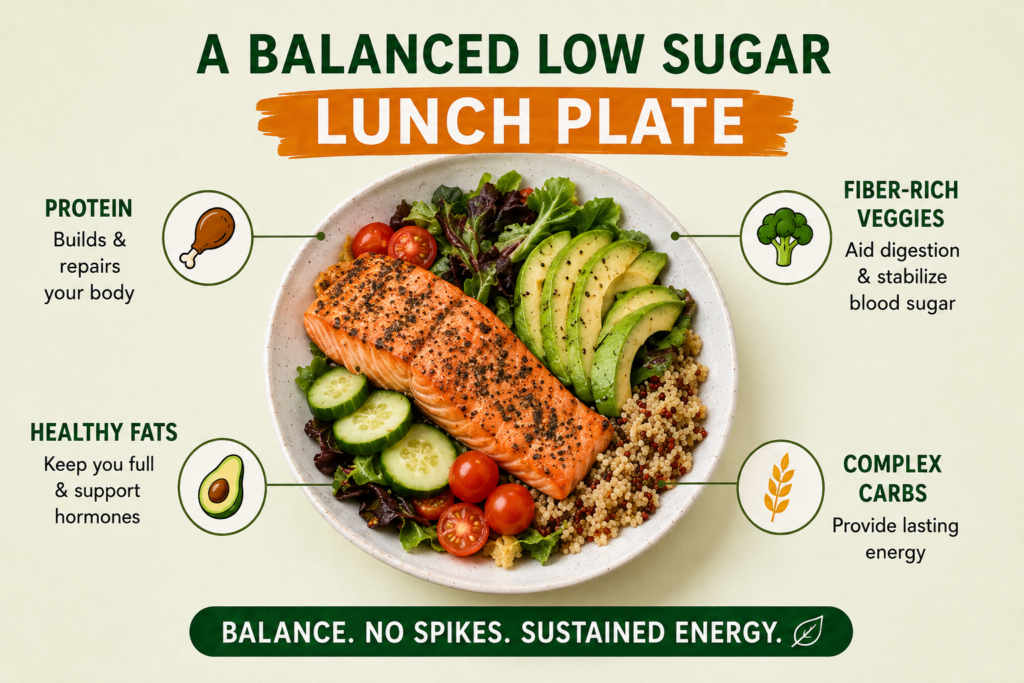
A truly satisfying and energy-sustaining low sugar lunch is built on a foundation of balanced macronutrients. Think of your plate as a blueprint for sustained energy, not just a meal. This approach is supported by dietary recommendations for metabolic health Harvard Health.
Protein Foundation
Start with a robust protein source. This is the cornerstone of satiety, helping you feel full for longer and preventing energy crashes. Excellent choices include grilled chicken or fish, lean beef, tofu, tempeh, or a generous serving of legumes like lentils or chickpeas. If you’re looking for more inspiration, check out these High-Protein Meal Prep Ideas: 15 Budget-Friendly Recipes + Beginner’s Guide.
Healthy Fats for Satiety
Don’t shy away from healthy fats! They are crucial for hormone production and nutrient absorption, and they significantly contribute to feeling satisfied. Incorporate sources like avocado, nuts, seeds, or a drizzle of olive oil over your salad.
Fiber-Rich Vegetables and Alternatives
Load up on non-starchy vegetables. Their high fiber content aids digestion, stabilizes blood sugar levels, and adds volume to your meal without excess carbohydrates. Aim for leafy greens, broccoli, bell peppers, cucumbers, and tomatoes. For those seeking lower-carb options, cauliflower rice or zucchini noodles can be great substitutes.
Quick & Easy Low Sugar Lunch Recipes (Organized by Prep Time)
No-Cook Options (<5 Minutes)
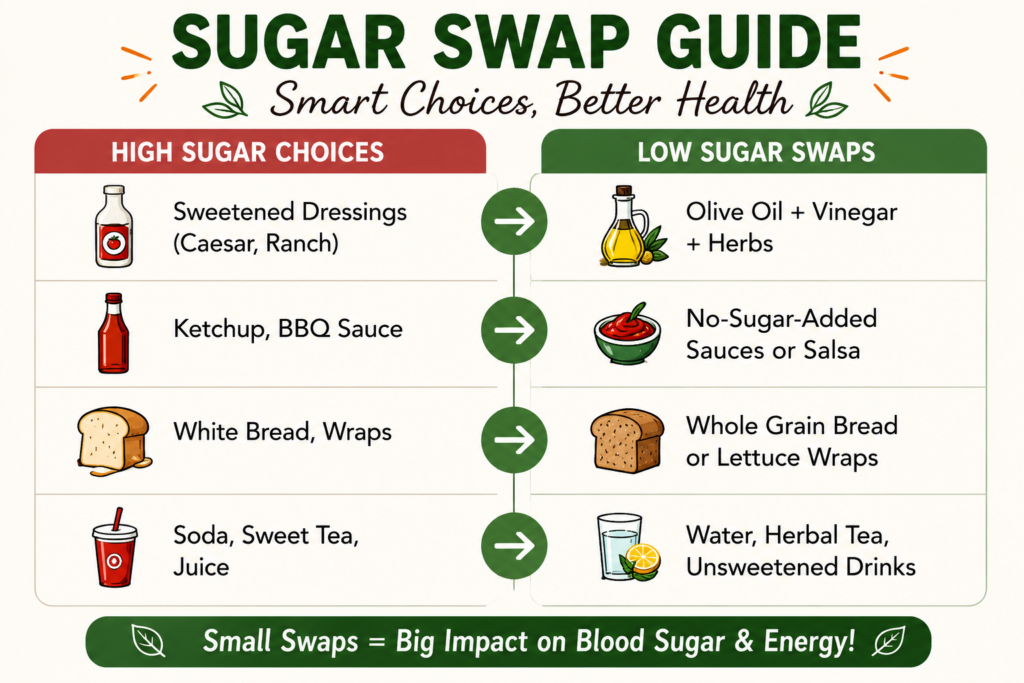
When time is truly of the essence, these no-cook options are your best friend. A classic for a reason, tuna or salmon salad (made with Greek yogurt or avocado instead of mayo) served in lettuce cups or with whole-grain crackers offers protein and healthy fats. Another speedy choice is a large salad packed with pre-washed greens, chopped vegetables, nuts, seeds, and a lean protein like hard-boiled eggs or pre-cooked chicken. Don’t forget to add healthy fats like avocado or a drizzle of olive oil-based dressing to keep you full.
Minimal-Cook Recipes (10-15 Minutes)
For those with a little more time, these minimal-cook recipes can be assembled quickly. Scrambled eggs with spinach and a side of berries is a nutrient-dense option. Alternatively, a quick stir-fry using pre-cut vegetables and a lean protein like tofu or shrimp, tossed with a low-sodium soy sauce or tamari, takes just minutes. For a heartier option, consider a quick quesadilla with whole-wheat tortillas, beans, cheese, and salsa – just be mindful of the cheese portion size.
Batch-Prep Friendly Recipes (20+ Minutes)
Investing a little more time upfront pays off throughout the week. Sheet pan meals are fantastic for batch prep. Toss chicken or fish with your favorite low-sugar vegetables like broccoli, bell peppers, and zucchini, season, and roast. This creates multiple servings for grab-and-go lunches. Another excellent strategy is preparing a large batch of quinoa or brown rice to serve as a base for bowls throughout the week. You can then top it with pre-cooked lentils, roasted sweet potatoes, and a tahini dressing. For more ideas on preparing meals in advance, check out our guide on High-Protein Meal Prep Ideas: 15 Budget-Friendly Recipes + Beginner’s Guide. Consistent, low-sugar lunches can significantly impact cognitive function and sustained energy throughout the day, as indicated by numerous PubMed studies on glycemic index and cognitive function World Health Organization.
Sugar Swap Guide: Low Sugar Alternatives for Common Lunch Ingredients
Sugar Swap Guide: Low Sugar Alternatives for Common Lunch Ingredients
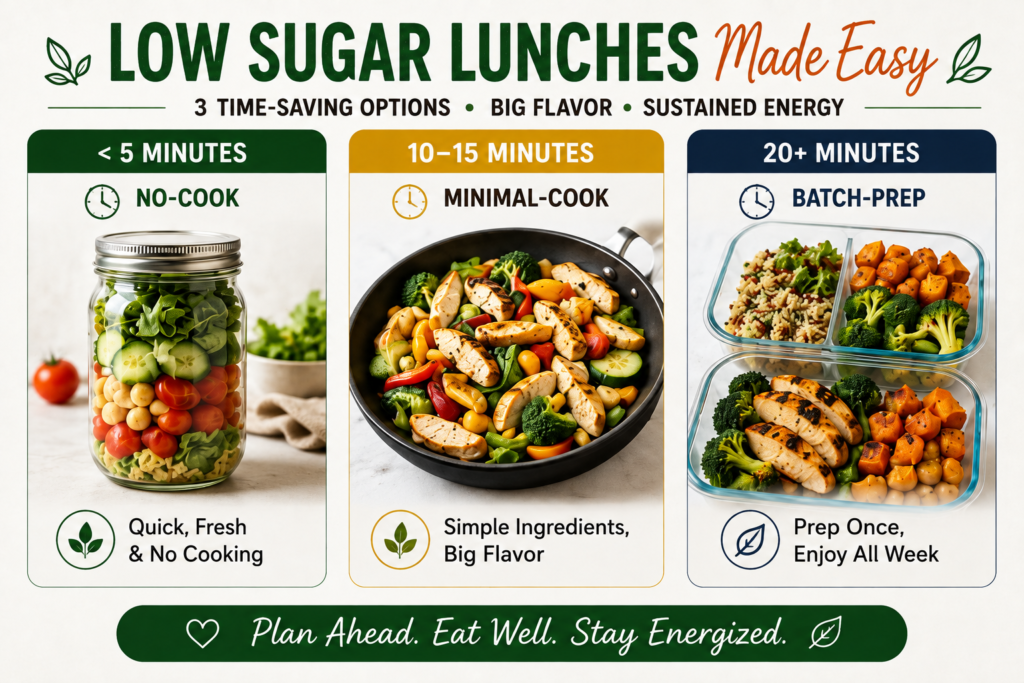
Many common lunch items hide surprising amounts of added sugar, contributing to energy crashes. Being mindful of these can make a big difference. For instance, many store-bought salad dressings and condiments, like ketchup and barbecue sauce, are loaded with sugar. Opting for vinaigrettes made with olive oil, vinegar, and herbs, or exploring specialized low-sugar versions, can significantly cut down your intake. A convenient way to manage this is with a – these bundles offer control over ingredients without sacrificing flavor.
Bread and Wraps
When choosing bread or wraps, look for whole-grain options that are lower in sugar and higher in fiber. Many commercial breads and tortillas contain added sugars for flavor and texture. Always check the nutrition label for added sugars. For a truly low-sugar approach, consider lettuce wraps or even large leafy greens as a base for your fillings.
Sweetened Beverages and Sides
Sugary drinks like sodas and many fruit juices are major sources of hidden sugar. Stick to water, unsweetened tea, or black coffee. If you crave something sweet, choose whole fruits over fruit cups in syrup or sweetened applesauce. Following World Health Organization guidelines on sugar intake recommendations Mayo Clinic Yoga means being vigilant about these seemingly small additions.
Low Sugar Lunch Meal Prep Strategies for the Week
Sunday Prep Workflow
Dedicate a couple of hours on Sunday to set yourself up for a week of successful low sugar lunches. Start by choosing 2-3 recipes from our collection of High-Protein Meal Prep Ideas: 15 Budget-Friendly Recipes + Beginner’s Guide. Wash and chop all your vegetables, cook your proteins (like chicken breasts, hard-boiled eggs, or lentils), and prepare any grains or healthy fats. Portioning everything out at this stage makes grabbing your lunch on busy mornings effortless.
Storage and Freshness Tips
Invest in quality glass meal prep containers with compartments to keep proteins, vegetables, and fats separated until eating time. This not only maintains texture but also helps with portion control and visual appeal, making your meals more enticing throughout the week. For items that can spoil quickly, like leafy greens, store them in airtight containers with a paper towel to absorb excess moisture. This ensures your low sugar lunch ideas stay fresh and delicious.
Budget-Friendly Batch Prep Ideas
Batch cooking staples like quinoa, roasted vegetables, and grilled chicken can significantly reduce your weekly lunch costs and prep time. Consider making a large batch of a versatile base, such as a lentil salad or a big container of mixed greens, then adding different proteins and toppings each day. This approach prevents flavor fatigue and ensures you always have healthy options readily available, aligning with the principles of.
Tips for Avoiding Hidden Sugars in Lunches
Reading Nutrition Labels
Become a label detective! Look beyond the front of the package. The Mayo Clinic advises paying close attention to the ingredients list and serving size on nutrition labels NIH NCCIH. Ingredients are listed by weight, so sugar will appear earlier if it’s a primary component.
Common Culprits in Pre-Made Items
Many seemingly healthy pre-made items hide sugar. Be wary of salad dressings, flavored yogurts, canned soups, and even some whole-grain breads. These often contain added sugars to enhance flavor and shelf life.
Restaurant and Takeout Strategies
Eating out? Opt for grilled or baked proteins and steamed vegetables. Ask for dressings and sauces on the side. Many restaurant meals, especially those with sweet glazes or marinades, can be sugar bombs. Consider packing a healthy lunch if you’re aiming for strict sugar control.
Healthy Snack Ideas to Complement Low Sugar Lunches
To maintain stable energy levels throughout the afternoon and prevent sugar cravings, smart snacking is key. Complementing your low sugar lunch with the right snacks can bridge the gap between meals and keep you feeling satisfied.
Protein-Focused Snacks
Protein is excellent for satiety. Consider hard-boiled eggs, a small handful of almonds, or Greek yogurt. For those on the go, preparing a protein shake is a convenient option. A quality portable blender or shaker bottle makes it easy to mix up your favorite low-sugar protein powder with water or unsweetened almond milk, ensuring you have a quick, energizing snack ready anytime.
Fat and Fiber Combinations
Combining healthy fats and fiber also promotes fullness and slows digestion. Options include celery sticks with natural peanut butter, a small avocado with a sprinkle of salt and pepper, or a small portion of berries with a few walnuts. These snacks help prevent blood sugar spikes and crashes, keeping your energy levels consistent, much like the principles behind the High-Protein Meal Prep Ideas: 15 Budget-Friendly Recipes + Beginner’s Guide.
Low Sugar Lunches for Specific Dietary Needs
Vegan Low Sugar Options
Eating vegan doesn’t mean sacrificing flavor or energy. Focus on whole plant-based foods like lentils, beans, tofu, and tempeh for protein. Pair these with plenty of non-starchy vegetables and healthy fats from sources like avocado and nuts. Many of our High-Protein Meal Prep Ideas can be easily adapted for a vegan diet, ensuring your lunch is both satisfying and sugar-free.
Gluten-Free Low Sugar Lunches
For those avoiding gluten, delicious low sugar lunches are readily achievable. Embrace naturally gluten-free grains like quinoa, brown rice, and millet. Load up on leafy greens, colorful vegetables, and lean proteins such as fish, chicken, or legumes. Salads with a simple vinaigrette, or stir-fries with tamari instead of soy sauce, are excellent choices. Remember to check labels on pre-made sauces and dressings for added sugars.
Frequently Asked Questions
How many grams of sugar should a low sugar lunch have?
Most nutrition experts recommend keeping added sugars under 5–10 grams per meal. Natural sugars from whole foods like vegetables and legumes are less concerning, since they come packaged with fiber that slows absorption and prevents energy spikes.
Can low sugar lunches still be filling?
Absolutely. The key is combining lean protein, healthy fats, and high-fiber carbohydrates — all of which promote satiety without spiking blood sugar. A grilled chicken salad with avocado and chickpeas, for example, keeps you full for hours. For recipe inspiration with exact carb counts, see our guide on low blood sugar recipes quick easy meals.
Are low sugar lunches suitable for people without diabetes?
Yes. Reducing added sugar benefits everyone — improving focus, reducing afternoon energy crashes, and supporting long-term metabolic health, regardless of whether you have a specific condition.
What’s the fastest low sugar lunch to prepare?
Hard-boiled eggs with sliced vegetables and hummus can be ready in under five minutes, making it one of the most practical low sugar lunch ideas for busy days.
About the Author

Pratham Bavkar — Wellness Researcher · Founder, Yoga Therapy Guide
Pratham Bavkar is the founder of Yoga Therapy Guide and a wellness researcher focused on yoga therapy, mobility, and posture health. He creates evidence-based, beginner-friendly guides on yoga poses, stretching routines, and natural wellness practices to help readers improve daily health naturally.