Introduction: Why Yoga for Kids Matters
Getting kids to sit still, focus, and manage big emotions can feel like an uphill battle — especially in a world of constant screens and overstimulation. If you’ve watched your child melt down over homework or struggle to wind down at bedtime, you’re not alone. That’s exactly why so many parents are discovering that simple yoga poses for kids can make a surprising difference.
What is Yoga for Children?
Kids’ yoga takes the core elements of traditional yoga — movement, breathing, and mindfulness — and wraps them in imagination and play. Think animal poses, silly sounds, and storytelling. It’s less about perfection and more about exploration, making it genuinely fun for little ones.
Why Parents Are Turning to Yoga
Research highlighted by Healthline on yoga benefits for child development Healthline points to real gains in focus, emotional regulation, and physical coordination. For kids who struggle with anxiety or restlessness, a short daily practice can become a powerful grounding tool — and it’s a habit that pays off well into adulthood. You might also notice parallels with how yoga supports mental wellness at any age, as explored in our guide on.
Benefits of Yoga for Kids: Science-Backed Advantages
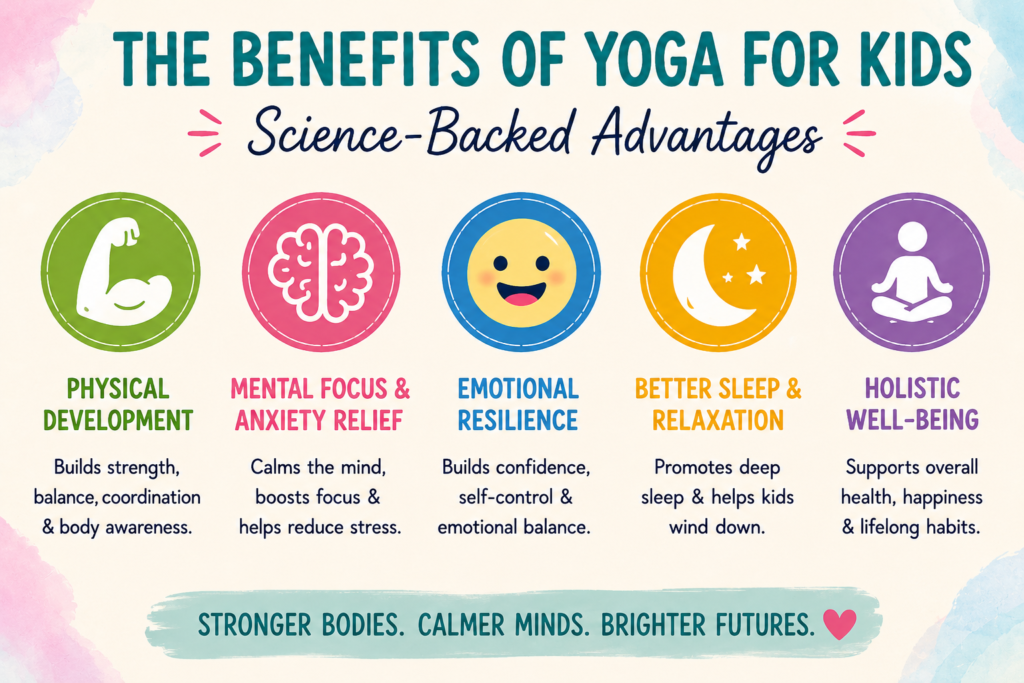
Introducing simple yoga poses for kids offers far more than flexibility — research points to meaningful gains across physical, emotional, and cognitive development. Here’s what the evidence suggests.
Physical Development & Strength
Regular yoga practice builds core strength, improves balance, and enhances coordination in growing bodies. Unlike competitive sports, yoga encourages children to move at their own pace, reducing injury risk while developing body awareness and healthy posture habits early in life.
Mental Focus & Anxiety Relief
According to WebMD, yoga can support anxiety relief and focus improvement in children WebMD. Breathing exercises and mindful movement help calm an overactive nervous system, making yoga a practical tool for kids who struggle with attention or school-related stress. For a deeper look at how specific poses address anxiety, see our guide on.
Emotional Resilience & Confidence
Mastering a new pose — even a simple one — gives children a genuine sense of accomplishment. Over time, this builds self-efficacy: the belief that effort leads to progress. Yoga also teaches kids to respond to frustration calmly rather than react impulsively.
Better Sleep & Relaxation
Gentle evening yoga routines, particularly poses paired with slow breathing, can help children wind down before bed. Improved sleep quality supports memory consolidation, mood regulation, and healthy growth — benefits that extend well beyond the yoga mat.
8 Simple Yoga Poses for Kids (By Age Group)
Poses for Toddlers (Ages 2-4)
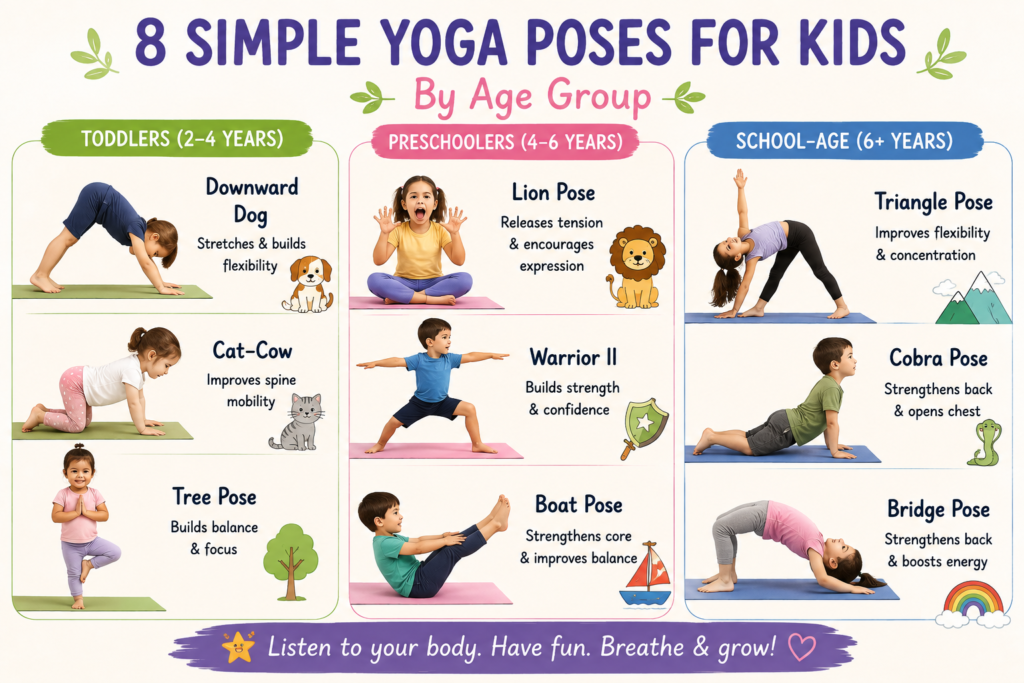
Toddlers are bursting with energy and love imitating animals. Simple, playful poses are ideal. Try Downward-Facing Dog (hands and feet on the floor, hips lifted like a roof), Cat-Cow (arching and rounding the back on hands and knees, mimicking a cat and cow), and Tree Pose (standing on one leg, hands at heart center or overhead). These poses help develop balance, coordination, and body awareness.
Poses for Preschoolers (Ages 4-6)
Preschoolers can engage in slightly more complex poses and enjoy imaginative storytelling. Continue with animal poses like Lion Pose (sitting with legs crossed, sticking out the tongue and roaring) for vocal expression and releasing tension. Introduce Warrior II (one foot forward, one back, arms extended to the sides) for building strength and confidence, and Boat Pose (sitting with knees bent, leaning back slightly, and lifting legs) for core engagement. These poses can also help with focus and emotional regulation, as explored in research on.
Poses for School-Age Kids (Ages 6+)
Older children can hold poses longer and understand more nuanced instructions. They can benefit from poses that build strength, flexibility, and concentration. Poses like Triangle Pose (standing with legs wide, tilting the torso to one side with arms extended) and Cobra Pose (lying on the stomach, lifting the chest off the floor) are excellent for spinal health and posture. A gentle Bridge Pose (lying on the back, lifting hips) can open the chest and strengthen the back. Clinical evidence on yoga for pediatric populations from the NIH NCCIH NIH NCCIH suggests these practices can be beneficial for overall well-being.
How to Adapt Poses for Different Abilities
Adaptability is key to inclusive yoga. For younger children or those with less mobility, simplify poses. For example, in Tree Pose, a toddler can simply lift one heel instead of a full leg. In Warrior II, a smaller stance might be more comfortable. Use props like blankets or blocks to support children in various poses. For children who find it difficult to sit still, incorporate movement between poses or use games to keep them engaged. The goal is to make yoga accessible and enjoyable for every child, regardless of their physical or developmental stage.
Making Yoga Fun: Storytelling & Playful Themes
Animal-Themed Yoga Adventures
Transforming simple yoga poses for kids into an imaginative journey is key to keeping them engaged. Think of a safari or a trip to the farm! Children can become mighty lions (Simhasana), graceful swans (Hamsasana), or busy bees buzzing around. This playful approach taps into their natural love for animals and storytelling, making each pose a character to embody. You can even incorporate sounds and movements to enhance the experience.
Yoga Stories & Sequences
Weave poses into a narrative. A simple story about a squirrel gathering nuts can include poses like Downward-Facing Dog (gathering nuts), Warrior II (standing tall like a tree), and Child’s Pose (snuggling into its nest). This method helps children follow sequences naturally and remember the poses through context. For guidance on how yoga can support overall well-being in children, you can refer to resources like Mayo Clinic: Child wellness and developmental milestones Mayo Clinic.
Gamification: Yoga Challenge Cards
Turn practice into a fun game! Create simple challenge cards that prompt kids to try different poses or combinations. For instance, a card might say “Be a tree for 5 breaths!” or “Try 3 Sun Salutations.” This adds an element of challenge and reward. To further enhance these interactive sessions, consider a that offers downloadable yoga adventure maps and pose challenge cards, providing a structured yet playful framework for your child’s yoga journey.
Setting Up a Calming Yoga Space at Home
Essential Elements for a Kid-Friendly Yoga Area
Transform a corner of your home into a serene sanctuary for your child’s yoga practice. Ensure a clear, uncluttered space, free from distractions. A soft rug or a dedicated Yoga Mat for Kids (Non-Slip, Eco-Friendly) provides comfort and stability, making it a worthwhile investment in their well-being. Quiet music or nature sounds can further enhance the calming atmosphere.
Creating a Sensory-Rich Environment
Engage your child’s senses to deepen their connection to the practice. Consider soft lighting, perhaps from a string of fairy lights or a gentle lamp. Introduce calming scents like lavender through a diffuser, if your child isn’t sensitive to them. Soft blankets and cushions can add to the cozy feel. This mindful setup supports stress reduction, a benefit highlighted by research from Harvard Health: Stress reduction and mental health in children PubMed. For related practices, explore our guide on mental health yoga poses.
How to Introduce Yoga to Your Kids (Parent Guide)
Start Small with 5-Minute Sessions
Begin with very short, manageable yoga sessions. Even five minutes of playful movement can be beneficial. Focus on a few simple poses and keep it lighthearted. As your child becomes more comfortable, you can gradually increase the duration.
Make It a Routine, Not a Chore
Integrate yoga into your daily or weekly schedule, perhaps before bedtime or as a weekend activity. The key is consistency. When yoga becomes a regular, enjoyable part of their lives, it’s less likely to feel like a chore. Consider exploring a dedicated Children’s Yoga Book or Video Course for structured ideas.
Lead by Example
Children often learn best by observing. Participate in the yoga practice with your kids! Your enthusiasm and engagement will be contagious. Showing them that you enjoy yoga too can be a powerful motivator. Research on yoga’s efficacy in children, such as studies found on PubMed, often highlights the positive impact of guided practice Harvard Health.
Quick Yoga Breaks for Busy Families
Life gets hectic, but short yoga breaks can be slotted in easily. A quick stretch session between homework and dinner, or a few mindful breaths before a busy outing, can make a difference. These moments can help manage stress and bring a sense of calm, much like the techniques discussed in.
Frequently Asked Questions (FAQs)
Frequently Asked Questions (FAQs)
How young can children start doing yoga? Toddlers can begin exploring simple movements and poses, but formal practice often starts around age 3-4. The key is to keep it playful and age-appropriate, focusing on fun rather than perfect form.
Do I need special equipment for kids’ yoga? Not at all! A comfortable, open space is all that’s needed. A yoga mat can add comfort, but a soft rug or carpet works just fine. Comfortable clothing is essential.
How long should a kids’ yoga session be? For younger children, sessions can be as short as 10-15 minutes. As they get older, you can gradually increase the time. The focus should be on engagement and enjoyment, not duration.
Can yoga help with my child’s behavior? Absolutely. Yoga can help children develop self-regulation, focus, and body awareness. It provides a healthy outlet for energy and can be particularly beneficial for children experiencing stress or anxiety, much like how yoga aids adults with mental health yoga poses.
Conclusion: Start Your Family’s Yoga Journey Today
Simple yoga poses for kids offer something genuinely rare: a practice that builds physical strength, emotional resilience, and focused attention — all while feeling like play. From the grounded stability of Tree Pose to the giggles that come with Downward Dog, every session plants seeds that can support your child’s wellbeing for years to come.
The most important thing to remember is that perfection isn’t the goal. A wobbly warrior or a distracted child mid-pose is completely normal — and completely fine. What matters is showing up consistently, keeping it joyful, and letting your child lead at their own pace.
- Start small — even five minutes a few times a week makes a difference
- Follow their energy — playful themes and storytelling keep kids engaged
- Practice together — family yoga deepens connection and builds shared routine
As your family grows more comfortable on the mat, yoga’s benefits naturally extend to every member. If you’re personally navigating stress or anxiety alongside your child, explore our guide on mental health yoga poses for anxiety and stress relief to support your own practice too. Now roll out that mat — your family’s yoga journey starts today.
About the Author

Pratham Bavkar — Wellness Researcher · Founder, Yoga Therapy Guide
Pratham Bavkar is the founder of Yoga Therapy Guide and a wellness researcher focused on yoga therapy, mobility, and posture health. He creates evidence-based, beginner-friendly guides on yoga poses, stretching routines, and natural wellness practices to help readers improve daily health naturally.