

Why Post-Yoga Nutrition Matters
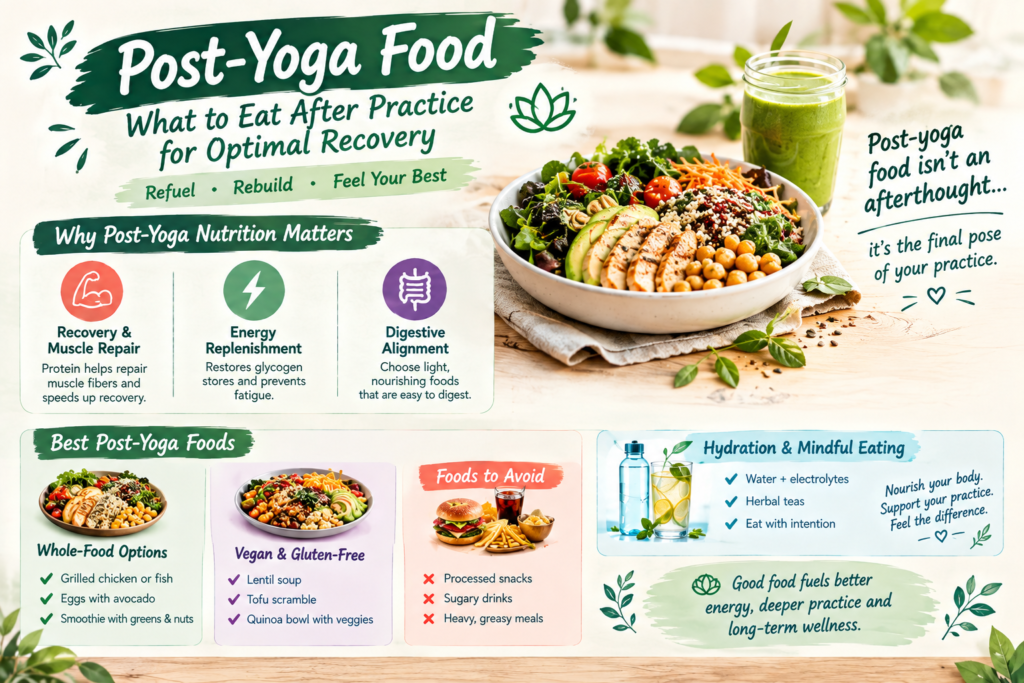
You’ve just rolled up your mat, taken your final savasana breath, and your body is quietly humming with effort. What you eat in the next hour can either amplify everything you just worked for — or leave your muscles stiff and your energy flat by evening. Post-yoga food isn’t an afterthought; it’s the final pose of your practice.
Recovery and Muscle Repair
Even a gentle flow creates microscopic stress in muscle fibers that requires protein to rebuild. The Mayo Clinic on post-exercise nutrition and recovery timing Spine-health confirms that consuming protein within 30–60 minutes of exercise meaningfully accelerates tissue repair. Whether you practiced restorative yin or a vigorous vinyasa, your muscles are listening for the right nutritional signal.
Energy Replenishment
Yoga depletes glycogen — the stored carbohydrate your muscles use as fuel. Skipping post-practice carbohydrates leaves you foggy and fatigued, undermining the mental clarity that yoga cultivates. Pairing quality carbs with protein creates a synergistic recovery response that restores both physical and cognitive energy. For a deeper look at how yoga supports mental well-being, see our guide on.
Digestive Alignment with Yoga Philosophy
Yoga’s holistic framework views food as prana — life force. Eating mindfully after practice honors that principle, choosing foods that are light, nourishing, and easy to digest rather than heavy or processed.
How Soon After Yoga Can You Eat?

How Soon After Yoga Can You Eat?
The ideal time to refuel after yoga depends on your practice’s intensity. While a general rule of thumb suggests waiting about 30 minutes to an hour after a gentle session, more vigorous classes might require a quicker intake of nutrients for optimal recovery.
Intensity Matters: Restorative vs. Power Yoga
For a restorative or gentle Hatha yoga session, your digestive system is likely still in a relaxed state. Waiting 30-60 minutes allows your body to fully transition out of practice before introducing food. However, after a strenuous power yoga or Ashtanga class, your body has depleted its energy stores and needs replenishment sooner. Consuming a balanced meal or snack within 30 minutes can significantly aid muscle repair and glycogen replenishment.
Listen to Your Body
Ultimately, the best timing is dictated by your individual hunger cues and how your body feels. Some people feel ready to eat shortly after any yoga practice, while others prefer a longer pause. Pay attention to your energy levels and digestive comfort. Research from the National Institutes of Health (NIH) NCCIH on yoga and digestive health NIH NCCIH highlights the diverse ways yoga can impact digestion, reinforcing the need for personalized approaches to post-yoga nutrition.
Macronutrients for Post-Yoga Recovery
Macronutrients for Post-Yoga Recovery
After your yoga practice, focusing on the right macronutrients is key for optimal recovery. Prioritize protein to help repair and rebuild muscle tissue that may have been stressed during your session. Carbohydrates are essential for replenishing your depleted glycogen stores, providing the energy needed for daily activities. Healthy fats contribute to satiety, helping you feel full and satisfied after your meal, and play a role in reducing inflammation.
Protein for Muscle Recovery
Adequate protein intake post-yoga supports muscle repair and growth. Aim for sources like Greek yogurt, eggs, or a plant-based protein shake.
Carbohydrates for Energy Restoration
Replenishing glycogen stores is crucial. Choose complex carbohydrates such as whole-grain toast, oats, or fruits to provide sustained energy.
Healthy Fats for Satiety
Don’t shy away from healthy fats. They aid in nutrient absorption and keep you feeling full. Avocados, nuts, and seeds are excellent choices for post-yoga snacks or meals.
Best Post-Yoga Foods and Quick Meal Ideas

Easy Whole-Food Options
After your yoga session, focus on nutrient-dense foods to aid muscle repair and replenish energy stores. A balanced meal should include lean protein, complex carbohydrates, and healthy fats. Consider a grilled chicken or fish salad with mixed greens and a light vinaigrette. Alternatively, a hard-boiled egg and a piece of fruit offer a simple, effective combination. For those who find themselves energized after a deep practice, exploring might inspire a more restorative meal.
Vegan and Gluten-Free Alternatives
Plant-based and gluten-free individuals have excellent options too. Lentil soup or a tofu scramble provides ample protein. A quinoa bowl packed with roasted vegetables and a tahini dressing is both satisfying and nutritious. Remember that adequate protein intake is crucial for muscle synthesis, as highlighted in PubMed studies on protein synthesis post-yoga and recovery Mayo Clinic.
Foods to Avoid After Practice
While it’s tempting to indulge, some foods can hinder your recovery. Highly processed snacks, sugary drinks, and excessive amounts of saturated fats can lead to inflammation and slow down muscle repair. Avoid heavy, greasy meals immediately after practice; opt for lighter, easily digestible options instead.
Hydration and Mindful Eating After Yoga
Rehydration Strategy
After a yoga session, your body has likely lost fluids through sweat. Replenishing these is crucial for muscle recovery and overall well-being. Focus on water as your primary source, but consider adding electrolytes if your practice was particularly intense or lengthy. Herbal teas can also contribute to hydration and offer additional benefits.
Avoiding the ‘Reward’ Mentality
It’s easy to fall into the trap of viewing your yoga practice as a justification for indulging in unhealthy foods. Instead, cultivate a mindset of nourishment. Think about how the food will support the positive feelings and physical benefits you’ve just cultivated. This mindful approach aligns with the principles of yoga itself, promoting balance and self-awareness, much like the concepts in Yoga Nidra: The Complete Guide to Conscious Relaxation and Transformation.
Eating with Intention
Approach your post-yoga meal as an act of self-care. Pay attention to your hunger cues and choose foods that are both satisfying and beneficial for your body. Consider the principles of digestive alignment, as discussed by Spine-Health on yoga and digestive alignment PubMed. Opt for whole, unprocessed foods that provide sustained energy and support muscle repair, rather than quick fixes that can lead to energy crashes.
Pre-Yoga Snacking and Meal Timing
While the focus is often on what to eat after yoga, fueling your body before practice is equally important for optimal performance and recovery. Eating the right foods at the right time can prevent energy dips and improve your overall experience, making your session more akin to the mindful benefits found in.
What to Eat Before Class
Aim for easily digestible foods that provide sustained energy. Carbohydrates are key for fuel, while a small amount of protein can aid in muscle preparation. Avoid heavy, fatty, or overly spicy foods that can cause discomfort during your practice.
Timing Guidelines by Class Duration
For classes less than an hour, a light snack 30-60 minutes prior is usually sufficient. Think a banana or a small handful of almonds. If you have a longer or more intense session planned (90 minutes or more), consider a more substantial meal 2-3 hours beforehand, incorporating complex carbohydrates and lean protein.
Emergency Pre-Yoga Options
If you find yourself needing a quick energy boost close to class time, opt for something simple like a few dates or a small energy bar. These provide a rapid source of glucose to power you through your practice without weighing you down.
Quick Post-Yoga Meal Planner Template
Use this simple framework to match your post-yoga food choices to the intensity and demands of your specific practice — no guesswork required.
For Restorative Yoga
Gentle sessions burn minimal glycogen, so your body needs nourishment rather than aggressive refuelling. Opt for a light, anti-inflammatory meal within 60–90 minutes: think warm golden milk with a small handful of walnuts, or miso soup with tofu and steamed greens. Keep portions modest and prioritise calming foods that support the parasympathetic state you’ve just cultivated. If you enjoy yoga nidra as part of your restorative routine, see our guide on Yoga Nidra: The Complete Guide to Conscious Relaxation and Transformation for how deep rest affects your recovery needs.
For Power/Vinyasa Yoga
Higher intensity means greater muscle breakdown and glycogen depletion. Aim to eat within 30–45 minutes post-practice, combining lean protein (20–30g) with complex carbohydrates — a chicken and quinoa bowl or Greek yoghurt with banana works well.
For Hot Yoga
Electrolyte replacement is your first priority after a heated class. Start with a coconut water or electrolyte drink, then move to a balanced meal featuring sodium-rich foods like edamame, alongside protein and carbohydrates to rebuild depleted stores.
For a fully structured weekly plan tailored to your yoga style, the Yoga Nutrition Meal Prep Guide offers ready-made templates that take the planning off your plate entirely.
About the Author

Pratham Bavkar — Wellness Researcher · Founder, Yoga Therapy Guide
Pratham Bavkar is the founder of Yoga Therapy Guide and a wellness researcher focused on yoga therapy, mobility, and posture health. He creates evidence-based, beginner-friendly guides on yoga poses, stretching routines, and natural wellness practices to help readers improve daily health naturally.