

What Is Breast Yoga?
Breast yoga is a targeted wellness practice combining chest-opening poses, breathwork, and lymphatic stimulation techniques drawn from traditional yoga to support breast tissue health, posture, and circulation. It is not a single defined style but rather a purposeful selection of movements that address the muscles, fascia, and lymphatic pathways surrounding the chest.
Defining Breast Yoga as a Wellness Practice
At its core, breast yoga focuses on strengthening the pectoral and supporting muscles, improving thoracic posture, and encouraging healthy lymphatic drainage. The NIH NCCIH on yoga and lymphatic health NIH NCCIH acknowledges yoga’s role in promoting circulation and reducing inflammation — both directly relevant to breast tissue wellness.
Breast Yoga vs. ‘Yoga Boobs’: Understanding the Difference
You may have seen viral claims that yoga reshapes breast appearance. Breast yoga is not about aesthetics or surgical alternatives. It is a structured, evidence-informed practice focused on musculoskeletal support and overall chest health — grounded in anatomy, not marketing.
The Holistic Approach to Breast Health
This practice treats the chest as part of an interconnected system. Improved posture reduces compression, breathwork supports lymph flow, and mindful movement builds body awareness. If you already use yoga therapeutically, our guide on yoga for pain relief shows how these principles extend across the whole body.
Benefits of Breast Yoga for Women

Physical Health Benefits: Lymphatic Drainage and Circulation
Breast yoga offers several physical advantages. Gentle movements and focused breathing can enhance lymphatic drainage, which is crucial for removing toxins and supporting immune function. Improved circulation in the chest area is also a key benefit, potentially reducing discomfort and promoting overall breast health. Research from the National Institutes of Health (NIH) on complementary and alternative medicine highlights the positive impact of practices like yoga on bodily systems Mayo Clinic.
Psychological and Emotional Benefits
Beyond the physical, breast yoga can significantly boost emotional well-being. The practice encourages mindfulness and body awareness, fostering a deeper connection with oneself. This can lead to reduced stress, anxiety, and an improved sense of self-acceptance. Many find that dedicating time to these specific movements cultivates a sense of self-care and empowerment.
Posture Improvement and Breast Comfort
By strengthening chest and upper back muscles, breast yoga can contribute to better posture. This, in turn, can alleviate strain on the shoulders and neck, reducing discomfort. Improved posture can also make the breasts feel lighter and more supported, enhancing overall comfort throughout the day. The Mayo Clinic notes that yoga can be beneficial for various physical ailments and overall wellness PubMed.
Supporting Post-Surgery Recovery and Body Acceptance
For individuals recovering from breast surgery, breast yoga can be a gentle way to regain mobility and reduce scar tissue adhesion. The practice’s emphasis on body acceptance and mindful movement can be particularly helpful during this sensitive time. It aids in reconnecting with the body and promoting healing, both physically and emotionally. For those seeking relief from physical discomfort, exploring yoga for pain relief might also be beneficial.
Essential Yoga Poses for Breast Health

Essential Yoga Poses for Breast Health
Certain yoga poses can be particularly beneficial for breast health by promoting circulation, improving posture, and encouraging lymphatic drainage. Here, we explore some key poses and how to adapt them for your comfort.
Chest-Opening Poses: Bhujangasana and Urdhva Mukha Svanasana
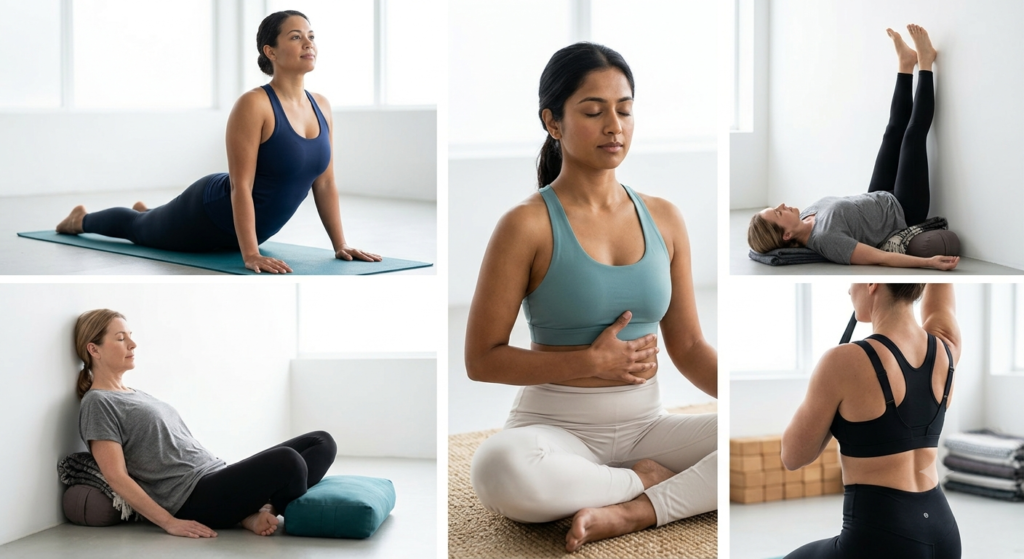
These poses are excellent for counteracting rounded shoulders and opening the chest. Cobra Pose (Bhujangasana) involves lying on your stomach and lifting your chest off the floor using back strength, while Upward-Facing Dog (Urdhva Mukha Svanasana) is a more intense backbend. Both help to create space in the chest and improve breathing capacity. If you have larger breasts or find these poses strain your lower back, try keeping your hips on the floor in Cobra or modifying Upward-Facing Dog by keeping your knees down (Forearm Plank).
Shoulder and Thoracic Mobility: Gomukhasana and Reverse Prayer Pose
Improving mobility in the shoulders and upper back is crucial for good posture, which, as highlighted by Harvard Health on posture and breast health connection Harvard Health, can impact breast tissue health. Cow Face Pose (Gomukhasana), particularly the arm variation, stretches the shoulders. Similarly, Reverse Prayer Pose (Paschima Namaskarasana), where hands are clasped behind the back with palms together, opens the chest and shoulders. For those with limited shoulder flexibility, a yoga strap can bridge the gap between the hands, making these poses more accessible.
Lymphatic Drainage Poses: Legs-Up-the-Wall and Supported Bridge
Poses that elevate the legs can aid lymphatic drainage. Legs-Up-the-Wall Pose (Viparita Karani) is a restorative inversion that is gentle and calming. Supported Bridge Pose (Setu Bandhasana), where a block or bolster is placed under the sacrum, gently opens the chest while also allowing for passive inversion. These poses can help reduce fluid retention and promote overall well-being.
Modifications for Different Breast Sizes and Comfort Levels
It’s important to modify poses to suit your body. For individuals with larger breasts, the primary concern is often comfort and avoiding compression. Using blankets or bolsters for support under the chest or abdomen can create space. For those with breast implants, it’s crucial to listen to your body and avoid any poses that cause discomfort or pressure. Gentle chest openers and shoulder stretches are generally well-tolerated. If you have specific concerns, consulting with a knowledgeable yoga instructor or healthcare provider is recommended. Remember, a comfortable and supportive yoga mat can enhance your practice.
Breathing Techniques for Breast Health
Diaphragmatic Breathing and Chest Expansion
Deep, conscious breathing is fundamental to breast yoga. Diaphragmatic breathing, also known as belly breathing, encourages the diaphragm to move down, creating more space for the lungs to expand fully. This expansion not only oxygenates the body but also gently massages the chest area, promoting circulation and lymphatic flow. Focusing on chest expansion during inhales can help open up the thoracic cavity, releasing tension that may accumulate in the shoulders and chest, areas often associated with stress and poor posture.
Pranayama Practices for Lymphatic Support
Certain pranayama (yogic breathing) techniques are particularly beneficial for supporting the lymphatic system, which plays a crucial role in detoxification and immune function. Practices like deep belly breathing and alternate nostril breathing (Nadi Shodhana) can help stimulate lymphatic drainage. While research on the direct impact of pranayama on breast tissue is ongoing, improved circulation and reduced stress from these practices are generally recognized as beneficial for overall health. For those with breast implants or who have undergone surgery, it’s important to consult with a healthcare provider, as recommended by the Cleveland Clinic on yoga with breast implants and post-surgery considerations Mayo Clinic Yoga.
Integrating Breath Work into Your Yoga Practice
Incorporating breath awareness into your daily yoga routine can enhance the benefits of your physical poses. Start by dedicating a few minutes before or after your asana practice to focused breathing. Even short, consistent sessions can make a difference. You can practice diaphragmatic breathing while seated or lying down, and integrate chest expansion techniques into poses like Cat-Cow or gentle backbends. Remember, consistent practice is key to reaping the full rewards of breath work for both physical and emotional well-being.
Precautions, Contraindications, and Safety Considerations
Practicing yoga to support breast health is generally safe for most women, but certain conditions and circumstances call for caution, modification, or medical clearance before beginning or continuing a practice.
When to Avoid Breast Yoga or Modify Intensity
Women who have recently undergone breast surgery, are in active cancer treatment, or are experiencing acute breast inflammation should avoid chest-opening poses and inversions until cleared by a physician. During pregnancy, deep twists and strong chest compressions should be modified. Always listen to your body — discomfort is a signal, not a challenge to push through. If you experience persistent breast pain, our guide on yoga for pain relief offers broader context on managing pain through mindful movement.
Breast Implants and Yoga: What You Need to Know
Women with breast implants can typically practice yoga safely, but high-impact chest stretches and extreme range-of-motion poses may place undue stress on implant placement. Consult your surgeon about restrictions, particularly within the first year post-procedure.
Addressing Breast Pain During Practice
Cyclical breast tenderness is common, and certain poses may feel uncomfortable during this time. Wearing a supportive sports bra, reducing intensity, and avoiding prone positions can help. Persistent or unexplained breast pain warrants medical evaluation Cleveland Clinic.
Consulting Healthcare Providers
Always consult a qualified healthcare provider before starting any new exercise routine if you have a breast health condition, recent surgery, or ongoing treatment. Yoga complements medical care — it does not replace it.
Practical Tips for Comfortable Breast Yoga Practice
Choosing Supportive Activewear for Your Breast Size
The right foundation makes every pose safer and more comfortable. A well-fitted supportive sports bra minimises bounce and reduces ligament strain, particularly during dynamic flows. Women with larger busts benefit most from encapsulation-style bras with wide straps and firm underbands, while those with smaller frames can opt for lighter compression styles. Prioritise moisture-wicking fabric and a snug — not restrictive — fit that allows full diaphragmatic breathing.
Creating a Sustainable Practice Routine
Consistency matters far more than duration. Starting with two or three 20-minute sessions per week allows your body to adapt without overwhelm. Pair chest-opening poses with the breathing techniques covered earlier in this guide, and gradually layer in strength-focused sequences over time. For women managing discomfort alongside their practice, our guide on yoga for pain relief offers complementary strategies worth exploring.
User Testimonials and Real-World Experiences
- “I noticed better posture within three weeks,” shares Maya, 42, who began practicing after a mastectomy.
- “The breathwork alone reduced my tension headaches,” reports Diane, 35, a full-time desk worker.
- “Finding the right bra changed everything,” says Priya, 28, noting that proper support finally made inversions feel accessible.
About the Author

Pratham Bavkar — Wellness Researcher · Founder, Yoga Therapy Guide
Pratham Bavkar is the founder of Yoga Therapy Guide and a wellness researcher focused on yoga therapy, mobility, and posture health. He creates evidence-based, beginner-friendly guides on yoga poses, stretching routines, and natural wellness practices to help readers improve daily health naturally.