Introduction to Yoga for Mental Health
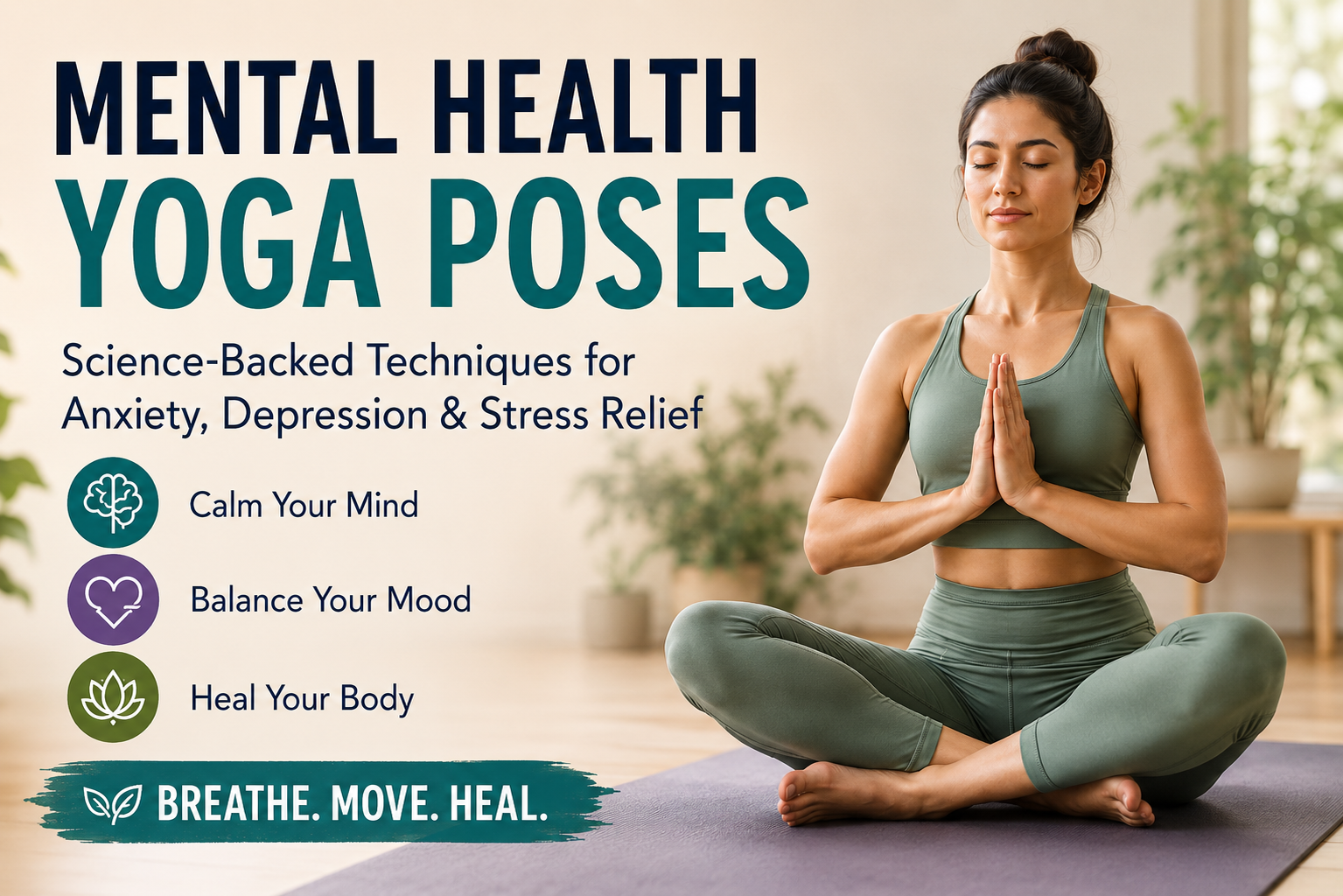
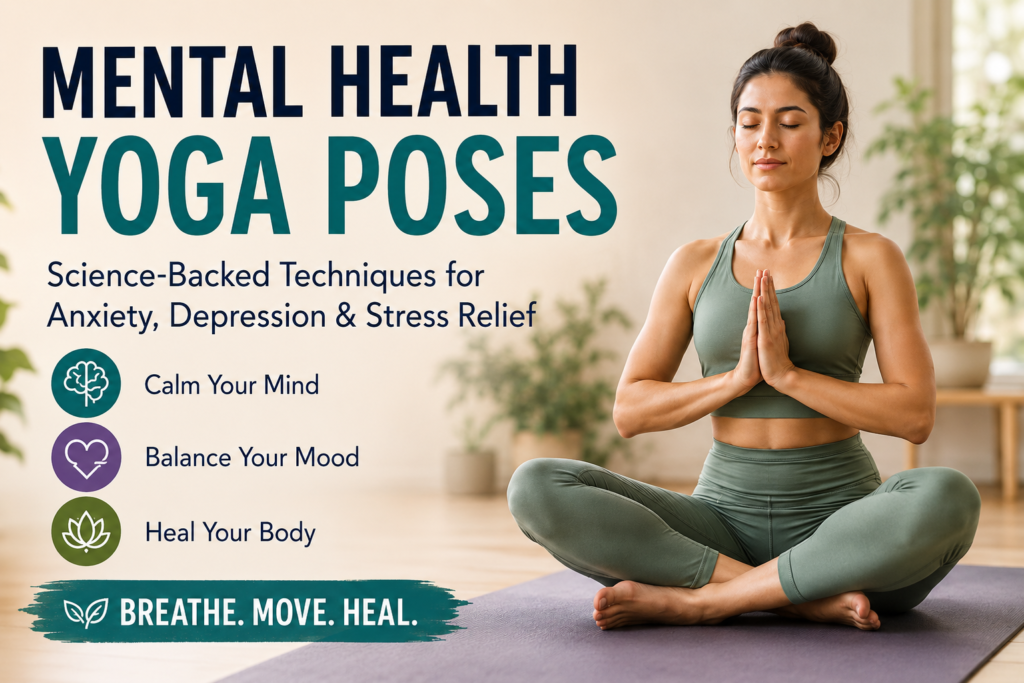
Stress, anxiety, and depression have become defining challenges of modern life — yet millions of people are discovering that ancient movement practices offer surprisingly powerful relief. Mental health yoga poses aren’t just trendy wellness content; they’re backed by a growing body of clinical research showing measurable effects on mood, nervous system regulation, and emotional resilience. The NIH’s National Center for Complementary and Integrative Health Healthline has recognized yoga as a promising complementary approach for anxiety and depression — and this guide translates that science into practical techniques you can use today.
What is Yoga Therapy?
Yoga therapy is the intentional application of yoga practices — postures, breathwork, and mindfulness — to support physical and mental health outcomes. It works alongside conventional treatment, not instead of it. If you’re managing a diagnosed mental health condition, yoga is a powerful complement to professional care, never a replacement. Think of it as adding a research-supported tool to your existing wellness plan.
Why Mental Health Matters in Modern Life
Chronic stress doesn’t just affect your mood — it elevates cortisol, disrupts sleep, and strains the cardiovascular system. For those already navigating high blood pressure alongside anxiety, our guide on yoga for high blood pressure explores how these conditions often overlap and how yoga addresses both simultaneously.
The Science Behind Yoga and Mental Health
How Yoga Affects the Nervous System
Yoga works on mental health through a concrete physiological pathway: it activates the parasympathetic nervous system, often called the “rest and digest” response, while dampening the stress-driven sympathetic system. Slow, controlled breathing — a cornerstone of yoga practice — directly stimulates the vagus nerve, lowering heart rate and reducing cortisol levels. Harvard Health on stress reduction and nervous system regulation WebMD confirms that these breath-driven shifts produce measurable, not merely subjective, changes in the body’s stress response.
Neurological Benefits: Stress Reduction and Mood Regulation
Regular yoga practice is associated with increased GABA (gamma-aminobutyric acid) activity in the brain — a neurotransmitter that calms neural excitability and is often low in people with anxiety and depression. Studies also point to changes in the prefrontal cortex, the region governing emotional regulation, suggesting yoga reshapes how the brain processes stress over time. For those managing physical discomfort alongside emotional strain, see our guide on yoga for pain relief.
The Role of Consistency in Mental Health Improvement
A single session can provide temporary relief, but lasting mental health benefits require regular practice. Research consistently shows that practitioners who maintain a routine of at least two to three sessions per week over eight or more weeks report meaningful reductions in anxiety and depressive symptoms. Think of yoga less as a quick fix and more as a trainable skill — the nervous system, like any system, adapts gradually with repeated, intentional input.
Yoga Poses for Anxiety and Stress Relief
Certain yoga poses are particularly effective at calming the nervous system, easing anxious thoughts, and lowering the physiological markers of stress. The Mayo Clinic on yoga as complementary mental health care NIH NCCIH highlights that even gentle, restorative postures can meaningfully support emotional wellbeing alongside conventional treatment. Understanding why each pose works helps you practice with greater intention — and greater benefit.
Child’s Pose (Balasana)
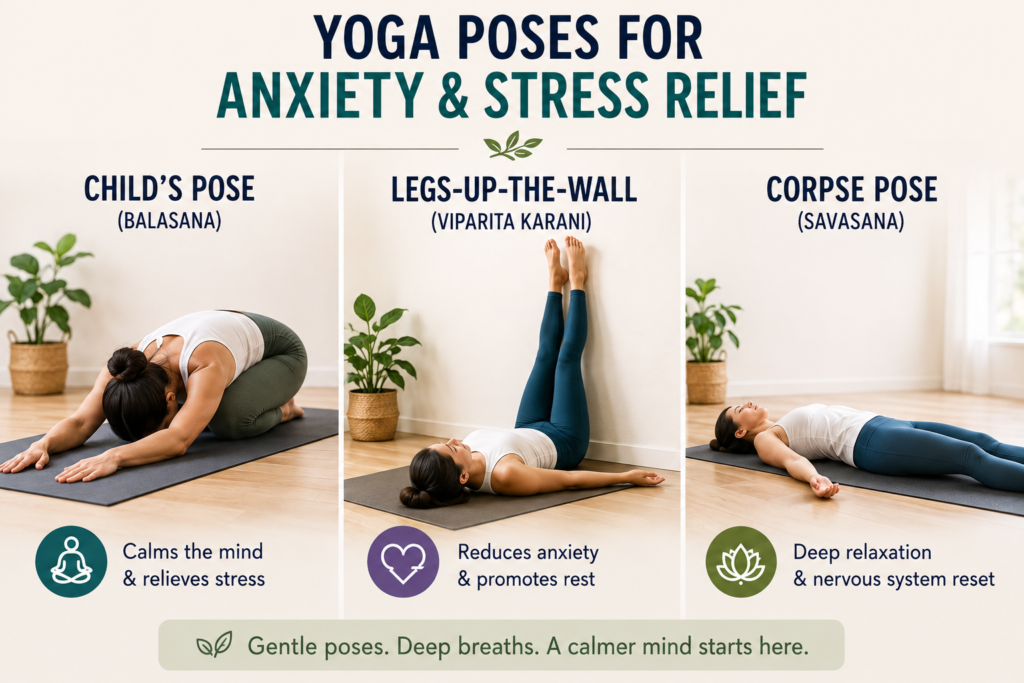
Child’s Pose is a gentle forward fold that signals safety to the nervous system. By drawing the body inward and lowering the forehead toward the ground, you activate the parasympathetic (“rest and digest”) response, slowing heart rate and reducing cortisol output. The light compression on the abdomen also encourages diaphragmatic breathing, deepening the calming effect. Using props like yoga blocks or bolsters makes this pose more accessible and comfortable, especially for beginners or those with knee sensitivity — place a bolster under your torso or a folded blanket behind your knees for support. Contraindication: Avoid if you have recent knee injuries or are in late-stage pregnancy.
Legs-Up-The-Wall Pose (Viparita Karani)
This passive inversion involves lying on your back with legs resting vertically against a wall. The position encourages venous blood return to the heart, which research links to reduced heart rate and a measurable drop in anxiety symptoms. Mayo Clinic It requires almost no muscular effort, making it ideal for moments of acute stress or exhaustion. Hold for five to fifteen minutes, focusing on slow, even breathing. Contraindication: Those with glaucoma, serious neck injuries, or uncontrolled high blood pressure should consult a healthcare provider before practicing inversions. For more on how yoga supports cardiovascular wellbeing, see our guide on.
Corpse Pose (Savasana)
Often underestimated, Savasana is one of the most powerful tools in yoga for anxiety and stress relief. Lying completely still with eyes closed allows the entire body to release muscular tension while the mind practices conscious surrender — a skill that directly counters the hypervigilance common in anxiety. Studies on relaxation response techniques show that deliberate stillness lowers cortisol and activates the parasympathetic nervous system within minutes. Aim for five to ten minutes at the end of any practice. When to seek professional guidance: If anxiety, depression, or stress symptoms are severe, persistent, or interfering with daily life, yoga should complement — not replace — care from a qualified mental health professional.
Yoga Poses for Depression and Low Mood
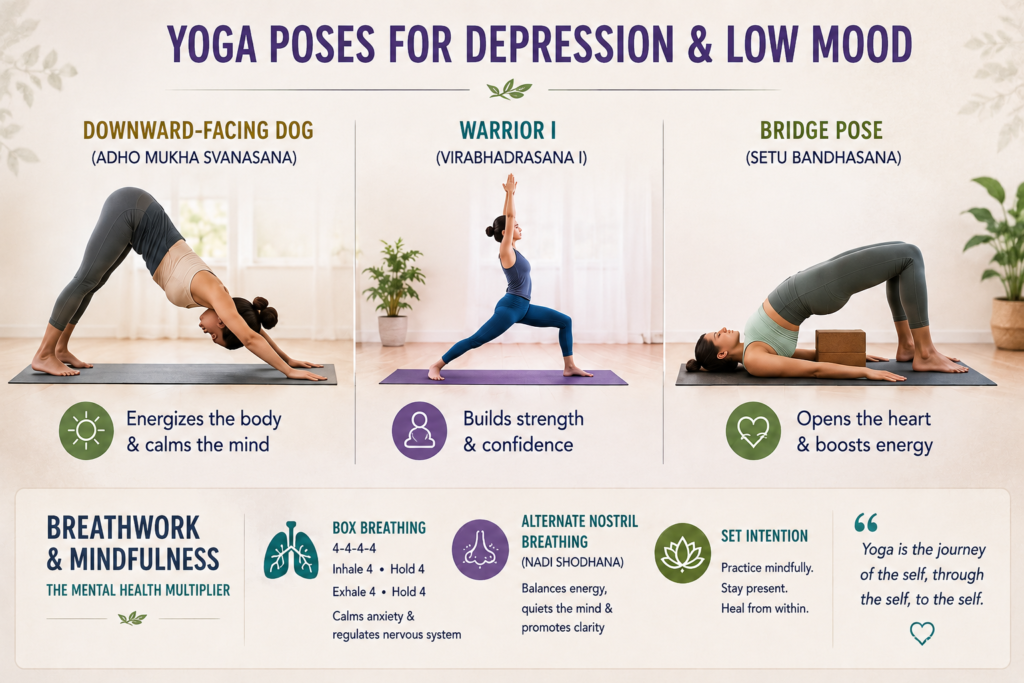
Downward-Facing Dog (Adho Mukha Svanasana)
Downward-Facing Dog is an inversion that can help to calm the nervous system and gently energize the body. By bringing the head below the heart, it can promote a sense of grounding and reduce feelings of overwhelm often associated with depression. This pose also stretches the hamstrings and calves, which can release physical tension that may be contributing to low mood.
Warrior I (Virabhadrasana I)
Warrior I is a powerful standing pose that builds strength and confidence. Its upright posture can counteract the tendency to hunch or withdraw when feeling depressed. The chest expansion in this pose can also help to open the heart space, promoting feelings of openness and positivity. This pose can be particularly beneficial for improving posture, which is often affected by low mood.
Bridge Pose (Setu Bandhasana)
Bridge Pose is a gentle backbend that opens the chest and shoulders, counteracting the effects of slumped posture and promoting a sense of upliftment. This pose is thought to stimulate the thyroid gland and can help to boost energy levels. For those experiencing fatigue with depression, Bridge Pose offers a way to energize the body and mind. Modifications can include placing a block under the sacrum for support.
Poses for Overthinking and Racing Thoughts
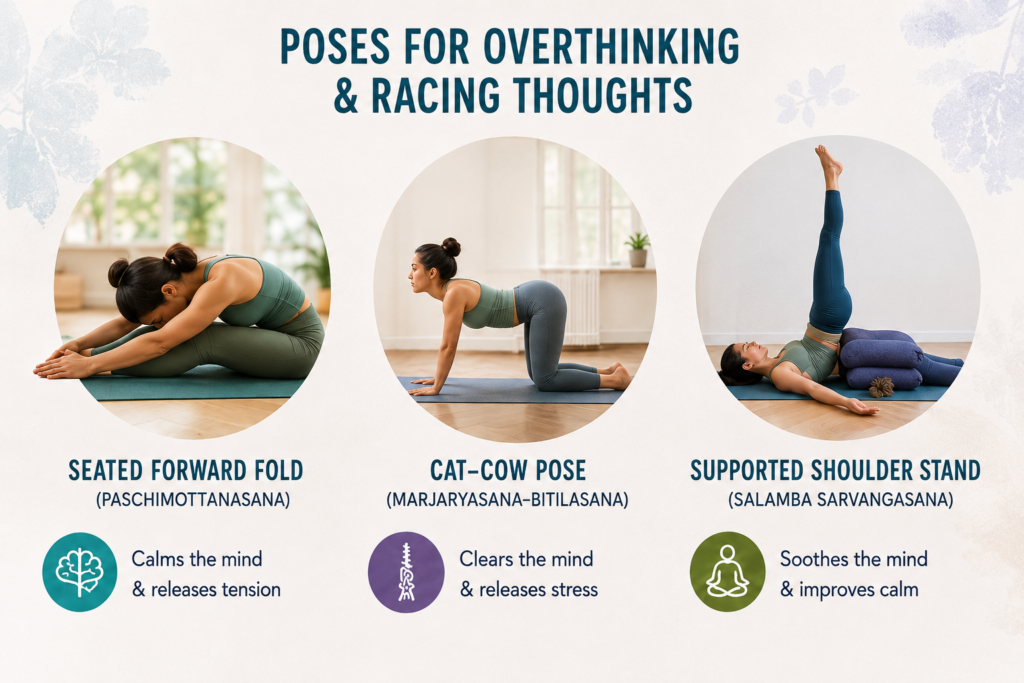
Poses for Overthinking and Racing Thoughts
When your mind races with relentless thoughts, yoga offers a powerful way to anchor yourself in the present. Inversion and grounding poses are particularly effective at interrupting rumination. By shifting your perspective or deepening your connection to the earth, these postures encourage a return to the physical sensations of your body, quieting the mental chatter. This mind-body connection is key to managing overthinking and fostering a sense of calm. PubMed studies on pranayama and cortisol reduction PubMed further highlight how breathwork integrated into these poses can reduce stress hormones.
Seated Forward Fold (Paschimottanasana)
This pose gently calms the nervous system and can help to release tension in the back and hamstrings, areas where stress often accumulates. As you fold forward, focus on your breath, allowing each exhale to deepen the stretch and release mental fatigue.
Cat-Cow Pose (Marjaryasana-Bitilasana)
The rhythmic movement of Cat-Cow synchronizes breath with motion, drawing your awareness to the spine and the present moment. This simple flow is excellent for clearing the mind and releasing pent-up tension.
Supported Shoulder Stand (Salamba Sarvangasana)
While inversions like shoulder stand can be energizing, a supported version, often done with bolsters for comfort and safety, can have a profoundly calming effect. It gently reverses blood flow, which can help to quiet an overactive mind. For those new to inversions, starting with simpler poses is recommended.
Breathwork and Mindfulness: The Mental Health Multiplier
Beyond the physical postures, the true power of yoga for mental well-being lies in its integration of breathwork (pranayama) and mindfulness. These techniques act as potent multipliers, enhancing the neurological benefits of yoga, as detailed by Healthline Harvard Health.
Box Breathing for Anxiety
A simple yet effective technique is box breathing. Inhale deeply for a count of four, hold for four, exhale for four, and hold again for four. This rhythmic pattern helps to calm the nervous system, reducing feelings of anxiety.
Alternate Nostril Breathing (Nadi Shodhana)
Nadi Shodhana, or alternate nostril breathing, is another powerful pranayama practice. By alternating breaths between nostrils, you can balance energy flow and promote mental clarity. This practice is particularly beneficial for quieting a racing mind.
Mindful Practice Guide: Setting Intention
Before you begin your practice, take a moment to set an intention. This simple act of mindfulness can deepen your connection to the practice and amplify its mental health benefits. Pairing your yoga practice with a mental health journaling or meditation app can help you track mood improvements and deepen your mind-body connection. Remember, the guidance of a qualified teacher is invaluable in mastering these techniques and understanding how they support your overall mental health journey.
Choosing the Right Yoga Style for Your Mental Health Needs
Not all yoga styles offer the same mental health benefits — the pace, intensity, and focus of a practice shape its therapeutic effects. Choosing the right style for your needs can meaningfully support your wellbeing, especially when integrated alongside professional care such as therapy or medication.
Hatha Yoga for Beginners
Hatha yoga’s slower pace and emphasis on individual postures make it ideal for those new to mental health yoga poses or managing high anxiety. The gentle structure builds body awareness without overwhelming the nervous system, giving beginners a safe entry point.
Vinyasa Flow for Energy and Processing Emotions
Vinyasa links breath to movement in continuous sequences, making it effective for lifting low mood and processing stored emotional tension. Research suggests Healthline that rhythmic, breath-synchronized movement can positively influence mood regulation. This style suits those experiencing depression or emotional stagnation who benefit from more active engagement. For those also managing physical discomfort alongside emotional stress, our guide on yoga for pain relief offers useful complementary strategies.
Restorative Yoga for Deep Relaxation and Anxiety
Restorative yoga uses supported, passive holds to activate the parasympathetic nervous system — your body’s rest-and-digest response. It is particularly effective for chronic stress and anxiety. Whichever style you choose, always discuss yoga as a complementary practice with your healthcare provider. To deepen your understanding and practice safely, consider enrolling in a mental health-focused yoga program through a qualified platform.
Frequently Asked Questions
Can yoga replace professional mental health treatment?
No. Yoga is a powerful complementary practice, not a substitute for therapy, medication, or psychiatric care. Research consistently shows yoga reduces symptoms of anxiety and depression WebMD, but it works best alongside — not instead of — professional support. Always consult a qualified mental health provider for diagnosis and treatment.
How often should I practice yoga for mental health benefits?
Studies suggest two to three sessions per week produce meaningful improvements in mood and stress levels. Even 10–15 minutes of daily breathwork or gentle movement can shift your nervous system noticeably over time. Consistency matters far more than session length.
What if I’m a beginner or have physical limitations?
Most mental health yoga poses are accessible regardless of fitness level. Restorative and chair-based variations remove physical barriers entirely. If pain is a concern, our guide on yoga for pain relief offers safe modifications to keep practice comfortable and sustainable from day one.
About the Author

Pratham Bavkar — Wellness Researcher · Founder, Yoga Therapy Guide
Pratham Bavkar is the founder of Yoga Therapy Guide and a wellness researcher focused on yoga therapy, mobility, and posture health. He creates evidence-based, beginner-friendly guides on yoga poses, stretching routines, and natural wellness practices to help readers improve daily health naturally.