Introduction to Yoga for Pain Relief
If you’ve tried painkillers, rest, or even physical therapy and still wake up every morning bracing for discomfort, you’re not alone — and you’re not out of options. Millions of people live with chronic pain that conventional medicine manages but rarely resolves. Yoga for pain relief offers something different: a practice that targets the body, the nervous system, and the mind simultaneously, addressing pain at its root rather than masking it.
How Yoga Works to Reduce Pain
Yoga reduces pain through several overlapping mechanisms — improving circulation, releasing muscular tension, increasing joint mobility, and regulating the nervous system’s stress response. According to the Mayo Clinic’s research on yoga for pain management and nervous system regulation WebMD, consistent practice can measurably lower the body’s inflammatory markers and shift the nervous system out of chronic fight-or-flight mode, which is a key driver of persistent pain.
Why Yoga Is Different From Other Pain Management Methods
Medication dulls pain signals. Physical therapy rebuilds specific structures. Yoga does both — while also retraining how your brain perceives pain. It builds body awareness, reduces fear-avoidance patterns, and creates sustainable habits. Whether you’re dealing with back tension, nerve discomfort, or joint stiffness, our guide on yoga for lower back pain: poses, benefits, and safety tips shows how targeted sequences can complement any recovery plan.
The Physiological Mechanisms: How Yoga Reduces Pain
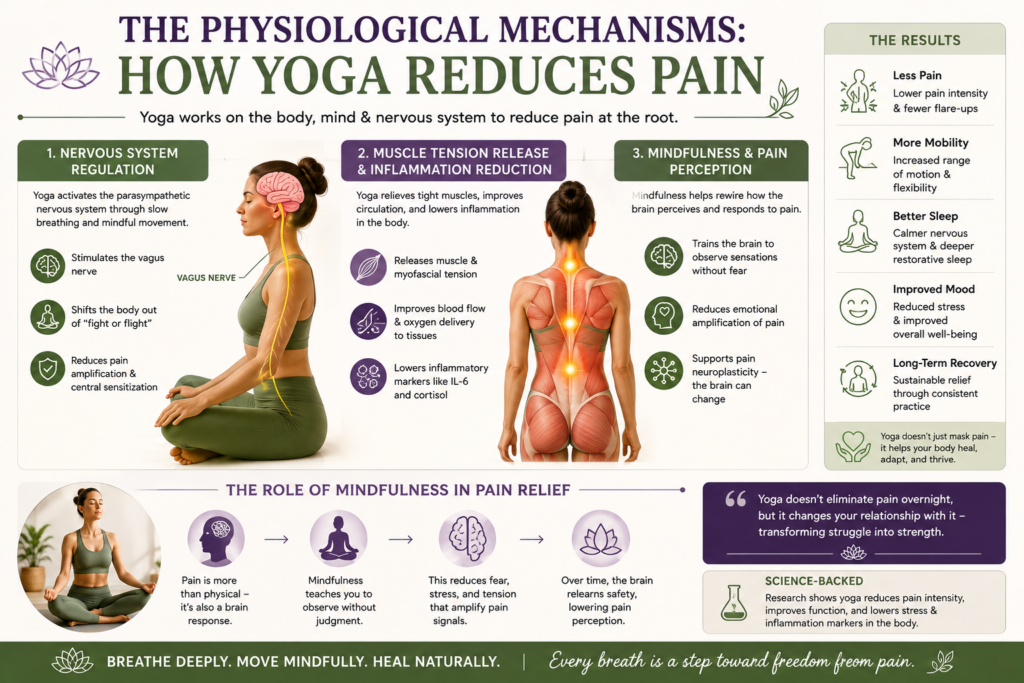
Most people know yoga “helps with pain,” but the mechanisms behind that relief are genuinely sophisticated. Understanding the science can deepen your practice and help you apply it more deliberately.
Nervous System Regulation and Pain Response
Chronic pain often involves an overactivated sympathetic nervous system — the “fight or flight” response locked in the on position. Slow, controlled yoga breathing and held postures stimulate the vagus nerve, shifting the body toward parasympathetic dominance. This directly dials down the nervous system’s pain-amplifying signals, a process researchers describe as reducing central sensitization — where the brain essentially learns to perceive pain more intensely over time. According to WebMD: How Yoga Reduces Chronic Pain and Inflammation Verywell Health, consistent practice can measurably recalibrate these pain pathways.
Muscle Tension Release and Inflammation Reduction
Tight muscles compress nerves and restrict circulation, creating a self-reinforcing pain cycle. Yoga’s sustained stretching releases myofascial tension while improving blood flow to oxygen-deprived tissue. Beyond mechanics, studies suggest yoga lowers pro-inflammatory markers like IL-6 and cortisol, addressing pain at a biochemical level — not just a muscular one. This is particularly relevant for conditions like sciatica, where nerve compression compounds soft-tissue dysfunction; see our guide on Yoga for Sciatica: 6 Safe Poses to Relieve Nerve Pain (+ What to Avoid) for targeted approaches.
The Role of Mindfulness in Pain Perception
Pain is never purely physical — the brain actively constructs the pain experience. Mindfulness-based movement, central to yoga, trains the prefrontal cortex to observe sensation without catastrophizing, reducing the emotional amplification that makes chronic pain so debilitating. This is pain neuroplasticity working in your favor: the brain can be gradually retrained to interpret signals differently, lowering perceived intensity even when the underlying condition persists.
Specific Yoga Poses for Different Pain Conditions
Different pain conditions respond to different types of movement, and choosing the right poses matters more than simply “doing yoga.” Below is a condition-by-condition breakdown of poses that research and clinical guidance support, along with practical modifications to keep practice safe and accessible.
Best Poses for Back Pain
Cat-Cow, Child’s Pose, and Supine Twist are among the most widely recommended poses for back pain. They gently mobilize the lumbar spine, decompress spinal discs, and release the paraspinal muscles that tighten under chronic stress. Verywell Health: Yoga Poses for Specific Pain Conditions Mayo Clinic highlights that consistent practice of these foundational poses can meaningfully reduce both pain intensity and functional limitation. For a deeper look at sequencing these safely, see our guide on Yoga for Lower Back Pain: Poses, Benefits, and Safety Tips.
Yoga for Arthritis and Joint Pain
Gentle standing poses — Warrior I, Mountain Pose, and supported Bridge — help maintain joint range of motion without compressive loading. The key is slow, controlled movement that warms synovial fluid rather than straining cartilage. Avoid locking joints at full extension, and pause at any point of sharp discomfort.
Restorative Yoga for Fibromyalgia
Fibromyalgia involves central sensitization, meaning the nervous system amplifies pain signals. Restorative poses — Legs-Up-the-Wall, Supported Fish, and Savasana with props — activate the parasympathetic nervous system and begin the gradual process of unlearning exaggerated pain responses. Sessions should be short (15–20 minutes) and prioritize stillness over stretch.
Modifications for Chronic Pain Sufferers
Accessibility is non-negotiable in pain-focused yoga. Props like blocks and straps make poses reachable for people with limited mobility, allowing the body to find supported, pain-free positions rather than forcing range of motion. Placing a block under the sacrum in Bridge Pose, or using a strap in Seated Forward Fold, removes strain from vulnerable joints while preserving the therapeutic benefit of the shape.
- Blocks: Reduce floor distance in standing folds and support passive backbends
- Straps: Extend reach in hamstring and shoulder stretches without overstretching
- Bolsters: Allow full relaxation in restorative poses without muscular effort
Always consult a qualified healthcare provider or a yoga therapist trained in pain management before beginning a new practice, particularly if your condition involves nerve involvement, recent surgery, or unstable joints.
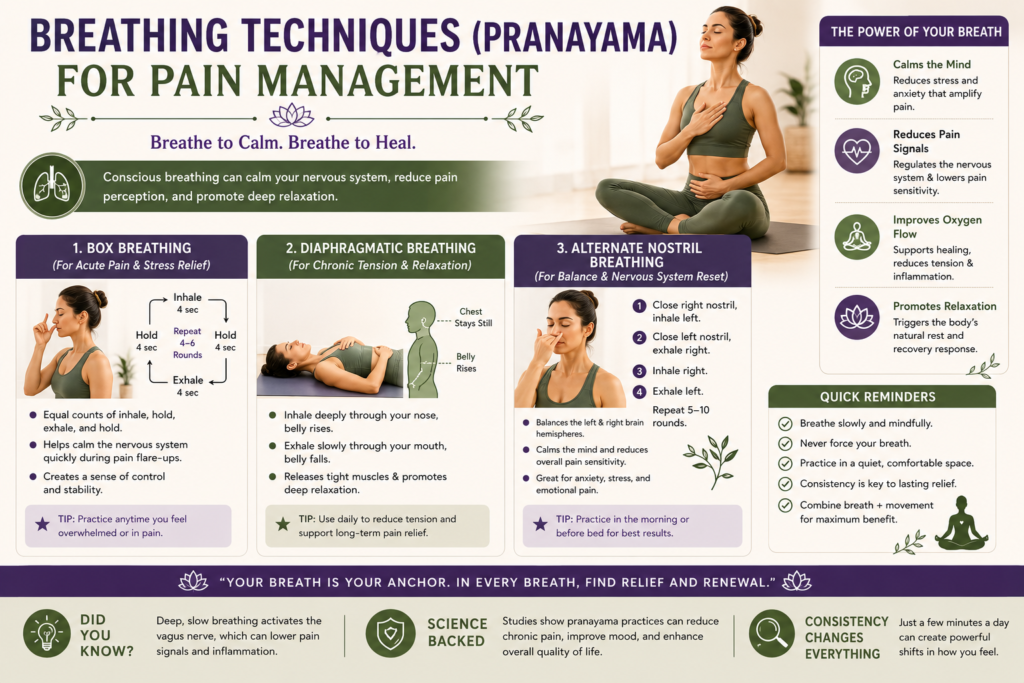
Breathing Techniques (Pranayama) for Pain Management

While poses are crucial, the breath is yoga’s secret weapon for pain management. Through pranayama, or breath control, you can directly influence your nervous system and reduce pain perception. Deep, conscious breathing activates the vagus nerve, a key player in the body’s relaxation response. This can lower heart rate, reduce inflammation, and signal to your brain that you are safe, thereby diminishing the intensity of pain signals. Research on yoga for back pain relief, for instance, highlights the importance of breathwork in promoting healing and reducing discomfort Mayo Clinic Yoga.
Box Breathing for Acute Pain
This technique involves inhaling, holding, exhaling, and holding the breath for equal counts, typically four seconds each. It’s excellent for quickly calming an overactive nervous system during a flare-up. Focus on smooth, even breaths to create a sense of control and stability.
Diaphragmatic Breathing for Chronic Tension
Also known as belly breathing, this involves deep inhales that expand the belly rather than just the chest. It promotes relaxation and can release chronic tension often held in the shoulders and neck, contributing to conditions like headaches or general stiffness.
Alternate Nostril Breathing for Nervous System Balance
This practice, called Nadi Shodhana, involves breathing through one nostril at a time, alternating between them. It’s known for balancing the left and right hemispheres of the brain and calming the entire nervous system, fostering a sense of equilibrium and reducing overall pain sensitivity.
Starting Your Yoga Practice: A Beginner’s Journey
Embarking on a yoga journey for pain relief is entirely accessible, even with chronic conditions. The key lies in a mindful, progressive approach. Begin by understanding your baseline.
Assessing Your Current Pain Level
Before your first session, take a moment to gauge your pain. Where is it located? What is its intensity on a scale of 1 to 10? Note what movements or positions exacerbate it and what offers even slight relief. This self-awareness is crucial for communicating with your instructor and modifying poses safely.
Choosing a Qualified Yoga Instructor for Chronic Pain
Selecting the right instructor is paramount. Look for someone with experience teaching students with chronic pain or injuries. They should be knowledgeable about anatomy and modifications and foster a non-judgmental, supportive environment. Don’t hesitate to discuss your specific pain points and limitations openly with potential instructors. A good instructor will guide you through poses like those beneficial for yoga for lower back pain, offering personalized adjustments.
Building a Sustainable Practice: Week 1–12 Progression
Start slowly. Focus on gentle movements and foundational poses. In the first few weeks, aim for 1-2 short sessions per week, prioritizing proper form over duration or intensity. Investing in a quality yoga mat is essential for safety and comfort, providing crucial grip and cushioning. As you build strength and flexibility, gradually increase the frequency and duration of your practice. Remember, consistency is more important than intensity. The effects of breathwork on pain perception, as noted by Healthline Healthline, become more apparent with regular practice.
Safety Considerations and Contraindications
Yoga for pain relief offers genuine benefits, but practicing without awareness of your individual limits can worsen existing conditions. Understanding when to modify, pause, or seek professional guidance is essential before you begin.
When to Avoid Certain Poses
Certain poses carry meaningful risk depending on your condition. Deep forward folds and unsupported inversions can aggravate herniated discs or uncontrolled blood pressure. Twisting poses may be contraindicated after spinal surgery. If you have osteoporosis, extreme spinal flexion increases fracture risk. The Mayo Clinic Yoga: Official Pose Modifications and Safety Spine-health recommends working with a qualified instructor who can tailor modifications to your diagnosis rather than following generic sequences. For condition-specific guidance, see our resource on Yoga for Lower Back Pain: Poses, Benefits, and Safety Tips.
Red Flags: When to Consult Your Doctor
Stop practicing and seek medical evaluation if you experience sharp or shooting pain during a pose, sudden numbness or tingling, joint swelling, chest tightness, or dizziness. These symptoms may signal an underlying issue requiring diagnosis before yoga safely continues.
Integrating Yoga With Physical Therapy and Medication
Yoga complements medical treatment — it does not replace it. Always inform your physician and physical therapist that you are practicing yoga, as they can identify movements that conflict with your rehabilitation plan. Many physical therapists actively incorporate yoga-derived mobility work alongside prescribed exercises and medication management, creating a cohesive, safer recovery pathway.
Real Stories: Yoga as a Long-Term Pain Management Solution
Case Study: Back Pain Relief Over 6 Months
Sarah, a graphic designer, lived with chronic lower back pain for years. After trying numerous treatments, she began a gentle yoga practice. Within six months, consistent practice, including poses like Cat-Cow and Child’s Pose, significantly reduced her pain and improved her posture. For those with similar issues, exploring Yoga for Lower Back Pain: Poses, Benefits, and Safety Tips can be a starting point.
Testimonial: Arthritis and Mobility Recovery
John, diagnosed with rheumatoid arthritis, found his joint stiffness and pain limiting his daily life. Yoga, particularly restorative poses and mindful movement, helped him regain flexibility and strength, making everyday tasks easier.
The ‘Love Story’ of Chronic Pain and Yoga
Many find that yoga isn’t just a treatment, but a companion. Like a developing relationship, the journey with yoga for pain relief can be one of gradual understanding, deepening trust, and enduring support, transforming a challenging condition into a manageable, even empowering, part of life.
Yoga vs. Other Pain Relief Methods: A Comparison
Yoga vs. Medication
Pain medications — from over-the-counter NSAIDs to prescription opioids — offer fast relief but carry real risks: dependency, gastrointestinal damage, and diminishing effectiveness over time. Research cited by the Mayo Clinic WebMD suggests that mind-body practices like yoga for pain relief can meaningfully reduce reliance on medication for chronic conditions, particularly lower back pain. Yoga doesn’t replace necessary medication, but it can lower the dose required and address root causes rather than masking symptoms.
Yoga vs. Physical Therapy
Physical therapy and yoga share significant overlap — both improve mobility, strengthen stabilizing muscles, and correct movement patterns. The key difference is access and sustainability. Physical therapy is clinician-guided and time-limited; yoga can become a lifelong, self-directed practice. For condition-specific guidance, our Yoga for Lower Back Pain: Poses, Benefits, and Safety Tips covers targeted poses that rival standard rehabilitation protocols in effectiveness.
Yoga + Multimodal Approach (Best Results)
The strongest evidence supports yoga as part of an integrated strategy. Healthline Verywell Health notes that combining yoga with conventional treatment — medication when needed, physical therapy, and psychological support — produces better long-term outcomes than any single method alone. Think of yoga as the connective tissue of your pain management plan: it reinforces every other intervention you use.
Common Questions About Yoga for Pain Relief
FAQ Section
Can yoga actually relieve chronic pain? Yes. Research consistently shows yoga reduces pain intensity and improves function in people with chronic conditions including back pain, arthritis, and fibromyalgia Mayo Clinic. It works by combining movement, breathwork, and nervous system regulation.
How quickly will I feel results? Many people notice reduced tension and improved mood after a single session. Meaningful, lasting pain relief typically develops over four to eight weeks of consistent practice.
Is yoga safe if I’m already in pain? For most people, yes — with modifications. Start gently, avoid pushing into sharp pain, and consult your doctor if you have a serious injury or medical condition. Our guide on yoga for lower back pain: poses, benefits, and safety tips covers key safety principles in detail.
How often should I practice? Even two to three sessions per week produces measurable benefits. Daily gentle practice accelerates results significantly.
Do I need experience to start? No. Beginners can access effective pain-relieving poses immediately, especially restorative and chair-based variations.
About the Author

Pratham Bavkar — Wellness Researcher · Founder, Yoga Therapy Guide
Pratham Bavkar is the founder of Yoga Therapy Guide and a wellness researcher focused on yoga therapy, mobility, and posture health. He creates evidence-based, beginner-friendly guides on yoga poses, stretching routines, and natural wellness practices to help readers improve daily health naturally.