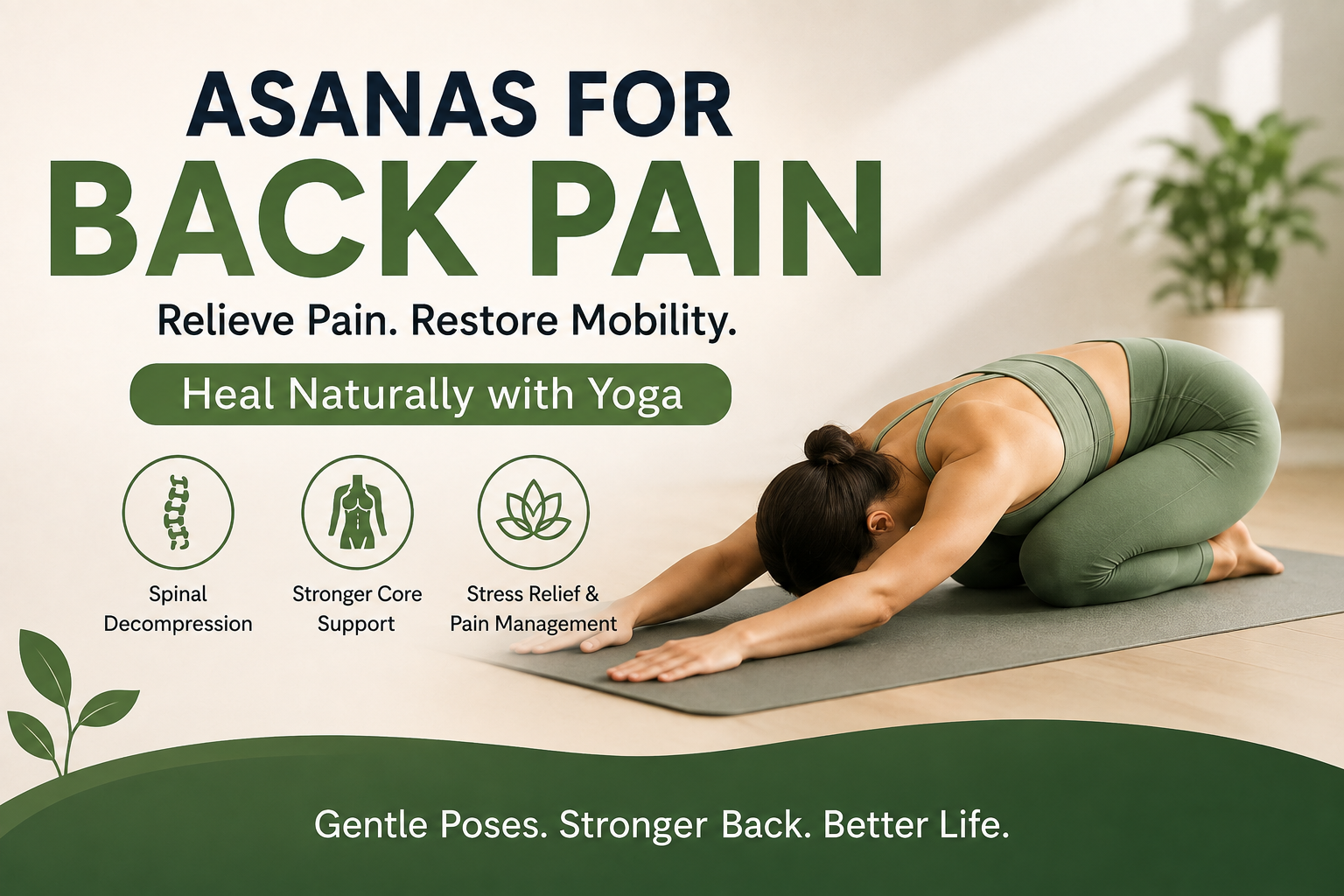
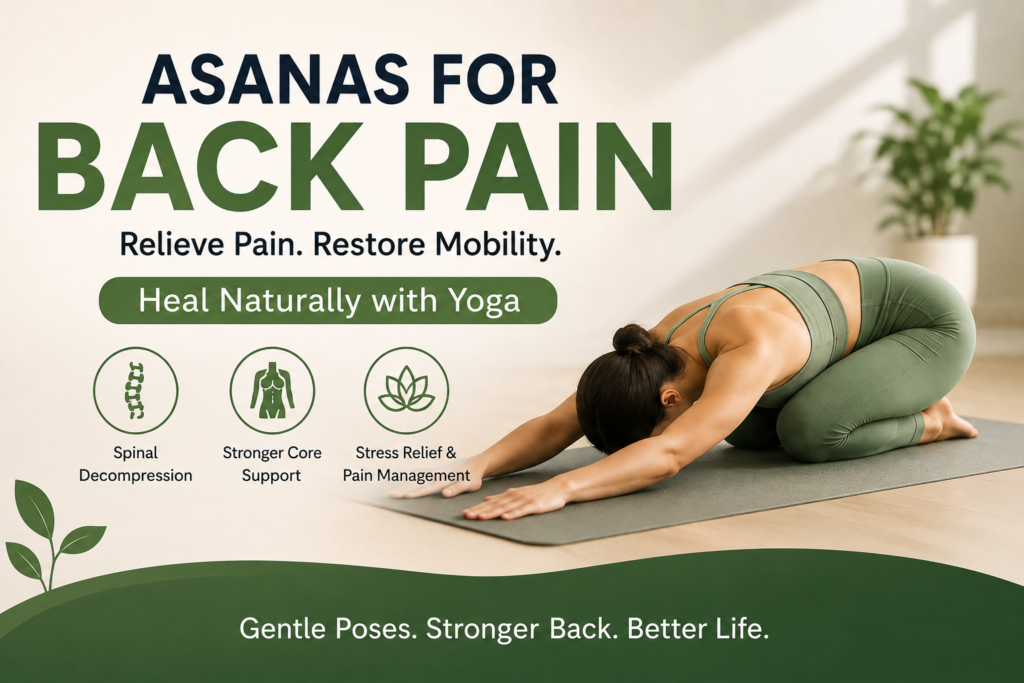
Introduction to Yoga for Back Pain
If you’ve ever winced getting out of bed, struggled to sit through a workday, or felt that sharp, radiating ache that makes every movement a negotiation — you already know how profoundly back pain can shrink your world. The good news? One of the most effective tools for relief may already be accessible to you: yoga.
Why Yoga Works for Back Pain
Yoga isn’t simply stretching with a spiritual soundtrack. It systematically targets the muscular imbalances, postural habits, and movement restrictions that drive most back pain. The Mayo Clinic on yoga efficacy for back pain Mayo Clinic confirms that a consistent yoga practice can meaningfully reduce chronic low back pain and improve functional mobility — results that rival conventional physical therapy for many patients.
The Science Behind Asanas and Spinal Health
Specific asanas for back pain work through three key physiological pathways:
- Decompression: Gentle spinal lengthening reduces intradiscal pressure, offering relief for herniated discs and sciatica.
- Strengthening: Targeted poses build the deep stabilizing muscles — multifidus and transverse abdominis — that protect spinal structures.
- Neurological reset: Slow, mindful movement downregulates the nervous system’s pain-amplifying stress response.
For a broader foundation before diving into condition-specific poses, explore our to understand how these principles apply across injury types.
Benefits of Yoga for Back Pain Relief
Yoga’s effectiveness for back pain stems from several key mechanisms. Asanas, or yoga poses, work by gently stretching and lengthening muscles that may have become tight and contracted due to injury or overuse. This increased flexibility can significantly improve range of motion and reduce stiffness, making everyday movements easier and less painful.
Increased Flexibility and Mobility
Regular practice of specific asanas is crucial for enhancing flexibility. This gradual improvement helps to alleviate the physical restrictions that often accompany back pain, allowing for greater ease of movement and a better quality of life. For those dealing with specific conditions like sciatica, targeted poses can be particularly beneficial Yoga for Sciatica: 6 Safe Poses to Relieve Nerve Pain (+ What to Avoid).
Strengthening Core Muscles
A strong core is fundamental to supporting the spine. Yoga poses engage and build the deep abdominal and back muscles, creating a natural corset that stabilizes the spine and prevents excessive strain. This enhanced muscular support is vital for both immediate relief and long-term spinal health.
Stress Reduction and Pain Management
Beyond the physical, yoga is renowned for its ability to reduce stress and anxiety, which often exacerbate pain perception. The combination of mindful movement, controlled breathing (pranayama), and meditation helps calm the nervous system, reducing the body’s stress response and promoting a sense of well-being. This holistic approach can significantly alter how pain is experienced and managed Cleveland Clinic Pain.
Long-Term Prevention
By addressing the root causes of back pain—such as muscle imbalances, poor posture, and stress—consistent yoga practice can prevent future episodes. It fosters body awareness, empowering individuals to recognize and correct harmful movement patterns before they lead to injury, promoting sustainable back health.
Best Yoga Asanas for Back Pain: Step-by-Step Guide
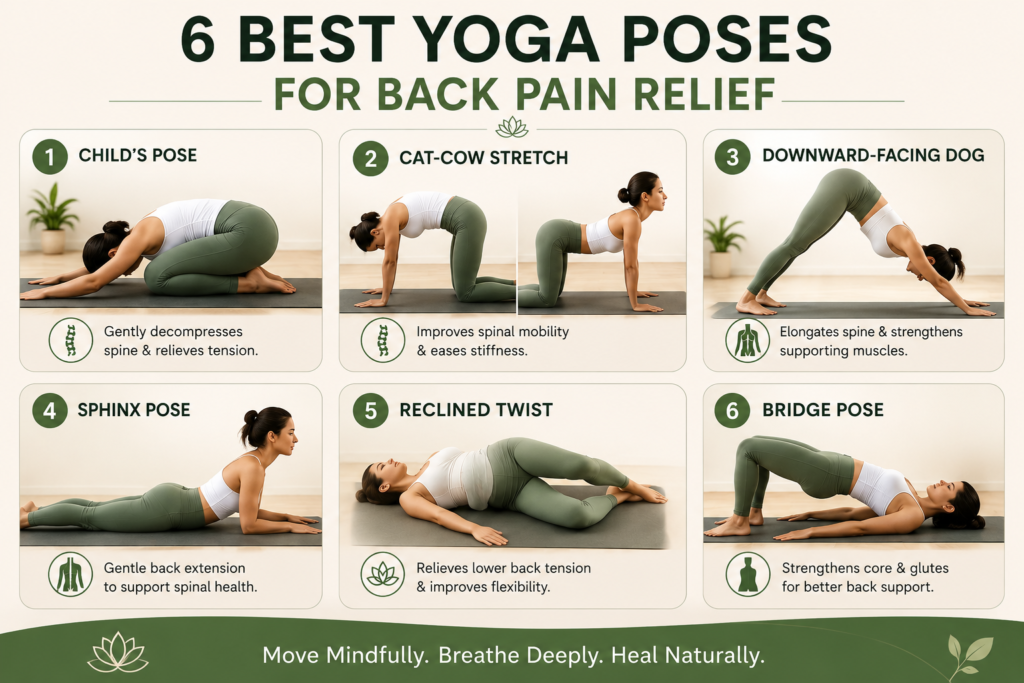
These six asanas for back pain form a progressive, evidence-based sequence you can practice daily. Move slowly, breathe steadily, and stop immediately if sharp or radiating pain increases. Spine-Health on safe poses for herniated discs Healthline recommends avoiding deep forward folds in the acute phase — keep that in mind as you work through each pose.
Child’s Pose (Balasana)
- How to: Kneel with big toes touching, knees hip-width apart. Exhale and fold your torso forward, extending arms overhead or resting them alongside your body. Let your forehead rest on the mat.
- Hold: 30–90 seconds, breathing deeply into the lower back.
- Benefits: Gently decompresses lumbar vertebrae, relieves muscle strain, and reduces tension along the sciatic nerve pathway.
- Modification: Place a folded blanket between thighs and calves if knees are uncomfortable. For herniated discs, keep hips higher by sitting back only halfway.
- Contraindication: Avoid if you have severe knee injuries or late-stage pregnancy.
Cat-Cow Stretch (Marjaryasana-Bitilasana)
- How to: Start on hands and knees, wrists under shoulders, knees under hips. Inhale, drop the belly, lift the chest and tailbone (Cow). Exhale, round the spine toward the ceiling, tucking chin and pelvis (Cat).
- Hold: Flow for 8–10 breath cycles.
- Benefits: Mobilizes the entire spine, lubricates spinal discs, and eases morning stiffness from muscle strain or disc issues.
- Modification: Place a folded blanket under knees. Reduce range of motion during flare-ups — small, gentle movements are sufficient.
- Contraindication: Skip deep extension (Cow) during an acute herniated disc episode.
Downward-Facing Dog (Adho Mukha Svanasana)
- How to: From hands and knees, tuck toes and lift hips toward the ceiling, forming an inverted V. Press firmly through palms, lengthen the spine, and keep a slight bend in the knees if hamstrings are tight.
- Hold: 5 breaths, working up to 30–60 seconds.
- Benefits: Elongates the lumbar spine, strengthens supporting musculature, and helps relieve sciatic compression when performed with bent knees.
- Modification: Bend knees generously to prevent posterior pelvic tuck, which can aggravate disc problems. Use a wall for support if needed.
- Contraindication: Avoid during acute sciatica flare-ups or if wrist pain is present — try a forearm variation instead.
Sphinx Pose (Salamba Bhujangasana)
- How to: Lie face down, legs extended. Place forearms on the mat, elbows under shoulders. Gently press forearms down and lift the chest, maintaining a long, neutral lower back.
- Hold: 30–60 seconds.
- Benefits: Introduces gentle lumbar extension, which can help rehydrate herniated discs and counteract prolonged sitting posture. For more on extension-based recovery, see our guide on yoga for pain relief a complete guide to poses breathing and long-term recovery.
- Modification: Place a thin pillow under the abdomen to reduce lumbar compression at lower pain tolerance levels.
- Contraindication: Avoid if spinal stenosis causes increased pain with extension.
Reclined Twist (Supta Matsyendrasana)
- How to: Lie on your back, draw the right knee to your chest, then guide it across your body to the left. Extend your right arm out to the side and gaze right.
Modifications and Precautions for Different Back Conditions
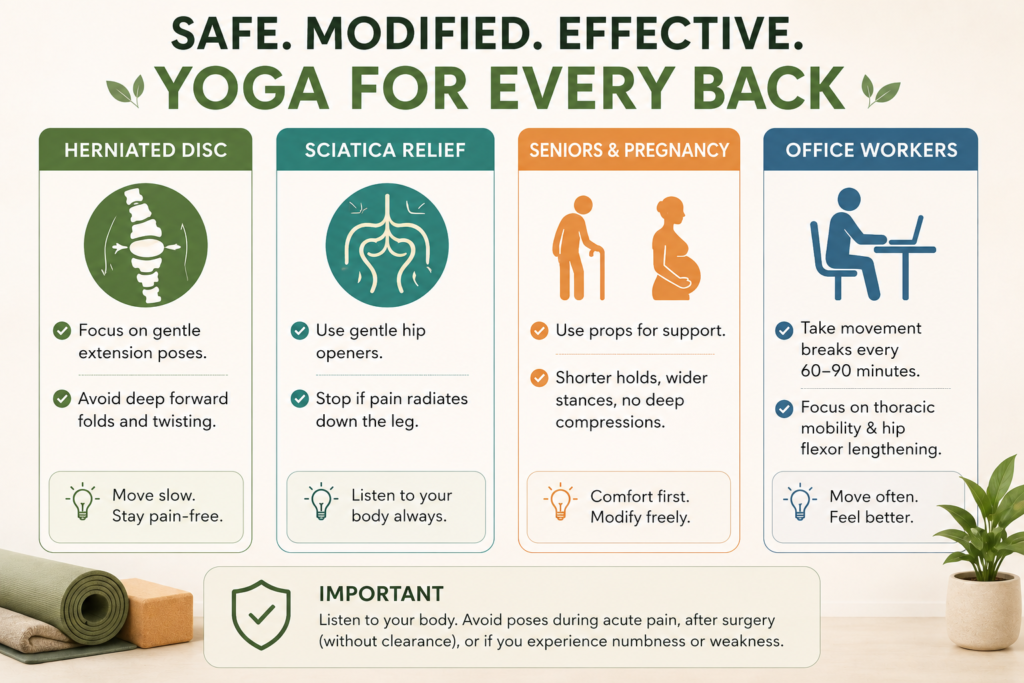
Not all back conditions respond the same way to yoga, and using the wrong approach can aggravate symptoms rather than relieve them. Understanding your specific diagnosis before beginning any asana practice is essential — always consult a spine specialist or physical therapist first.
Herniated Disc Modifications
Deep forward folds and rounding the spine can increase disc pressure significantly. If you have a herniated disc, prioritize extension-based poses like a gentle Sphinx or Cobra, which may reduce anterior disc bulge. Avoid seated forward bends, full Child’s Pose, and any movement that reproduces leg pain or tingling. Keep the range of motion small and pain-free at all times.
Sciatica-Specific Adjustments
Sciatica caused by piriformis tension responds well to gentle hip openers, but the same poses can worsen nerve compression from a herniated disc. If a stretch sends shooting pain down your leg, stop immediately. Our detailed guide on yoga for sciatica outlines which poses are safe and which to avoid based on your root cause.
Modifications for Seniors and Pregnant Women
- Seniors: Use a chair for support during standing poses, reduce hold times to 15–20 seconds, and avoid deep twists that stress spinal joints.
- Pregnant women: After the first trimester, avoid lying flat on the back for extended periods. Use props, widen the stance in forward folds, and skip deep abdominal compressions entirely.
Office Worker Routines
Prolonged sitting tightens hip flexors and weakens the posterior chain. Short, frequent movement breaks — a gentle Cat-Cow or standing Figure-Four stretch every 60–90 minutes — are often more effective than one long session. Focus on thoracic mobility and hip flexor lengthening rather than lumbar stretching alone.
When to Avoid Yoga Poses
Yoga is not appropriate during acute flare-ups with severe pain, after recent spinal surgery without clearance, or when symptoms include bladder or bowel changes — the latter requires emergency evaluation. WebMD on yoga frequency and timeline for relief Spine-health notes that consistent, gentle practice over several weeks yields better outcomes than aggressive early sessions. If any pose consistently worsens pain, numbness, or weakness, treat that as a clear signal to stop and seek professional reassessment.
The Role of Breathwork (Pranayama) in Back Pain Relief
The Role of Breathwork (Pranayama) in Back Pain Relief
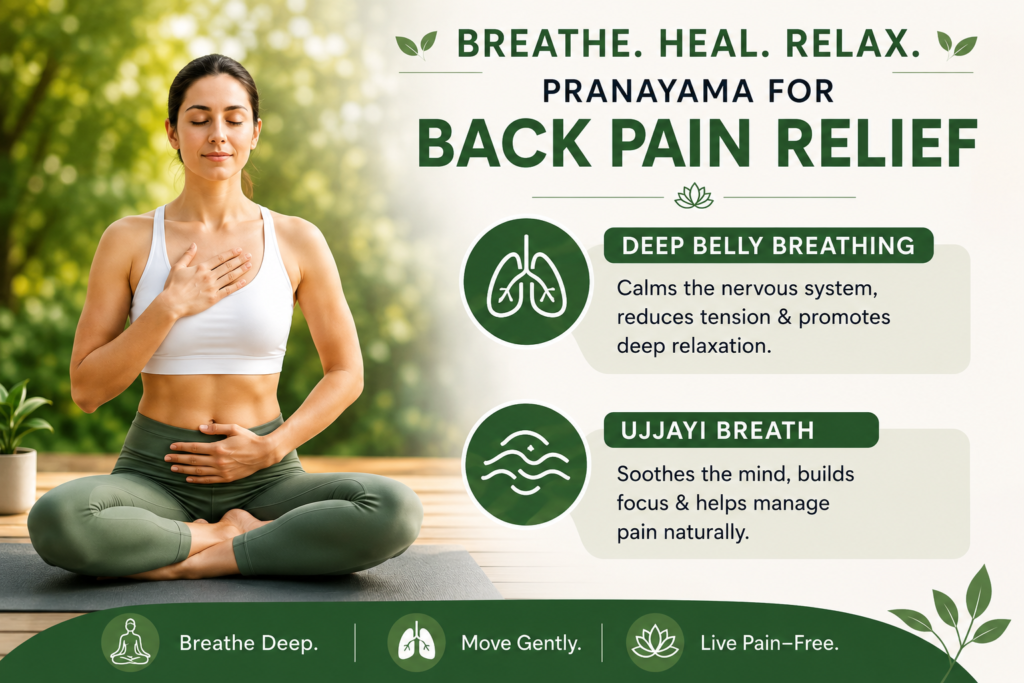
While asanas are crucial, incorporating breathwork, or pranayama, can significantly enhance back pain relief. Deep, conscious breathing helps to relax tense muscles, reduce inflammation, and calm the nervous system. This mindful approach to breathing supports the body’s natural healing processes. Healthline on pranayama and pain management highlights its effectiveness in alleviating discomfort WebMD.
Deep Belly Breathing Technique
Place one hand on your chest and the other on your belly. Inhale deeply through your nose, allowing your belly to rise more than your chest. Exhale slowly through your mouth, feeling your belly contract. This technique promotes relaxation and reduces stress, which often exacerbates back pain. For a comprehensive understanding of yoga’s healing potential, explore our guide on.
Ujjayi Breath for Pain Management
Also known as “victorious breath” or “ocean breath,” Ujjayi involves a slight constriction at the back of the throat, creating a soft, audible sound. This focused breathing helps to build internal heat and calm the mind, making it particularly useful during challenging poses or periods of intense pain.
Beginner’s Daily Sequence for Back Pain
5-Minute Routine
For a quick, accessible start, focus on gentle movements. Begin with Cat-Cow pose, flowing between the two for 5-10 breaths. Follow with a Child’s Pose for 30 seconds, allowing your back to release. A quality yoga mat with alignment guides helps ensure proper spinal alignment during poses.
15-Minute Routine
Expand on the 5-minute routine by adding more poses. After Cat-Cow and Child’s Pose, incorporate Downward-Facing Dog (hold for 5 breaths), a gentle Supine Twist (30 seconds per side), and finish with a brief Savasana (corpse pose) for 1-2 minutes. For more on this, see our guide on yoga for sciatica.
Frequency and Consistency
Consistency is key when managing back pain with yoga. Aim to practice daily, even if it’s just the 5-minute routine. Medical News Today on yoga and chronic pain research highlights that regular, gentle movement can significantly improve outcomes Medical News Today. Prioritize consistency over intensity to build strength and flexibility safely.
How Long Until You Feel Relief?
One of the most common questions people ask when starting asanas for back pain is: “How soon will I feel better?” The honest answer depends on whether your pain is acute or chronic — and consistency matters more than intensity.
Timeline for Acute Pain
For recent muscle strain or sudden flare-ups, gentle yoga can provide noticeable relief within one to two weeks of daily practice. Research suggests that even a single session of mindful movement can reduce perceived pain intensity by calming the nervous system’s stress response Mayo Clinic. Start slowly and prioritize gentle stretching over deep poses.
Timeline for Chronic Pain
Chronic back pain — lasting more than 12 weeks — typically requires a longer commitment. Most studies examining yoga for persistent back conditions report meaningful improvements after six to twelve weeks of regular practice. For a structured approach to longer recovery, see our guide on.
Tracking Progress
- Log pain levels (1–10 scale) before and after each session
- Note improvements in mobility, sleep quality, and daily function
- Reassess with your healthcare provider if pain worsens or doesn’t improve after four weeks
Comparing Yoga Styles for Back Pain Management
Not all yoga styles offer the same benefits for back pain. Choosing the right approach depends on your condition’s severity, your fitness level, and what your body needs most right now. For a broader overview of style-specific guidance, see our.
Hatha Yoga
Hatha classes move at a slower pace than vinyasa flow, holding poses long enough to build awareness and gentle strength. This makes it well-suited for mild to moderate muscle strain, where controlled movement without intensity is the goal.
Restorative Yoga
Using bolsters, blankets, and blocks to support the body completely, restorative yoga is ideal for acute flare-ups, herniated discs, or sciatica. Poses are held passively for several minutes, calming the nervous system and reducing protective muscle guarding.
Iyengar Yoga
Iyengar’s emphasis on precise alignment and extensive prop use makes it arguably the most therapeutic style for structural back conditions. Instructors are trained to modify poses individually, reducing injury risk for those with diagnosed spinal issues.
Conclusion: Your Path to a Healthier Back
Key Takeaways
Asanas for back pain work — not as a quick fix, but as a sustainable, science-backed approach to reducing pain, improving mobility, and strengthening the muscles that support your spine. The poses covered in this guide target the root causes of sciatica, herniated discs, and muscle strain, while breathwork and mindful movement help calm the nervous system’s pain response. Consistency matters far more than intensity: even 15–20 minutes daily can produce meaningful, lasting change.
Next Steps
Start with the beginner sequence outlined earlier, listen to your body, and modify poses as needed. As your confidence grows, deepen your practice with our guide on yoga for sciatica: 6 safe poses to relieve nerve pain. For personalized guidance tailored to your specific condition, consider an instructor-led course on yoga for back pain management — having an expert in your corner accelerates progress and keeps you safe.
Your healthier back starts with a single pose. Begin today.
About the Author

Pratham Bavkar — Wellness Researcher · Founder, Yoga Therapy Guide
Pratham Bavkar is the founder of Yoga Therapy Guide and a wellness researcher focused on yoga therapy, mobility, and posture health. He creates evidence-based, beginner-friendly guides on yoga poses, stretching routines, and natural wellness practices to help readers improve daily health naturally.