What Is Fertility Yoga?
Defining Fertility Yoga
Fertility yoga for women is a specialized practice that combines gentle movement, breathwork, and mindfulness to support reproductive health. It draws from traditional yoga traditions while intentionally targeting areas of the body and nervous system most relevant to hormonal balance, pelvic circulation, and stress reduction. Crucially, it works alongside medical fertility treatments — not as a replacement for them.
How It Differs From General Yoga Practice
Unlike a standard vinyasa or power yoga class, fertility yoga avoids intense heat, extreme inversions, and high-impact sequences that could disrupt hormonal rhythms or pelvic stability. The pace is slower, the poses are more restorative, and the intention is deeply specific — nurturing the body’s readiness for conception and supporting emotional resilience through the process. For a broader look at how yoga addresses stress-related physical symptoms, see our guide on.
The Mind-Body Philosophy Behind It
The National Institutes of Health’s NCCIH NIH NCCIH recognizes yoga as a credible tool for stress reduction — a key factor in reproductive health. Fertility yoga embraces this connection, treating the mind and body as inseparable. Chronic stress elevates cortisol, which can interfere with ovulation and hormonal signaling. By calming the nervous system, this practice creates a more fertile internal environment.
The Science: How Yoga May Support Fertility
The Science: How Yoga May Support Fertility
While yoga is not a direct cure for infertility, emerging research suggests it can play a supportive role by addressing key physiological and psychological factors. One significant area is stress reduction. Chronic stress elevates cortisol levels, which can disrupt the reproductive hormones essential for ovulation and implantation Mayo Clinic. Practices like those recommended by the Mayo Clinic on yoga for fertility and stress management PubMed have been shown to lower stress markers, potentially creating a more favorable environment for conception. This aligns with findings in articles discussing mental health yoga poses and their impact on stress relief.
Stress Reduction and the Cortisol-Fertility Link
The body’s stress response, while crucial for survival, can become detrimental when chronic. Elevated cortisol can interfere with the hypothalamic-pituitary-gonadal (HPG) axis, which regulates reproductive functions. By promoting relaxation and mindfulness, yoga can help modulate this axis and reduce cortisol’s negative effects on fertility.
Pelvic Blood Flow and Reproductive Health
Certain yoga poses, particularly those involving gentle twists and inversions, are believed to enhance blood circulation to the pelvic region. Improved blood flow to the uterus and ovaries may support overall reproductive health and the implantation process. While more research is needed, this mechanism is a key area of interest in fertility yoga.
The Role of the Nervous System in Conception
Yoga influences the autonomic nervous system, shifting the balance from the sympathetic “fight or flight” response to the parasympathetic “rest and digest” state. This shift is crucial for optimal bodily function, including reproductive processes. A calmer nervous system may facilitate hormonal balance and reduce the physiological tension that can hinder conception.
Key Fertility Yoga Poses and Their Benefits
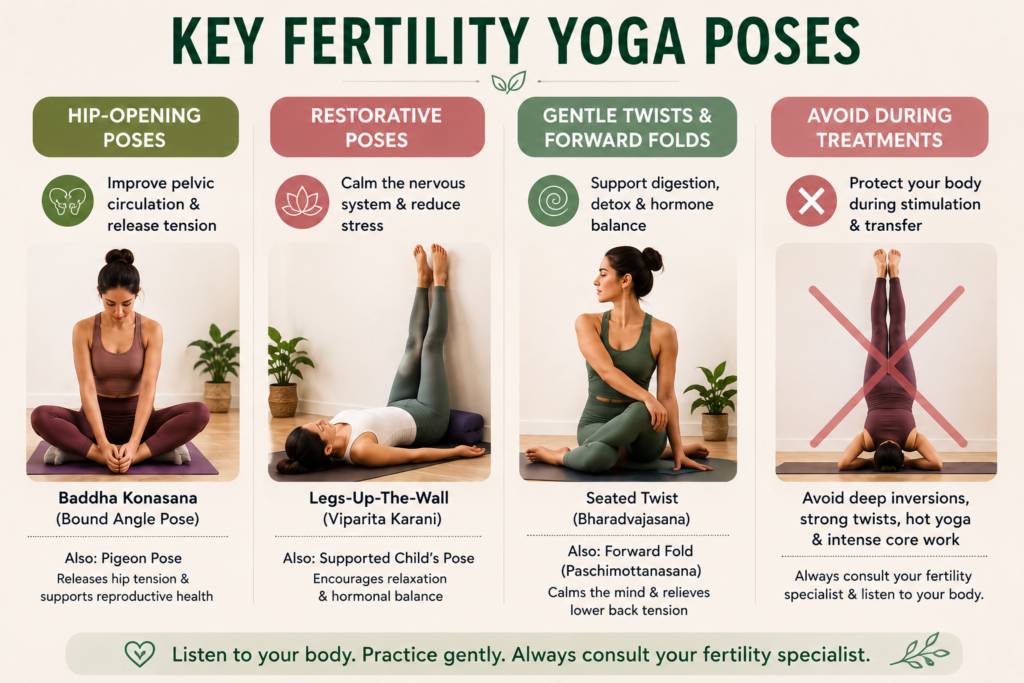
Hip-Opening Poses (Baddha Konasana, Pigeon Pose)
Hip-opening poses are central to fertility yoga for women because they increase circulation to the pelvic region and release chronic tension held in the hip flexors and psoas muscle — areas that tighten significantly under stress. Baddha Konasana (Bound Angle Pose) gently stretches the inner groin and stimulates the ovaries and uterus according to traditional yogic anatomy. Sit tall, press the soles of your feet together, and allow the knees to soften toward the floor without forcing them down. Pigeon Pose targets the deep external rotators; use a folded blanket under the hip of the extended leg to maintain a neutral pelvis.
Restorative Poses (Supported Child’s Pose, Legs-Up-the-Wall)
Restorative poses activate the parasympathetic nervous system, which PubMed studies on yoga, cortisol, and reproductive health Harvard Health suggest may help regulate the hormonal stress response. Supported Child’s Pose with a bolster placed lengthwise under the torso allows full abdominal release without compression. Legs-Up-the-Wall (Viparita Karani) encourages venous return and is widely recommended for its calming effect. Quality props make these poses significantly more accessible — a supportive bolster, blocks, and straps allow you to hold restorative shapes comfortably for five to ten minutes. If stress management is a broader goal alongside fertility, see our guide on.
Gentle Twists and Forward Folds
Mild seated twists, such as Bharadvajasana, massage abdominal organs and may support lymphatic drainage. Always twist from the mid-thoracic spine rather than the lumbar region, and keep the movement gentle. Seated forward folds like Paschimottanasana calm the nervous system and stretch the lower back — use a strap around the feet to avoid rounding aggressively through the lumbar spine.
Poses to Avoid During Fertility Treatments
During ovarian stimulation or after an embryo transfer, certain poses carry meaningful risk and should be avoided entirely:
- Deep inversions (Headstand, Shoulder Stand) — may stress the abdomen and are contraindicated with enlarged ovaries
- Strong twists and deep backbends — create intra-abdominal pressure unsuitable during stimulation phases
- Hot yoga — elevated core temperature is associated with potential risks to early embryo development
- Any pose causing discomfort or bloating — ovarian hyperstimulation syndrome (OHSS) requires immediate rest; consult your reproductive endocrinologist before continuing practice
Always disclose your treatment stage to any yoga instructor, and when in doubt, prioritize restorative and seated work only.
Breathwork (Pranayama) for Fertility and Emotional Resilience
Why Breath Work Matters in Fertility Yoga
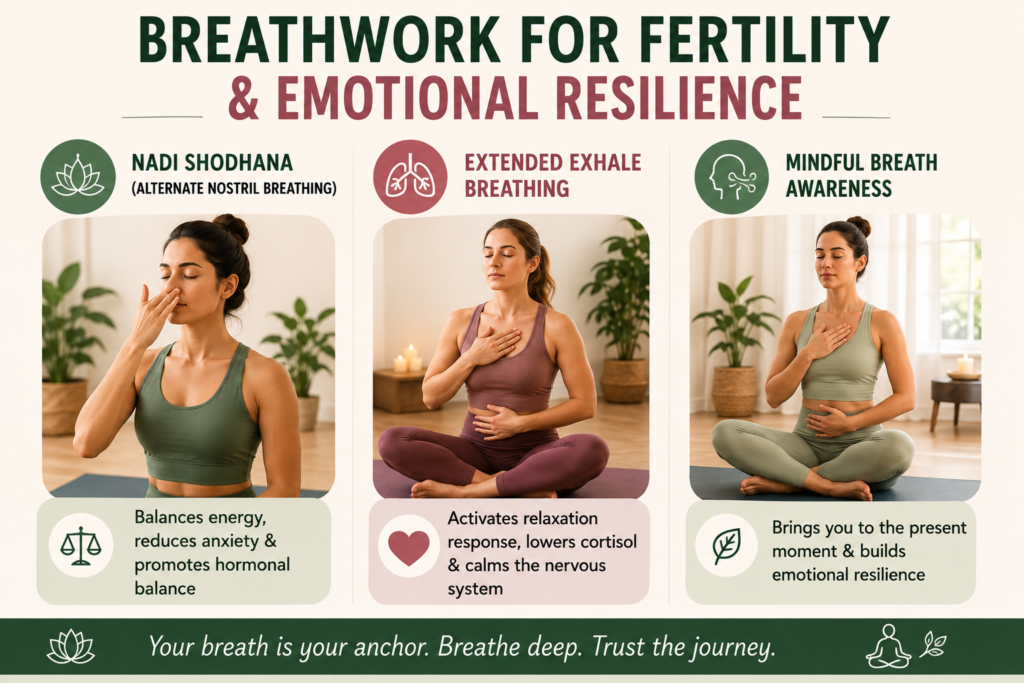
Breathwork, or pranayama, is a cornerstone of fertility yoga, directly impacting the nervous system. Focusing on the breath shifts the body from a stressed, sympathetic “fight-or-flight” state to a relaxed, parasympathetic “rest-and-digest” state. This transition is crucial for hormonal balance and can significantly reduce the emotional toll of fertility challenges. Research in mind-body medicine, such as studies highlighted by Harvard Health on mind-body medicine and infertility Mayo Clinic Yoga, underscores the profound connection between mental state and reproductive health.
Nadi Shodhana (Alternate Nostril Breathing) for Balance
Nadi Shodhana is a powerful pranayama technique that balances the left and right hemispheres of the brain, promoting a sense of equilibrium. By alternating breaths through each nostril, practitioners can calm the mind and reduce anxiety. This practice is particularly beneficial for women navigating the emotional rollercoaster of fertility treatments.
Extended Exhale Breathing for Nervous System Calm
Simply extending the exhale phase of your breath—making your out-breath longer than your in-breath—is a simple yet effective way to activate the parasympathetic nervous system. This technique signals safety and relaxation to the body, counteracting stress and fostering emotional resilience. For those seeking broader strategies for managing difficult emotions, exploring may offer additional support.
Yoga Styles for Fertility: Which Is Right for You?
Not all yoga styles are created equal when it comes to fertility support. The right choice depends on where you are in your cycle, your treatment phase, and how your body feels day to day.
Restorative Yoga for Deep Relaxation
Restorative yoga uses props and long-held passive poses to activate the parasympathetic nervous system. This style is particularly valuable during the two-week wait or after procedures like embryo transfer, when rest and stress reduction matter most. The Cleveland Clinic Cleveland Clinic recognizes complementary approaches like restorative practices as potentially beneficial for managing the emotional demands of fertility treatment.
Hatha Yoga for Gentle, Mindful Movement
Hatha yoga offers a balanced middle ground — slow-paced, breath-focused movement that builds body awareness without overexertion. It pairs well with the stress-relief benefits explored in our guide on, making it a practical everyday option throughout your fertility journey.
Why Hot Yoga May Not Be Ideal During Conception Attempts
Elevated core body temperature during the luteal phase or early pregnancy is a genuine concern. Hot yoga environments can raise internal temperature significantly, which reproductive specialists generally advise avoiding when trying to conceive or during fertility treatments. Stick to room-temperature classes until you have medical clearance.
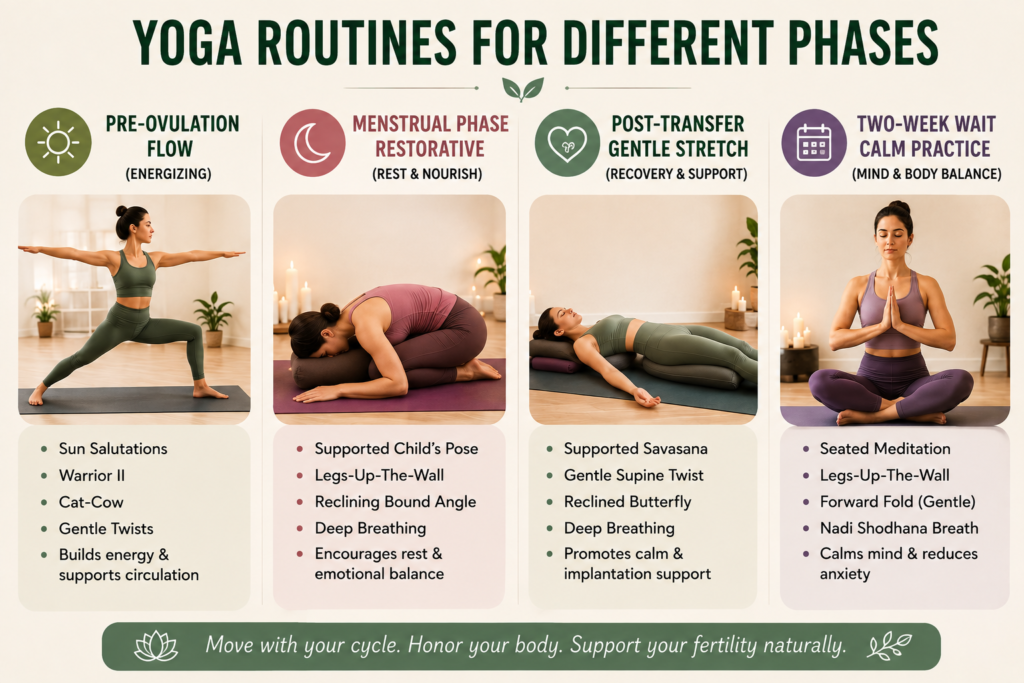
Fertility Yoga Routines for Different Phases
Pre-Ovulation Flow (Energizing Sequence)
During the follicular phase, leading up to ovulation, focus on energizing and stimulating poses. This sequence aims to increase blood flow to the reproductive organs and build vitality. Include poses like Sun Salutations (Surya Namaskar) to warm up the body, Cat-Cow (Marjaryasana-Bitilasana) for spinal mobility, and gentle twists to encourage detoxification. Standing poses such as Warrior II (Virabhadrasana II) and Triangle Pose (Trikonasana) build strength and confidence. End with a brief, invigorating meditation.
Menstrual Phase Restorative Practice
As menstruation begins, the body needs rest and nourishment. This phase calls for gentle, restorative practices. Focus on poses that promote relaxation and introspection. Supported poses like Reclining Bound Angle Pose (Supta Baddha Konasana) with props, Legs-Up-the-Wall Pose (Viparita Karani), and Child’s Pose (Balasana) are ideal. Gentle forward folds can help calm the nervous system. Incorporate deep, diaphragmatic breathing to ease discomfort and promote emotional balance. If you’re experiencing significant discomfort, exploring yoga for pain relief might offer additional strategies.
Post-Transfer Gentle Stretch (IVF Recovery)
For those undergoing IVF, the period after embryo transfer requires utmost gentleness and support. This phase is about nurturing and creating a calm environment. Focus on deeply relaxing poses that minimize abdominal pressure. Examples include supported Savasana (Corpse Pose), gentle supine twists with ample support, and reclined Butterfly Pose. Avoid any inversions or strenuous activity. The emphasis is on stillness, deep breathing, and cultivating a sense of peace and receptivity.
Myth vs. Reality: What the Research Actually Shows
Does Yoga Improve IVF Success Rates?
While many women report feeling more relaxed and optimistic when practicing fertility yoga, robust scientific evidence directly linking it to improved IVF success rates is currently limited. Studies often involve small sample sizes or lack rigorous control groups, making it difficult to isolate yoga’s specific impact from other lifestyle factors or the placebo effect.
The Placebo Effect and Real Psychological Benefits
It’s crucial to acknowledge that the psychological benefits of yoga are very real. The practice can significantly reduce stress and anxiety, which are known to negatively impact fertility NIH NCCIH. This reduction in stress, whether through the placebo effect or direct physiological changes, can create a more favorable environment for conception. For managing stress and anxiety, exploring can be beneficial.
What Studies Confirm vs. What Remains Anecdotal
Research does confirm that yoga can improve menstrual regularity, balance hormones, and enhance blood flow to the reproductive organs. However, many claims about yoga’s direct impact on conception, particularly in conjunction with assisted reproductive technologies like IVF, remain largely anecdotal or based on preliminary findings. More extensive, high-quality research is needed to establish definitive causal links.
Safety Considerations and When to Avoid Certain Poses
Fertility yoga is generally gentle and low-risk, but specific circumstances require real caution. Always treat yoga as a complementary support, never a substitute for your medical treatment plan.
Contraindications During Stimulation Phase
During ovarian stimulation, rising estrogen levels cause the ovaries to enlarge significantly. Avoid deep twists, strong inversions, and any pose that compresses the abdomen. Ovarian torsion, though rare, is a serious risk when enlarged ovaries are present Mayo Clinic. Stick to restorative, supine, or seated poses during this window.
Post-Retrieval and Post-Transfer Modifications
After egg retrieval or embryo transfer, treat your body as if you are early pregnant. Skip hot yoga entirely, avoid strong core engagement, and forgo any pose that creates intra-abdominal pressure. If stress management remains a priority during the two-week wait, gentle breathwork and mental health yoga poses can offer emotional relief without physical risk.
Consulting Your Fertility Specialist
Before beginning or continuing any yoga practice during treatment, discuss it explicitly with your reproductive endocrinologist. Every protocol differs. What is safe during a natural cycle may be contraindicated during IVF stimulation. Your specialist’s guidance always takes precedence over general recommendations found online or in class.
Mindfulness and Meditation for Fertility Challenges
Navigating fertility challenges can take a significant emotional toll. Fertility yoga for women extends beyond physical postures to embrace mindfulness and meditation as powerful tools for building resilience.
Guided Meditation for Anxiety and Grief
The journey through fertility treatments or struggles can be fraught with anxiety and grief. Guided meditations, easily accessible through various platforms like a quality meditation or mindfulness app, can help soothe the nervous system and process difficult emotions. These sessions offer a sanctuary for the mind, providing calm amidst uncertainty.
Body Scan Practices for Reconnection
Many women experience a sense of disconnection from their bodies during fertility challenges. Body scan meditations gently guide your awareness through each part of your body, fostering a renewed sense of presence and acceptance. This practice can be incredibly grounding, helping you feel more at home within yourself, which is a key component of overall well-being, as explored in our articles on.
Affirmations and Visualization Techniques
Positive affirmations and visualization can powerfully reshape your mindset. Repeating empowering statements and vividly imagining a healthy pregnancy and birth can cultivate hope and reduce self-doubt. These mental exercises, combined with physical yoga, create a holistic approach to fertility well-being.
Getting Started: Tips for Safe Practice During Fertility Treatments
Communicating With Your Yoga Instructor
Before your first class, tell your instructor exactly where you are in your fertility journey — whether you’re in a natural cycle, undergoing IUI, or mid-IVF stimulation. A knowledgeable teacher will modify inversions, deep twists, and strong abdominal work accordingly. If group classes feel too unpredictable, a structured program designed specifically for fertility can remove the guesswork. An offers guided sequences built around each cycle phase, making it easier to practice safely without needing to explain your situation every session.
Listening to Your Body and Adjusting Intensity
Fertility treatments can shift your energy, mood, and physical comfort week to week. Honor that variability. On low-energy days, swap a full flow for restorative poses and breathwork. On higher-energy days, gentle Hatha or Yin is still preferable to vigorous practice. If you experience bloating, pelvic pressure, or unusual fatigue — common during hormonal stimulation — reduce intensity immediately. For broader stress-reduction strategies that complement this approach, see our guide on.
Creating a Sustainable Home Practice
Consistency matters more than duration. Even 15–20 minutes daily of intentional movement and breathwork builds the stress-resilience and body awareness that support fertility over time. Choose a consistent time, keep your mat visible, and start with just two or three familiar poses. Small, repeatable habits are far more effective than occasional intensive sessions.
About the Author

Pratham Bavkar — Wellness Researcher · Founder, Yoga Therapy Guide
Pratham Bavkar is the founder of Yoga Therapy Guide and a wellness researcher focused on yoga therapy, mobility, and posture health. He creates evidence-based, beginner-friendly guides on yoga poses, stretching routines, and natural wellness practices to help readers improve daily health naturally.