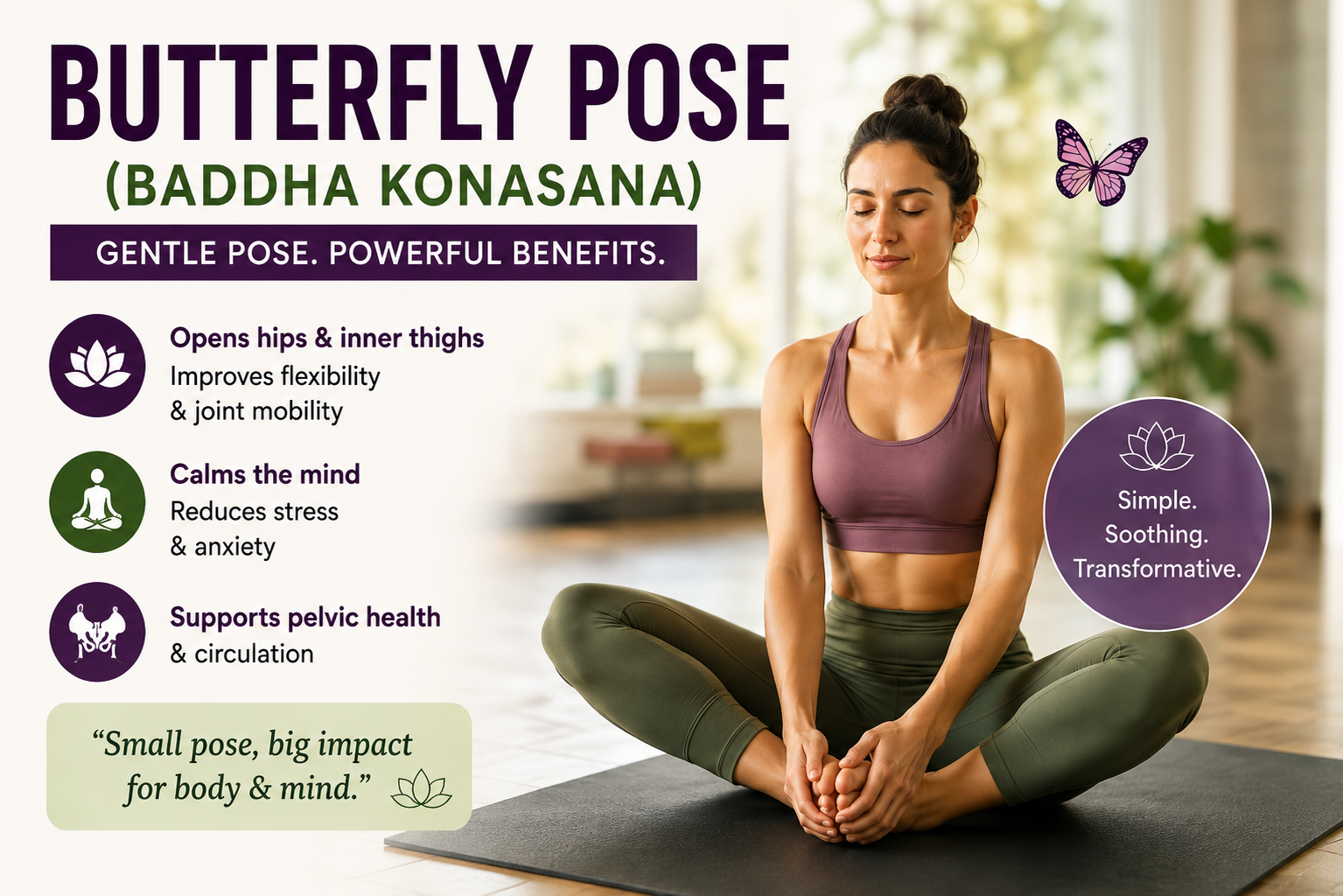
What Is Butterfly Pose (Baddha Konasana)?
Butterfly Pose is one of yoga’s most recognizable seated postures — accessible to beginners yet rich enough to reward lifelong practitioners. Whether you’re easing tight hips after a long day at a desk or preparing for deeper hip-opening work, this gentle pose delivers remarkable results. Research highlighted by Healthline: Hip flexibility and yoga benefits research Healthline confirms that consistent hip-opening practice improves joint mobility and reduces chronic tension, making Baddha Konasana a genuinely valuable addition to any routine.
Etymology and Origins
The Sanskrit name Baddha Konasana breaks down simply: baddha means “bound,” kona means “angle,” and asana means “pose.” Together, they describe the shape precisely — feet bound together, legs forming a wide angle. The posture appears in classical Hatha yoga texts and has long been used in Indian tradition to support pelvic health, digestion, and meditative stillness.
Why It’s Called Butterfly Pose
The Western nickname comes from the wings-like flutter the knees create when practitioners gently bounce them up and down — a movement that mimics a butterfly in flight. This playful quality makes it especially welcoming for younger students, as explored in our guide on Simple Yoga Poses for Kids: A Beginner’s Guide to Playful Practice. Despite its lighthearted name, the pose carries serious anatomical and meditative depth.
How to Perform Butterfly Pose: Step-by-Step Guide
Setup and Starting Position
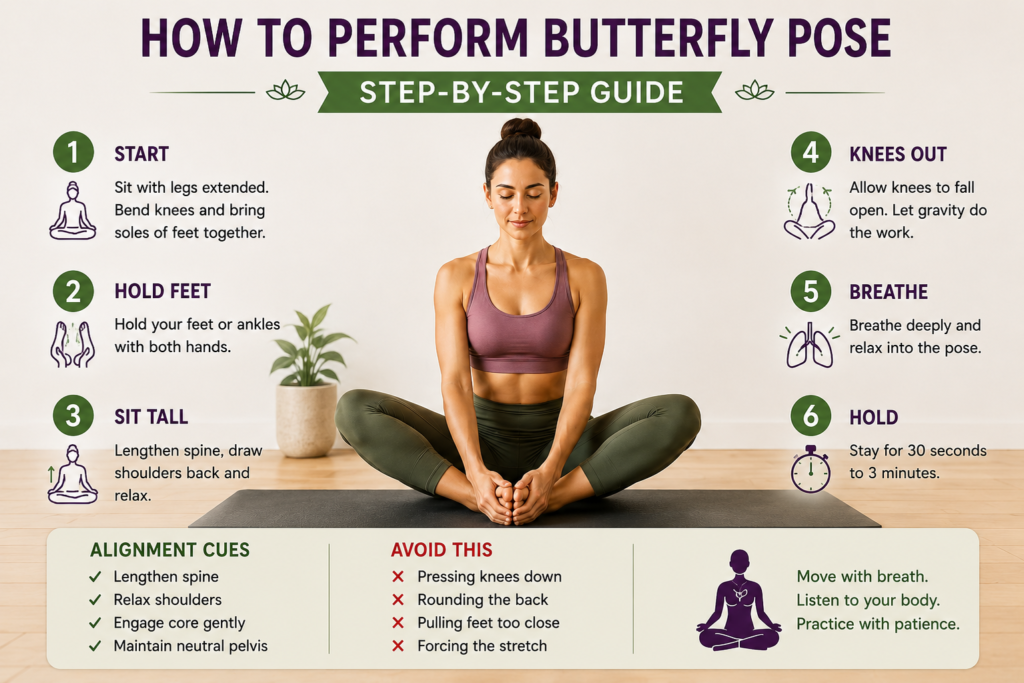
Begin seated on your mat with your legs extended in front of you. Bend both knees and draw the soles of your feet together, allowing your knees to fall out to the sides. Slide your heels as close toward your pelvis as feels comfortable — there is no single “correct” distance. Hold your feet with both hands, interlacing your fingers around them or gripping your ankles. Sit tall on your sitting bones before moving any further.
Proper Alignment Cues
- Spine: Lengthen through the crown of your head rather than rounding the lower back.
- Knees: Let gravity lower them naturally — never press or force them toward the floor.
- Shoulders: Draw them back and down, away from your ears.
- Pelvis: Tilt gently forward to maintain a neutral lumbar curve.
If your hips are tight and your lower back rounds significantly, sit on a folded blanket to elevate the pelvis. This small adjustment makes proper spinal alignment far more accessible for beginners. If you experience any groin or knee discomfort, consult a qualified healthcare provider before continuing — the Mayo Clinic WebMD notes that hip and groin conditions warrant medical guidance before attempting seated stretches.
Common Setup Mistakes to Avoid
The most frequent error is forcing the knees downward with hands or elbows, which strains the inner knee ligaments rather than opening the hips. Equally common is collapsing the chest and rounding the spine in an effort to fold forward — this compresses the lumbar discs rather than creating space. Finally, avoid placing your feet too close to the groin before your body is ready; start with heels at a comfortable distance and move them inward gradually over weeks of practice. For those managing existing discomfort in the lower body, our guide on yoga for pain relief offers helpful context on working safely within your limits.
Muscle Engagement and Anatomy in Butterfly Pose
Muscle Engagement and Anatomy in Butterfly Pose
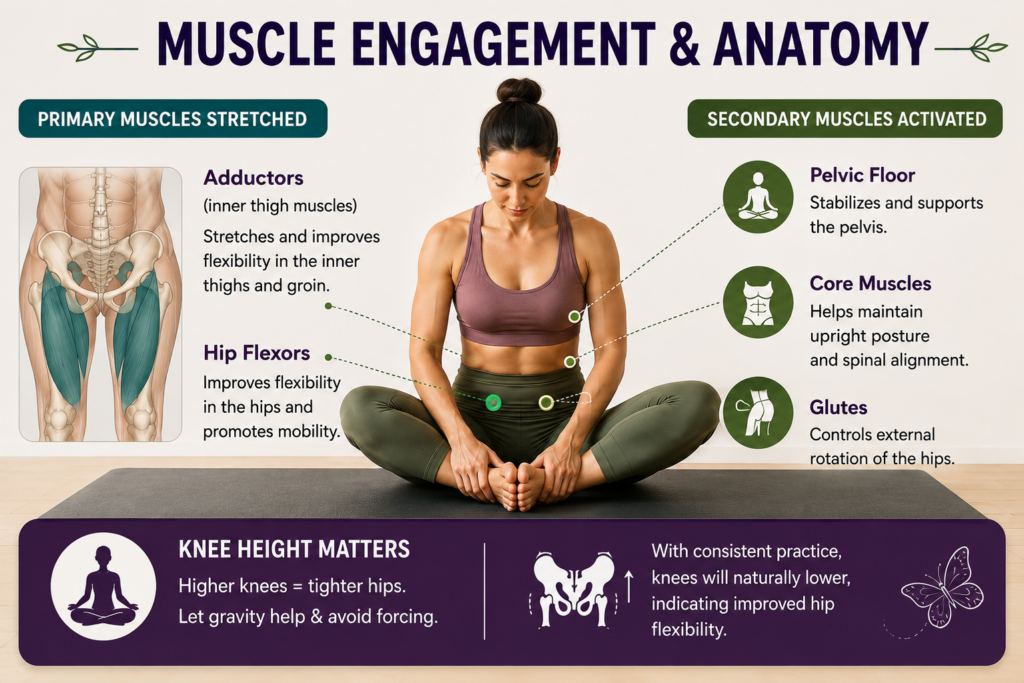
Butterfly pose, or Baddha Konasana, is a powerful hip opener that targets several key muscle groups. The primary muscles stretched are the adductors (inner thigh muscles) and the hip flexors. As you bring your soles together and draw your heels towards your groin, you’re creating an external rotation and abduction at the hip joint, which elongates these muscles.
Secondary Muscle Groups Activated
While the focus is on stretching, certain muscles are gently activated to support the pose. The pelvic floor muscles can be engaged to help stabilize the pelvis. Your core muscles (abdominals and obliques) work isometrically to maintain an upright posture, preventing you from collapsing forward. Even the glutes play a subtle role in controlling the external rotation of the hips.
Why Knee Height Matters
The height of your knees in Butterfly Pose is a good indicator of your hip flexibility. If your knees are high towards the ceiling, it suggests tightness in your hip flexors and adductors. Gently encouraging them down, without forcing, helps deepen the stretch. For those experiencing discomfort or seeking relief from conditions like sciatica, exploring poses outlined in our guide on asanas for back pain might be beneficial. The stress-reducing aspects of yoga are well-documented, as noted by Harvard Health NIH NCCIH.
Key Benefits of Butterfly Pose
Physical Health Benefits
Butterfly pose offers a gentle yet effective stretch for the inner thighs, groin, and knees, promoting flexibility in the hips. This can be particularly beneficial for alleviating tightness associated with prolonged sitting. The pose also aids in improving circulation to the pelvic region, which may support reproductive health Mayo Clinic. Beyond the hips and thighs, it can contribute to better posture and relieve mild discomfort in the lower back, as detailed in our guide on.
Mental and Emotional Benefits
The physical release experienced in Butterfly Pose often translates into mental calm. By encouraging a state of relaxation, it can help reduce stress and anxiety. Research from the NIH NCCIH: Complementary medicine research on yoga and anxiety PubMed supports yoga’s role in managing mental well-being, and Baddha Konasana is a prime example of this effect. The grounded nature of the pose can foster feelings of stability and peace.
Energetic and Meridian Benefits
In Traditional Chinese Medicine, Butterfly Pose is thought to stimulate the kidney and bladder meridians, which run through the inner thighs and groin. This stimulation is believed to support the body’s natural detoxification processes and boost energy levels. The pose’s ability to open the hips is also associated with releasing stored emotional blockages, promoting a sense of emotional freedom and flow.
Troubleshooting Common Issues: Why You Struggle and How to Fix It
Why Can’t I Bend Forward in Butterfly Pose?
Struggling to fold forward in butterfly pose often stems from tight hamstrings or hips. Instead of forcing yourself down, focus on lengthening your spine first. Imagine growing taller from your crown. If your back rounds, it’s a sign to ease up. Try sitting on a folded blanket or cushion to elevate your hips, which can help tilt your pelvis forward and allow for a deeper stretch in the hamstrings and hips. This modification is crucial for making the pose accessible and beneficial.
How to Lower Your Knees Safely
The goal of butterfly pose isn’t to force your knees to the floor. Instead, aim for a gentle release in the inner thighs and hips. If you feel any strain or pinching, back off. You can place blocks or rolled blankets under your outer thighs or knees for support. This helps prevent hyperextension and protects your knee joints. Patience is key; consistent practice and gentle stretching will gradually increase your flexibility.
Addressing Knee Pain and Discomfort
Knee pain in butterfly pose is a clear signal to modify. Never push through sharp discomfort. Ensure your feet are a comfortable distance from your body – closer is often more intense. If pain persists, try the pose with legs extended or explore other hip-opening poses that feel better for your body. For persistent joint issues, consulting a physical therapist or yoga instructor experienced in therapeutic yoga is highly recommended. This approach aligns with a holistic view of well-being, similar to the benefits found in yoga for pain relief. Research on hip flexibility and yoga poses Harvard Health also highlights the importance of listening to your body.
How to Deepen Butterfly Pose Safely
Progressive Deepening Techniques
Once you’re comfortable with the basic Butterfly Pose, you can explore ways to deepen the stretch safely. Start by gently leaning forward from your hips, maintaining a straight spine. Avoid rounding your back, as this can strain your lower back. As you become more flexible, you might find yourself able to lower your torso closer to the floor or extend your legs further. Listen to your body; a gentle stretch is the goal, not pain. For those focusing on hip opening for practices like fertility yoga for women, gradual deepening is key.
Using Props for Support
Props can be invaluable for both supporting beginners and allowing advanced practitioners to hold the pose longer with greater comfort. Placing yoga blocks under your knees can provide essential support and reduce strain. For a restorative approach, a bolster placed under your torso or between your feet can allow for a passive, supported stretch. A strap can also be used to gently encourage the feet closer together if flexibility is limited.
When to Increase Intensity
Progressing in Butterfly Pose should be guided by your body’s signals. If you can hold the pose comfortably for several minutes without significant discomfort and are experiencing no pain, you might consider exploring deeper variations. Remember that flexibility increases gradually. Rushing the process can lead to injury, a concern emphasized in general health and safety information on stretching Healthline. Always prioritize alignment and mindful breathing over pushing too deeply, too soon.
Butterfly Pose Variations and Modifications
Reclined Butterfly Pose (Supta Baddha Konasana)
This gentle variation involves lying on your back with the soles of your feet together and knees falling open. It’s particularly effective for calming the nervous system and can be a wonderful addition to a practice focused on mental health yoga poses. Ensure your lower back is comfortable; if not, place a rolled blanket or bolster underneath it.
Supported Butterfly Pose with Props
To enhance comfort and accessibility, props can be used strategically. Place bolsters or firm cushions under your knees to alleviate hip and groin pressure. A bolster can also be placed under your torso in the reclined variation for full support. For those with tight hips, placing blocks or rolled blankets under the outer thighs can also be beneficial.
Active vs. Passive Variations
Butterfly pose can be practiced actively or passively. In an active variation, you engage your leg muscles to draw the feet closer to the groin and maintain an upright posture. In a passive variation, you allow gravity to do the work, perhaps leaning forward slightly while supported by props, focusing on relaxation and surrender.
Butterfly Pose vs. Similar Yoga Stretches: A Comparative Analysis
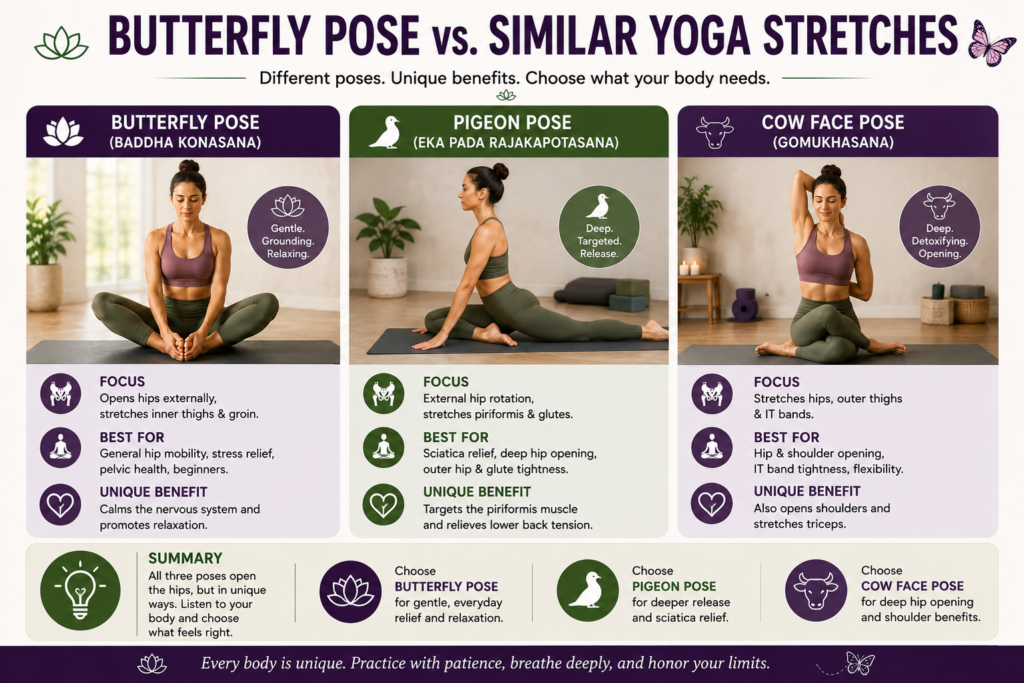
Butterfly Pose vs. Pigeon Pose
While both Butterfly Pose and Pigeon Pose target the hips and groin, they do so with distinct approaches. Butterfly Pose (Baddha Konasana) opens the hips externally and is excellent for improving flexibility in the inner thighs and groin. Pigeon Pose, on the other hand, focuses on external hip rotation and stretching the piriformis muscle, often providing a deeper stretch for the outer hip. Butterfly pose is generally more accessible and can be particularly beneficial for those seeking hip opening without the intense external rotation required by Pigeon.
Butterfly Pose vs. Cow Face Pose
Cow Face Pose (Gomukhasana) also stretches the hips and outer thighs, but it involves a significant knee bend and external rotation in one leg while the other is tucked beneath. This creates a different kind of hip opening compared to Butterfly Pose. Butterfly Pose is more about a gentle, sustained stretch for the inner thighs and groin, making it a great choice for general hip mobility and relaxation. Cow Face Pose can be more challenging and is often used to target specific tightness in the outer hips and IT bands.
Unique Benefits of Each
Butterfly Pose is renowned for its ability to calm the nervous system and promote relaxation, making it a valuable tool for stress relief WebMD. It’s also frequently recommended as part of a practice aimed at improving reproductive health and easing menstrual discomfort. Pigeon Pose is superior for targeting the piriformis and gluteal muscles, often aiding in sciatica relief. Cow Face Pose offers a powerful stretch for the shoulders and triceps in its upper body variation, in addition to its hip benefits.
Contraindications and When to Avoid Butterfly Pose
Medical Conditions to Consider
Butterfly pose places significant stress on the inner groin, hip flexors, and knee joints. Anyone with a groin strain, hip labral tear, or sacroiliac joint dysfunction should approach this pose cautiously or skip it entirely until cleared by a healthcare provider. Those managing chronic lower back conditions should also exercise care — for broader guidance, see our article on asanas for back pain. Always consult a qualified physiotherapist or physician before practicing if you have an existing musculoskeletal injury.
Pregnancy and Modifications
Butterfly pose is generally considered safe during pregnancy and is often recommended for pelvic opening, but individual circumstances vary. Avoid deep forward folds as the belly grows, and never compress the abdomen. Use props such as bolsters for support, and always seek clearance from your midwife or obstetrician before adding or continuing this pose during pregnancy.
Signs You Should Stop
Discontinue immediately if you experience sharp pain in the groin, knees, or hips — dull stretching discomfort is normal, but acute or shooting pain is not. Numbness, tingling, or joint instability are also clear signals to stop and seek professional evaluation before resuming practice.
Frequently Asked Questions (FAQs)
How long should I hold butterfly pose?
Hold butterfly pose for 30 seconds to 3 minutes, depending on your goal. For active stretching, 30–60 seconds is sufficient. For yin-style deep tissue release, aim for 2–3 minutes with relaxed, supported hips.
Can beginners do butterfly pose?
Yes — butterfly pose is one of the most beginner-friendly hip openers in yoga. Simply sit on a folded blanket and keep your feet further from your body to reduce intensity.
Does butterfly pose reduce anxiety?
Regular practice can activate the parasympathetic nervous system, promoting calm. For a broader approach, explore our guide on mental health yoga poses for anxiety and stress relief.
Is butterfly pose safe during pregnancy?
Generally yes, but always consult your healthcare provider first. Avoid strong forward folds in later trimesters and use props for support.
About the Author

Pratham Bavkar — Wellness Researcher · Founder, Yoga Therapy Guide
Pratham Bavkar is the founder of Yoga Therapy Guide and a wellness researcher focused on yoga therapy, mobility, and posture health. He creates evidence-based, beginner-friendly guides on yoga poses, stretching routines, and natural wellness practices to help readers improve daily health naturally.